The Ark of the Covenant and Gods Holy Presence

Ark of the Covenant and the God who refuses to be managed
The Crossroads Moment
You are on a Tuesday night Zoom call, camera on, Slack notifications stacking in the corner, and your whole life feels split-screen. Your manager wants you to relocate to Austin for a startup role that could double your equity. Your fiancée is already stressed because wedding costs keep climbing and her dad just started chemo. Your church asked you to lead a young adults Bible study on holy things, and somehow the topic landed on the Ark of the Covenant. You thought it would be a cool artifact study. Then you hit the hard parts. People died around it. Kings danced before it. Priests carried it. Enemies captured it. Suddenly this is not Indiana Jones content. This is a live wire.
That is where many people meet the Ark. Not in a museum mindset, but at a crossroads. You are trying to figure out whether God’s presence is comfort, danger, or both. You want a category that fits your workflow. Sacred object. National symbol. Liturgical furniture. Portable throne. Covenant witness. Yet every category glitches. The Ark sits at the interface of holiness and mercy, judgment and nearness. It is not magic hardware. It is not a lucky charm Israel can equip for battle. When they treat it that way in 1 Samuel, the whole system crashes.
Maybe that lands closer to home than you expected. You can wear a cross necklace, post a Bible verse on Instagram, keep a YouVersion streak, and still try to deploy God as a productivity feature. I have done versions of that myself. Back in college, before my roommate walked me toward Christ, I treated spiritual things as hacks. I wanted peace without surrender. I wanted meaning without repentance. Think of it like this app: you cannot drag the living God into your dock and launch Him when convenient.
The Ark forces the dilemma. If God is truly present among His people, then your career choices, your relationships, your hidden habits, your worship style, your ethics on that expense report, all of it gets audited. The gold-covered chest in the tabernacle is not random ancient décor. It is a confrontation. It asks whether you want divine proximity on God’s terms or your own. That tension is why the Ark still matters in a world of iPhones, Notion boards, Ring cameras, and remote work dashboards.
Voices from the Cloud
The first voice comes from Torah, where the Ark is introduced with precise design specs that feel almost startup-engineering level detailed. Exodus 25 is not vague inspiration. It is measured, deliberate, covenantal. “And they shall make an ark of acacia wood. Two cubits and a half shall be its length, a cubit and a half its breadth, and a cubit and a half its height. You shall overlay it with pure gold, inside and outside shall you overlay it… And you shall put into the ark the testimony that I shall give you” (Exodus 25:10-11, 16). The Hebrew word for ark here points to a chest, but the text keeps pushing past storage. This is where the testimony rests, where the covenant is materially housed, where heaven and earth meet above the mercy seat. God is not being reduced to an object. Israel is being trained to approach Him with reverence, order, and memory.
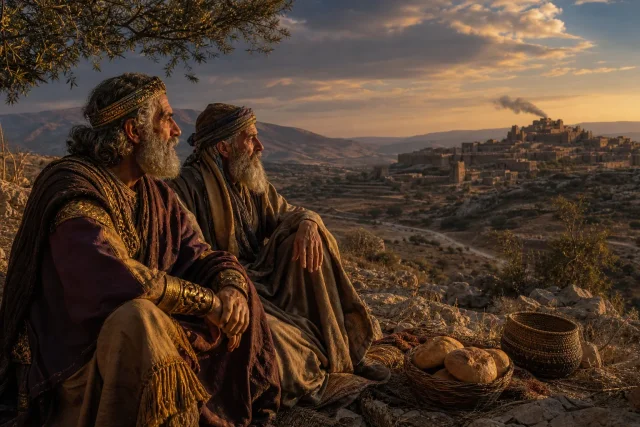
Another voice speaks: Proverbs. Wisdom literature keeps warning you that proximity to holy truth without fear of the Lord is a dangerous mismatch. “The fear of the Lord is the beginning of knowledge; fools despise wisdom and instruction” (Proverbs 1:7). That hits the Ark story hard. When Uzzah reaches out in 2 Samuel 6, modern readers often flinch. I get that. The scene is emotionally brutal. Oxen stumble, the cart jolts, dust kicks up in the sun, musicians freeze mid-beat, and a man drops dead beside the chest. Yet Proverbs gives you a category: holiness is not casual. Israel had already been given transport protocols. The bug was not in God’s character. The bug was in human presumption.
Consider also: Jesus reframes sacred space without deleting holiness. In the Gospels, He is greater than the temple, the embodied presence of God among His people. John writes, “And the Word became flesh and dwelt among us, and we have seen his glory, glory as of the only Son from the Father, full of grace and truth” (John 1:14). The verb behind “dwelt” carries tabernacle resonance. Time to upgrade your faith OS: the Ark was never the endpoint. It was part of the divine source code pointing ahead to Christ, where presence becomes personal. Yet grace does not flatten reverence. Jesus welcomes sinners, but He also cleanses the temple. Nearness and holiness still run together.
From a different angle: Paul treats believers as the new covenant dwelling place of God’s Spirit. “Do you not know that you are God’s temple and that God’s Spirit dwells in you?” (1 Corinthians 3:16). That means the Ark is not merely about ancient furniture; it is about the logic of divine indwelling. If God once marked His covenant presence above the mercy seat, and now by the Spirit He dwells in His people, then your body, your community, your church life, your ethics, your worship all become sacred interface zones. Paul’s counsel debugged my compartmentalized life. You cannot code one moral standard for Sunday and another for encrypted DMs, late-night browsing, or quiet resentment during a Google Meet call.
James adds one more sharp edge. “But be doers of the word, and not hearers only, deceiving yourselves” (James 1:22). Israel sometimes had the Ark physically near while their covenant fidelity was spiritually far. That is a chilling category. You can have access to sermons, podcasts, Logos Bible Software, group chats about theology, and still self-deceive. The Ark warns against religious cosplay. It calls for responsive obedience, not sacred aesthetics. God’s algorithm for life is not information only. It is truth received, honored, and embodied.
Wisdom Across Cultures
Early church voices read the Ark with a layered vision that can sharpen your own. Athanasius and others saw in it a pointer to incarnation logic: God chooses to dwell among people without becoming containable. Augustine kept pressing the difference between sign and thing signified. That matters. The Ark was real, historical, crafted in time and space. Yet it also signaled realities bigger than itself. If you confuse the sign with the source, you drift into superstition. If you strip away the sign as meaningless ritual tech, you miss how God tutors His people through material forms.
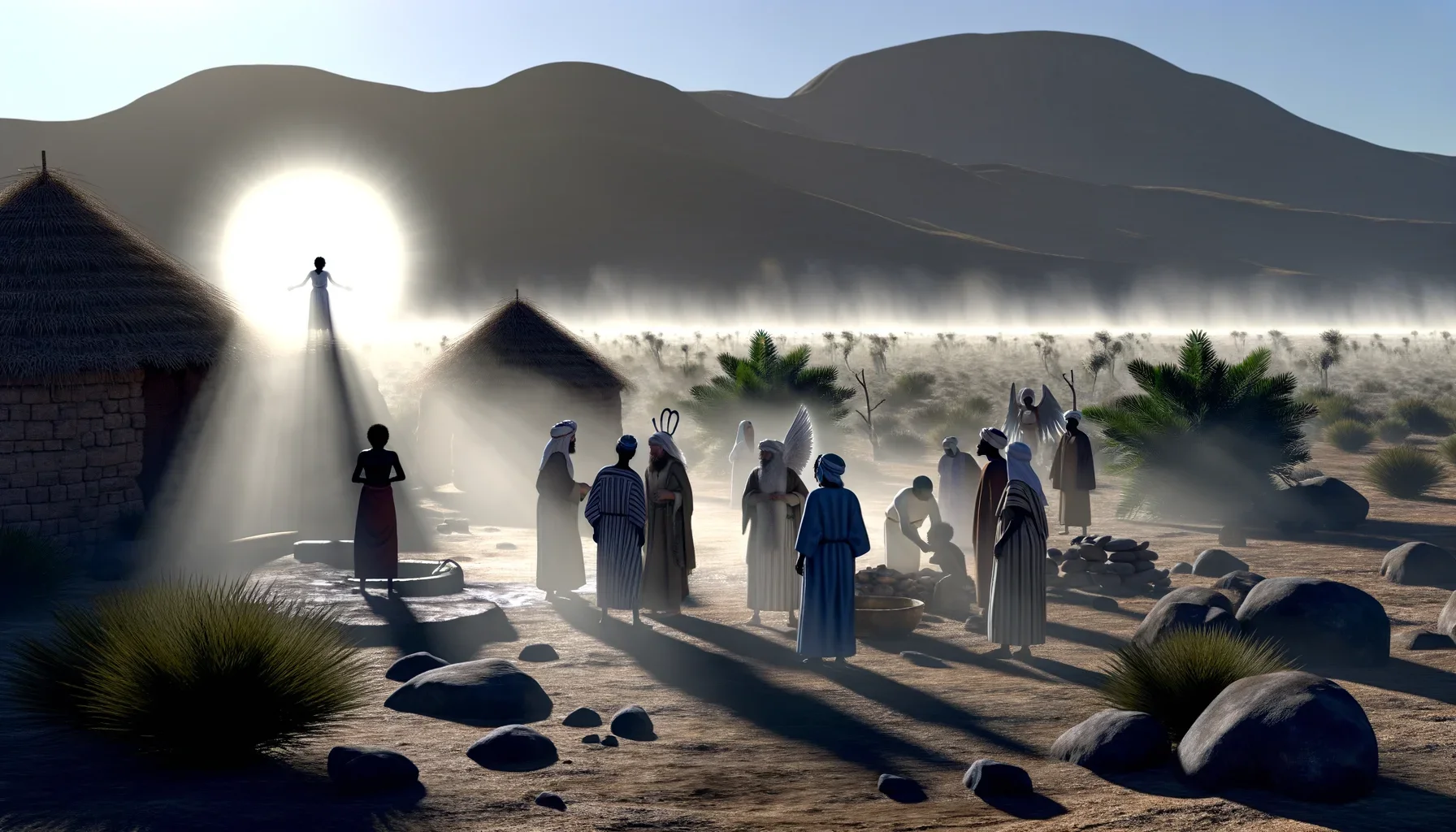
Church history also keeps reminding you that Christians across eras did not read the Ark as an excuse for anti-material spirituality. In Ethiopian Christianity, reverence surrounding sacred memory and divine presence stayed vivid in ways many hyper-digital Western believers have nearly deleted. I am not saying every historical claim tied to Ark traditions lands the same way academically. I am saying the global church often carries a stronger category for holiness than Silicon Valley culture does. We are fluent in convenience. They are often fluent in reverence.
Linguistic study adds another layer. The Hebrew term often rendered “mercy seat” refers to the cover of the Ark, yet its sacrificial role in Leviticus ties it to atonement. This is not a decorative lid. It is the site where blood is presented on the Day of Atonement. The Ark contains covenant testimony; above it is the place of propitiation. That pairing is stunning. Law inside. Mercy above. Think of a courtroom where the evidence is stacked in a polished cedar chamber, while the judge provides the very means of pardon. That tension runs straight into the gospel.
From a different angle: historical studies of ancient Near Eastern religion make the Ark stand out. Neighboring cultures also had sacred chests, processional objects, and throne imagery. Israel’s story shares surface-level architecture with the region, yet the differences are massive. There is no idol inside the Ark. No carved deity to manipulate. No image you can carry to force divine action. The invisible God enthrones Himself above the cherubim yet remains free. That is a theological firewall against pagan control systems. Israel’s God cannot be coded into a ritual exploit.
Modern global Christianity can still speak here. I have heard Korean prayer meetings press holiness with tears, Nigerian preaching frame God’s presence with joyful awe, and underground believers talk about Scripture with the seriousness of people who know access is costly. That hits different when your biggest inconvenience is a dead AirPods battery during Bible reading. The Ark can reset your scale. Sacred things are not content assets. They are covenant realities calling for humility, memory, and worship with your whole life.
The Wisdom Tapestry
Put the strands together and a strong pattern emerges. The Ark is a covenant chest, a throne-footstool image, a legal witness, and an atonement-centered meeting point. Those are not competing theories. They interlock. Think of it as a layered system architecture. If you isolate one layer, the app breaks. If you hold them together, the purpose comes into focus. God dwells with His people, governs them by His word, and makes mercy available without compromising holiness.
That integrated vision helps with difficult passages. Why did the Ark bring victory in one scene and disaster in another? Because divine presence is not a power-up you can spam. In 1 Samuel 4, Israel drags the Ark into battle as if sacred proximity guarantees success while their hearts remain corrupted. In 2 Samuel 6, David eventually brings the Ark up with rejoicing, but only after the transport process is corrected. Same Ark. Different posture. If/then logic helps here. If holy things are handled with presumption, then judgment exposes that arrogance. If holy things are received with reverence and obedience, then blessing flows in covenant alignment.
Consider also: the Ark’s contents matter. Hebrews 9 recalls the golden urn of manna, Aaron’s rod that budded, and the tablets of the covenant. Memory, priesthood, and law are all in play. Israel needed constant download reminders of who God was and who they were. You do too. Your phone keeps pushing notifications because attention leaks. The Ark was a sanctified memory core for a forgetful people. The divine source code of covenant identity had to remain central, not buried under tribal politics or personal preference.
Now bring in Christ. The Ark’s logic reaches fulfillment in Him. He is the meeting place of God and humanity. He embodies the law perfectly, provides the atoning sacrifice, and mediates the new covenant. Romans 3 uses language tied to propitiation that echoes mercy-seat categories. That does not make the Ark irrelevant. It makes it brighter. The chest in the wilderness was a signpost in gold and wood pointing toward a blood-bought reconciliation no artifact could complete on its own. Marvel fans might say the Ark was not the final form. It was the teaser trailer.
So what framework do you carry into real decisions? Ask three questions. First, what truth from God’s covenant word is at stake here? Second, where am I trying to manage God instead of submit to Him? Third, what would reverent obedience look like in public and private? That can apply to accepting a job with shady metrics, staying honest in a long-distance relationship, or resisting the late-night algorithm spiral that feeds lust, envy, or rage. Time to upgrade your faith OS: wisdom is not raw data. It is alignment with the holy presence of God through Christ.
Walking in Wisdom
Wisdom around the Ark becomes practical when you rebuild habits of reverence in a distracted age. Start with Scripture in a way that resists speed-scrolling. Put your phone on Focus mode for fifteen minutes. Read a passage aloud, especially one tied to God’s holiness or covenant presence. Sit with the tension instead of dodging it. If a text bothers you, that may be the exact place where your assumptions need debugging.
Another voice speaks: your physical environment matters more than you think. In Exodus, sacred space was arranged with care. You are not under tabernacle law, but you are still embodied. So make one real-world zone for prayer and Bible reading. A chair by the window before sunrise. A desk with your laptop closed, notifications off, and a paper Bible open. The rain tapping the glass, the hum of the heater, the smell of coffee, your shoulders slowly dropping out of stress posture. Reverence is not performance. It is trained attention.
Consider also: build a decision matrix around presence, not mere efficiency. Before you say yes to a promotion, a move, a dating relationship, or a side hustle, ask trusted believers to audit the decision with you. Not people who only hype your ambition. People who will ask about character, worship, truthfulness, and peace. I needed that in my own recovery from gaming addiction. Left to myself, I could rationalize anything if it felt optimized. Community interrupted my self-deception.
Practice confession fast, not delayed. The Ark confronts hidden sin because covenant life is not fake-clean. If you lied on a report, crossed boundaries in DMs, or fed bitterness after a tense Microsoft Teams meeting, bring it into the light early. James 5 logic still hits: confess, pray, repair. The longer sin stays cached, the more your spiritual system lags. Grace is real, but grace is not a cover for stealth mode rebellion.
End your day with a short wisdom prayer. Not polished. Honest. “Lord, keep me near without making me casual. Make me bold without making me arrogant. Let Your word stay central. Let mercy cover me in Christ. Train my hands to obey.” That is a practical first step tonight. The Ark invites you onto a path where holiness is not avoided and mercy is not cheapened. May God give you wisdom to carry His presence with reverence, joy, and a clean heart 🔥
Reflection Questions
Introspective: What within you reflects the truth about Ark of the Covenant, and where are you still trying to manage God as a useful feature instead of meeting Him as Lord?
Theological: How does the Ark’s pattern of law within and mercy above reshape your view of God’s holiness, atonement, and the presence of Christ?
Action: What concrete act of reverence will you practice this week to re-center your life on God’s covenant presence?
Continue Your Bible Study
Explore more lessons and deepen your understanding of scripture
View All Lessons Ask AI a Question