Hope and Healing for an Adultery Child

Adultery Child
Creation moment
At 6:12 a.m. on a gray Pacific morning, I stood above the cliffs at Mori Point with cold wind pushing through my hoodie and salt collecting on my lips. The ocean below kept throwing itself against black rock in repeating lines, white foam flashing under a weak strip of sunrise. A red-tailed hawk cut across the sky with zero wasted motion, while ice plant held to the edge of the trail in tiny geometric clusters, every bead carrying dew like polished glass. Your senses get overloaded in a scene like that. Sound. Motion. Scale. Precision. It feels less random than a bug-free deployment.
When you see mountain ridges stacked in blue layers, or a tide pool packed with miniature architecture, or a child tracing circles in wet sand before the next wave resets the canvas, something in you recognizes order and ache at the same time. Creation carries majesty, but it also carries fracture. You get beauty and brokenness in the same frame, almost like the world is running brilliant source code on damaged hardware. That tension matters when you bring a phrase as loaded as adultery child to Scripture. The phrase itself is harsh. It sounds like a label people use when they want to reduce a human being to the sin surrounding conception.
Let’s debug that spiritual issue right away. In the Bible, children are never morally guilty for the sexual sin of their parents. Historical settings did attach shame, inheritance problems, and social vulnerability to children born from illicit unions, but Scripture keeps pressing deeper than public stigma. The divine source code refuses to collapse a person into the circumstances of origin. Think of it like this app: culture often tags people with metadata they never chose, while God reads the full architecture of personhood.
That matters in a world of hidden DMs, encrypted affairs, paternity tests shipped in discreet packaging, and family implosions discovered through an iPhone notification during a Zoom meeting. You may be carrying pain as a spouse betrayed, a parent exposed, or a son or daughter caught in fallout. You may even hate the phrase adultery child because it feels dehumanizing. Fair. Scripture gives categories that are more precise and more humane than gossip. It names sin clearly. It also guards the dignity of the child. Time to upgrade your faith OS and read this with both truth and mercy active.
When Creation Speaks
That same morning at Mori Point, the clouds broke just enough for a blade of gold to hit the water, and the whole surface changed in seconds. Dark steel turned to hammered bronze. Pelicans skimmed low in formation, wings inches above the waves, while somewhere behind me a kid in a puffy yellow jacket yelled because he found a banana slug on the fence post. Nothing in that scene felt accidental. Vastness and intricacy were running side by side, ocean-scale power and tiny designed detail sharing one frame.
You catch something about God there. Not a full download, but a real signal. Psalm 19:1 says,
The heavens declare the glory of God, and the sky above proclaims his handiwork.The text does not say the sky saves you. It says creation broadcasts. It transmits. It pushes a message through every continent, every weather system, every sunrise over apartment towers and every moonlit field beyond city glow. The message is that reality is not self-originating. There is mind behind matter.
That matters when people start assigning identity through shame labels. Human systems flatten. God creates. A child conceived through adultery may enter a family network full of secrecy, rage, custody battles, and whispered side chats on WhatsApp. Yet the child still arrives bearing the Creator’s imprint. The body formed in secret is not a glitch. Psalm 139:13 says,
For you formed my inward parts; you knitted me together in my mother’s womb.That verse does not excuse adultery. It does something more radical. It separates the evil of the act from the worth of the person conceived.
I think about startup culture here. A founder can make catastrophic decisions and still employ engineers whose dignity is not erased by leadership failure. If/then logic helps: if adultery is sin, then Scripture names it as sin. If a child is conceived through that sin, then the child is still a creature of God, not a moral extension of the parents’ rebellion. Ezekiel 18:20 is blunt:
The soul who sins shall die. The son shall not suffer for the iniquity of the father, nor the father suffer for the iniquity of the son.That verse targets personal accountability. It does not deny consequences across generations. It denies inherited guilt.
Creation keeps pressing this point with quiet force. The hawk does not apologize for the storm that formed above it. The wildflower opening through cracked coastal soil is not guilty for the landslide that tore the hill months earlier. In a fallen world, life often emerges inside damage. That does not sanitize the damage. It does announce that God’s creative intent is larger than human betrayal. When creation speaks, you hear majesty, design, and a steady refusal to reduce a human life to scandal.
The earth proclaims:
The Original Commission
Scripture starts with creation, but it does not leave creation behind after Genesis 1. The whole Bible keeps returning to the theme, almost like a stable operating system running under every covenant, every kingdom, every exile, every promise. Psalm 24:1 says,
The earth is the Lord’s and the fullness thereof, the world and those who dwell therein.Ownership belongs to God. Human beings are not autonomous admins. You are stewards, image-bearers, delegated caretakers placed within a world that already belongs to Another.
That framework helps with the phrase adultery child. In the ancient Near East, family identity shaped inheritance, land rights, legitimacy, and social standing. Israel was not immune to those pressures. Deuteronomy 23:2 contains a difficult line about exclusion from the assembly tied to illegitimate birth in Israel’s covenant order. Scholars debate exact scope and translation, and the historical setting is complex. Yet even within those legal boundaries, later biblical revelation keeps pushing toward mercy, inclusion, and the personal dignity of those harmed by sexual sin and social stigma.
Job turns creation into courtroom testimony. God answers Job not with a spreadsheet of pain data but with a barrage of creation images: storehouses of snow, mountain goats giving birth, wild donkeys roaming free, stars set in courses. The point is not distraction. It is calibration. You are not at the center. God’s rule is wider than your crisis dashboard. That includes family crises triggered by adultery. Human betrayal feels total when it detonates a home, but it is not ultimate. The Creator still governs a world larger than the scandal.
Paul takes the creation theme and pushes it into redemption history. Romans 8:22 says,
For we know that the whole creation has been groaning together in the pains of childbirth until now.Childbirth imagery is not random here. Groaning is pain with future attached. Creation is not merely decaying; it is waiting. That means Christian theology never treats brokenness as final code. Sin corrupted the system, but God has not abandoned the project. He is moving history toward renewal.
Revelation closes the loop. Revelation 21:1 says,
Then I saw a new heaven and a new earth, for the first heaven and the first earth had passed away, and the sea was no more.New creation is not God rage-quitting material reality. It is restoration under his reign. That future reframes human labels. In Christ, identity is not permanently locked to ancestry, scandal, or social ranking. Think of it like this app: the world assigns you a broken username based on family chaos; the gospel issues a new credential grounded in union with Christ.
There is another angle here from linguistic and historical study. The Bible condemns adultery as covenant treachery, not merely private romance gone wrong. A child born from adultery enters a context of violated vows, fractured trust, and often contested belonging. Yet no biblical text teaches that such a child carries moral stain by conception itself. The theological pattern is sharper than internet hot takes: sin belongs to the sinner; image-bearing belongs to the child; redemption remains open to all who come to Christ. That is cleaner logic than gossip culture, and honestly, way more beautiful.
Creation groans:
Groaning with Creation
You do not have to romanticize the world to speak truthfully about it. Drive past wildfire burn scars in California where hillsides stand black against a weird orange sunset, and you feel the rupture. Scroll satellite maps of shrinking reservoirs. Read reports on coral bleaching or species collapse. Creation is not running in pristine mode. Romans 8 names the condition with brutal clarity: groaning. The system is damaged, and humans are deeply entangled in the damage.
The same realism applies to adultery and the children affected by it. Sin is never private in its blast radius. A late-night affair that starts through Slack messages between coworkers during remote sprint planning can end with two households fractured, teenagers rage-posting on Instagram, and a child asking why adults keep lying. Think of adultery as relational pollution. It contaminates trust, inheritance patterns, emotional safety, and even how a child imagines God’s faithfulness. Let’s debug this spiritual issue with zero sentimentality: sexual sin does not stay contained.
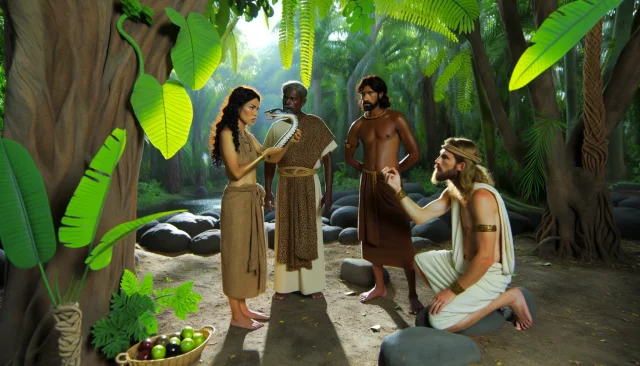
The Bible is honest about this. David’s adultery with Bathsheba and the arranged death of Uriah brought devastating consequences into the royal house. The child born in that union died, not as a statement that children are disposable, but as part of a severe covenant judgment on David’s sin. The story is painful and not easy to package into neat slogans. Yet even there, Scripture does not frame the child as morally blameworthy. The weight falls on David. Accountability stays attached to the sinner.
In modern life, children born from affairs can carry stigma that feels algorithmically unfair. Maybe a family tree on AncestryDNA blows open a secret after a holiday test kit reveal. Maybe a college student gets a text from a half-sibling found through 23andMe and realizes her entire origin story was edited. The emotional body language in those moments is real: hands shaking over a kitchen island, unread messages piling up, a mom staring at a dark MacBook screen because she cannot face another explanation. Creation groans, and so do families.
Your role in this cannot be passive. Churches can intensify the wound when they weaponize labels, protect image over truth, or treat children as living evidence exhibits of adult failure. That is spiritual malpractice. If the gospel means anything, it means you refuse to mirror the cruelty of scandal culture. You name sin clearly, protect the vulnerable, and reject inherited shame as a category for assigning worth. In a broken world, the church should not add toxins to the air. It should function as a clean room where grace and truth both stay online.
Listen to the land:
Tending the Garden
Environmental discipleship starts with stewardship, and the same stewardship logic carries into family ethics. You do not own the earth, and you do not own other people’s bodies, trust, or futures. Adultery violates covenant stewardship. Creation care trains your instincts against that violation because it teaches limits, fidelity, and responsibility. If you compost, reduce waste, and think carefully about energy use but treat marriage vows as optional software settings, your moral architecture is fragmented. God’s algorithm for life is integrated.
So what does faithful practice look like? Start with speech. Retire the phrase adultery child from casual use unless you are analyzing a text or legal-historical category with care. In everyday ministry, use language that guards dignity: child conceived through an affair, son, daughter, image-bearer, beloved person. Words are interface design. Bad labels create hostile environments. Good language does not blur sin; it keeps the child from being made collateral damage in your attempt to sound morally serious.
Move next to truth-telling. If adultery has happened, secrecy usually multiplies harm. That does not mean reckless disclosure on Facebook, vague “healing” reels on TikTok, or prayer requests loaded with coded gossip. It means wise confession, pastoral accountability, legal and financial honesty, and age-appropriate truth for children. Think of a corrupted database. If you keep patching over the breach without addressing root compromise, the system keeps failing. Repentance is not optics management. It is structural repair.
Community action matters too. Churches can build care teams for betrayed spouses, counseling funds for children navigating identity shock, and mentoring networks for single parents raising kids born into messy situations. A church with engineers, teachers, therapists, and lawyers already has serious bandwidth. Optimize that for mercy. Host a support group in a real room with fluorescent lights, Costco coffee, and boxes of tissues on metal folding chairs. That setup may not look cinematic, but grace often deploys through ordinary infrastructure.
Creation care also gives you practical analogies for discipleship. You plant trees whose shade you may never sit under. You restore soil slowly. You remove invasive species before they choke healthy growth. In relational terms, that can mean covenant counseling before crisis, digital boundaries with coworkers, no private Signal threads that drift into emotional intimacy, and shared passwords or transparency tools where trust has been broken. This is not legalism. It is wise system architecture after known vulnerabilities.
There is a gospel witness in that kind of care. When believers protect children from shame, support mothers and fathers in repentance, and refuse to reduce people to origin stories, the church becomes countercultural in the best way. Our social feeds run on exposure, outrage, and screenshot warfare. Christ forms a people who tell the truth without feeding on humiliation. Time to upgrade your faith OS: holiness is not image control; it is covenant faithfulness embodied in speech, systems, and sacrifice.
Creation participation starts here, not only at the level of carbon footprints but at the level of relational ecology. A healthy garden needs pruning, watering, patience, and protection from predators. A healthy church does too. If/then: if a child has been conceived through adultery, then the adults must carry the burden of repentance and repair. If Christ receives sinners and protects the vulnerable, then you do the same. That is kingdom maintenance with dirt under your nails and mercy in your mouth 🔥
The earth proclaims:
All Things New
Christian hope is not denial. It is not a glossy filter dropped over wreckage. It is resurrection logic applied to the whole cosmos and to the most tangled human stories. Revelation’s vision of a new heaven and new earth means God is not abandoning material existence or the bodies and histories carried within it. He is renewing. Restoring. Setting right what sin disordered. That includes the wounds wrapped around betrayal, legitimacy, identity, and belonging.
Think of a child conceived through adultery who has spent years feeling tagged by other people’s sin. In Christ, that person is not trapped in a permanent side quest called shame. The gospel does not erase biography, but it rewrites destiny. 2 Corinthians 5:17 says,
Therefore, if anyone is in Christ, he is a new creation. The old has passed away; behold, the new has come.New creation language is not sentimental branding. It is ontological renewal. The deepest identifier is no longer scandal but union with Christ.
This hope also reaches those who committed adultery and now carry real guilt. Repentance is not pretending the damage was small. It is bringing the full wreckage into the mercy of God and submitting to costly repair. Some consequences remain in time. Co-parenting complexities remain. Trust may take years to rebuild. Court documents, child support portals, awkward school events, and split holiday calendars may still define daily life. Yet grace can operate inside that complexity without minimizing justice.
Creation’s future trains your imagination here. A burned forest can hold green shoots after rain. A polluted shoreline can be restored over time through patient labor. You are not worshiping the process. You are witnessing renewal under wise care. In the same way, families shattered by adultery may never return to the exact prior state, but God is not limited to restoration as rewind. He can produce faithfulness, humility, truth, and tenderness that did not exist before. That is not cheap. It is redemptive.
Creation participation means you join the coming renewal now. You refuse dehumanizing labels. You protect children from inherited shame. You confess sexual sin without euphemism. You build communities where covenant faithfulness is practiced, not merely posted. Then your life starts syncing with the future God has promised. Wonder becomes prayer: Lord, make us people who keep faith, tell truth, heal damage, and echo the praise already rising from sea, stone, sparrow, and storm. May the earth’s long groan become, in Christ, a chorus of renewal.
Reflection Questions
Contemplative: Rest in this tension: how have you or others been reduced to a label rooted in someone else’s sin, and where do you sense Christ pushing back against that false identity?
Action: What one concrete step will you take this week to protect covenant faithfulness or to guard the dignity of a child affected by adultery, whether through a conversation, a boundary, financial support, or pastoral care?
Theological: What implications does new creation hope reshape in your view of adultery, accountability, inherited shame, and the full dignity of a child conceived through an affair?
Continue Your Bible Study
Explore more lessons and deepen your understanding of scripture
View All Lessons Ask AI a Question