Daniel and the Satraps Through Faith and Courage

When Satraps Turn Prayer Into a Crime
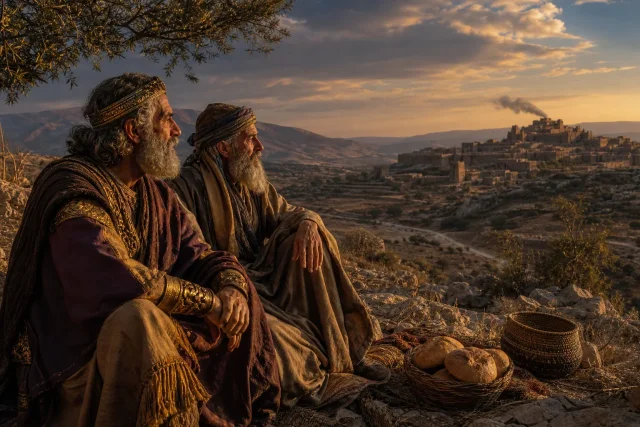
Some wounds do not come from open enemies. They come from polished officials, signed papers, and smiling men who already have a trap in motion. Daniel 6 begins in that kind of pain. Picture yourself walking through ancient Babylon under Persian rule, hearing sandals slap against stone corridors, seeing wax seals pressed into legal tablets, watching powerful satraps bow with perfect posture while jealousy burns under the surface. This is not a cartoon villain story. This is the ache of being targeted because faithfulness exposes corruption.
The Sacred Right to Cry
You need permission to say that betrayal hurts. You need room to admit that when people manipulate systems against the righteous, the soul groans. A lot of religious talk tries to rush past grief, but Daniel 6 refuses that shortcut. The chapter opens with promotion, yet behind the promotion sits resentment, and resentment is already sharpening its knife.
Daniel 6:3 says, “Then this Daniel became distinguished above all the other high officials and satraps, because an excellent spirit was in him. And the king planned to set him over the whole kingdom.” That line sounds triumphant until you feel the tension in the room. A man marked by integrity is about to become the target of men marked by envy. History comes alive when you realize that palace politics in the ancient world are not far from office politics, school politics, even family politics now.
The next verses pull no punches. Daniel 6:4 says, “Then the high officials and the satraps sought to find a ground for complaint against Daniel with regard to the kingdom, but they could find no ground for complaint or any fault, because he was faithful, and no error or fault was found in him.” Imagine that scene with cinematic detail: records spread across cedar tables, lamplight flickering on clay documents, officials leaning in, frustrated, searching for one crooked transaction, one shady message, one hidden compromise. They find nothing.
And still they do not repent. Daniel 6:5 says, “Then these men said, ‘We shall not find any ground for complaint against this Daniel unless we find it in connection with the law of his God.’” There is the lament. They cannot beat his character, so they weaponize his devotion. You may know that pain. Maybe not lions, but a supervisor who punishes honesty, a friend group that mocks conviction, a relationship conflict where your deepest loyalty becomes the pressure point.
Scripture gives you language for that ache. The psalms cry out. Jesus weeps at Lazarus’s tomb. Jeremiah laments over a ruined people. In college, when my faith nearly collapsed, I thought strong believers never admitted confusion or sorrow. Then I kept reading the Bible and saw mourners everywhere, not as spiritual failures, but as witnesses. The stones cry out, and sometimes the faithful do too.
Lament is not unbelief. Lament is what faith sounds like when it is bruised. Daniel does not write a speech in this chapter, yet his whole life becomes one. When power twists law into a weapon, when godliness brings danger instead of applause, when prayer itself becomes the evidence used against you, heaven does not command you to fake a smile. You are allowed to grieve that kind of world.
Yet even here:
The Language of Loss
Biblical lament has shape. It is not random despair thrown into the air. It names the wound, addresses God directly, remembers who He is, asks boldly, and clings even while trembling. Daniel 6 gives you that pattern in narrative form. Daniel does not compose a lament psalm on the page, but his actions carry the grammar of lament with remarkable clarity.
First, lament tells the truth about the threat. The satraps and high officials manipulate the king with flattery. Daniel 6:7-9 records their pitch: “All the high officials of the kingdom, the prefects and the satraps, the counselors and the governors are agreed that the king should establish an ordinance and enforce an injunction, that whoever makes petition to any god or man for thirty days, except to you, O king, shall be cast into the den of lions. Now, O king, establish the injunction and sign the document, so that it cannot be changed, according to the law of the Medes and the Persians, which cannot be revoked. Therefore King Darius signed the document and injunction.”
Notice the lie tucked inside the policy. All the officials are not agreed. Daniel is not part of this plot. Corrupt power often speaks with inflated certainty. You hear it now in corporate boardrooms, on social media feeds, in neighborhood disputes where someone says, “Everybody knows,” when everybody does not know at all. Lament begins by refusing false narratives.
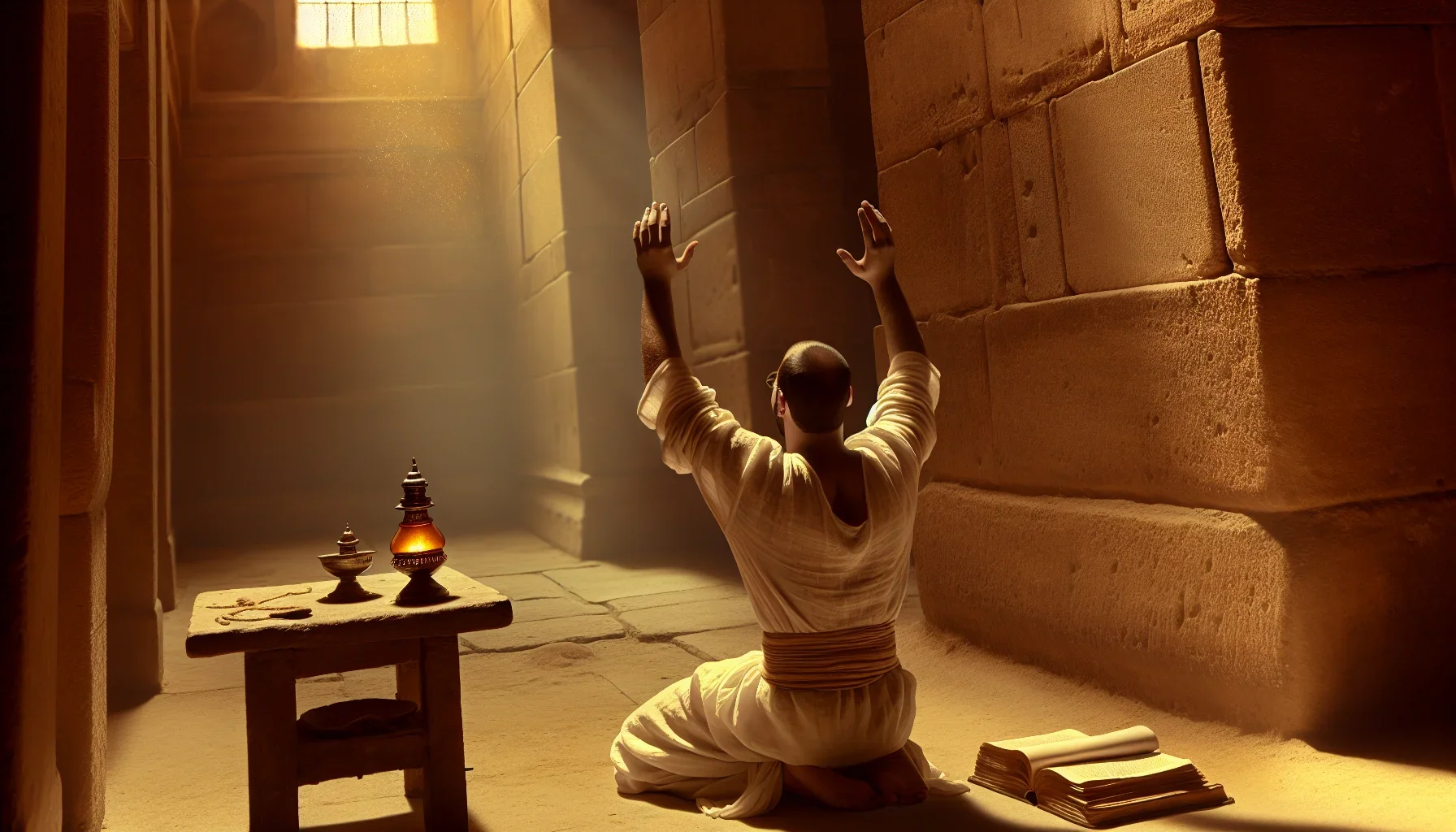
Second, lament turns toward God instead of away from Him. Daniel 6:10 says, “When Daniel knew that the document had been signed, he went to his house where he had windows in his upper chamber open toward Jerusalem. He got down on his knees three times a day and prayed and gave thanks before his God, as he had done previously.” Picture yourself walking into that upstairs room. Late light falls through open latticework. Dust hangs in the air. Jerusalem is far away, the temple in ruins, exile still a living wound, and Daniel kneels anyway.
That is practical lament. He does not deny danger. He does not edit his practice to please predators. He places the crisis in God’s presence. If you are stuck in traffic on I-35 with your jaw tight from financial stress, if you are standing in a grocery checkout line calculating whether eggs, milk, and medicine can all fit in the budget, if your phone lights up with another painful text from a fractured relationship, lament may sound as simple as this: Lord, this is real, this hurts, I am still turning toward You.
The psalms often move in that same rhythm. Complaint, remembrance, petition, trust. Prophets cry over cities. Saints lay out grief without polish. Prayer is less about changing God’s mind and more about aligning your heart with His reality, especially when the ground under you shakes. Daniel’s open window becomes a witness that pain need not silence devotion. It can become the very place where honest speech rises to heaven.
Something shifts:
Meeting God in the Darkness
Many people can imagine God waiting on the far side of suffering, arms crossed, saying, “Come back when you are stronger.” Daniel 6 tears that picture apart. God meets Daniel in the crisis itself. Not before the decree, not only after the rescue, but in the dark middle where imperial law, hungry lions, and a sleepless king all collide. The presence of God is not absent just because the night is long.
The satraps catch Daniel praying, and the machinery moves fast. They drag the accusation before Darius, and the king realizes too late that he has been played. I love that detail because it adds texture to the story. Ancient rulers were powerful, yet even they could become trapped by the systems they used. The archaeological evidence tells us Persian administration prized fixed decrees and layered bureaucracy. Daniel 6 feels historically grounded because this kind of legal rigidity fits the world of imperial governance.
Then comes the descent. Daniel 6:16 says, “Then the king commanded, and Daniel was brought and cast into the den of lions. The king declared to Daniel, ‘May your God, whom you serve continually, deliver you!’” Picture the scene with torchlight shaking across rough stone, soldiers gripping Daniel’s arms, the smell of dust and animals rising from below, the heavy scrape of the stone drawn over the opening. Faith does not spare Daniel from being thrown in. Faith carries him into a place where only God can keep him.
Darius spends the night fasting and restless. Daniel spends the night where death should have ruled. At dawn the king runs to the den, and the text becomes electric. Daniel 6:22 says, “My God sent his angel and shut the lions’ mouths, and they have not harmed me, because I was found blameless before him; and also before you, O king, I have done no harm.” There it is. Divine presence in the pit. God does not merely observe. He sends His angel.
That matters for you. When health concerns drag on after another scan, when a parent sits in a hospital parking garage gripping a paper cup of cold coffee, when a teenager in the neighborhood keeps checking the porch because eviction notices have made home feel fragile, the promise is not that pain is imaginary. The promise is that God is near in it. Isaiah speaks of the suffering servant bearing griefs. Jesus enters tears, rejection, and death itself. The Lord is not allergic to dark places.
I think about a museum case I once stared at for nearly twenty minutes, filled with small Near Eastern seal impressions, the kind officials used to mark authority. Tiny objects, huge consequences. Daniel faced that world of signatures and seals. Yet above every human seal stands the living God. History comes alive when you realize the empire’s document could not overrule heaven’s witness. Daniel is not alone underground. Neither are you when your own night feels sealed shut.
Watch what happens:
The Mysterious Turn
The turn from lament to trust is rarely neat. It is not a motivational speech with dramatic music swelling in the background. In Scripture, the pivot often happens while circumstances still look dangerous. Daniel’s turn takes place before dawn breaks over Babylon, before the stone is rolled back, before the satraps are exposed. The mysterious change is not first in the den. It begins upstairs at the open window.
Daniel 6:10 is the hinge of the whole chapter because it reveals where Daniel’s center is anchored. “He got down on his knees three times a day and prayed and gave thanks before his God, as he had done previously.” That final phrase matters deeply: as he had done previously. His trust in crisis is not improvised. It is practiced. He has built habits of communion long before the emergency. When pressure comes, he does not invent a new self. His true self is revealed.
You see that same pattern in the psalms where sorrow suddenly turns toward trust, not because all evidence has changed, but because the singer remembers God’s character. Job never gets a tidy explanation for every wound, yet his vision of God alters the ground beneath his feet. Years ago, when I was twenty and close to walking away from faith, the turn for me did not arrive as one big cinematic answer. It came in fragments: a professor who took my questions seriously, an old gospel in my dorm room, the stubborn historical witness of the resurrection that refused to leave me alone.
That is often how God works. Something shifts internally before the world outside catches up. A woman still dealing with medical debt chooses to pray on her commute instead of spiraling in panic. A dad sitting in stalled traffic after a brutal argument whispers truth instead of rehearsing revenge. A teenager dealing with group chat humiliation leaves the phone face down and kneels by the bed. The circumstances have not changed yet, but the heart has turned toward the faithful God.
The satraps think they control the story because they control the paperwork. Daniel knows better because prayer has trained his sight. The gospel deepens this even more. Jesus prays in Gethsemane before the cross, not as escape, but as surrender. Through personal relationship with Jesus, prayer becomes participation in His trust, His obedience, His nearness to the Father. That does not erase lament. It gives lament somewhere to stand while the night is still dark.
Yet even here:
Songs from the Ruins
Praise after lament does not sound shallow. It carries dust on its clothes. It remembers the den. Daniel comes out alive, but the story does not invite cheap celebration. It invites reverent awe. Daniel 6:23 says, “Then the king was exceedingly glad, and commanded that Daniel be taken up out of the den. So Daniel was taken up out of the den, and no kind of harm was found on him, because he had trusted in his God.” That is praise with scars in the memory.
Darius then speaks words that ripple beyond the palace. Daniel 6:26-27 says, “I make a decree, that in all my royal dominion people are to tremble and fear before the God of Daniel, for he is the living God, enduring forever; his kingdom shall never be destroyed, and his dominion shall be to the end. He delivers and rescues; he works signs and wonders in heaven and on earth, he who has saved Daniel from the power of the lions.” Imagine the irony. The empire that tried to criminalize prayer ends up broadcasting praise.
That is how songs from the ruins often rise. Not as denial, but as testimony. You praise God differently after the den than before it. Before the den, you may sing about deliverance as doctrine. After the den, you sing it as witness. The stones cry out, and so do people who have sat in waiting rooms, opened rejection emails, checked empty bank accounts, buried loved ones, and still found Christ faithful in the night.
I think of a former student who used to stop by my classroom after school, backpack half-zipped, eyes tired, home life chaotic. Months later he told me he had started praying on the walk back from basketball practice, not because life got easy, but because he needed somewhere to put the anger and fear. That is a small modern echo of Daniel’s open window. Praise began there, not in perfection, but in repeated turning toward God.
The biblical story arc lifts this even higher. Daniel in the den points beyond itself to Jesus in the tomb and the vindication that follows. Corrupt leaders conspire, false accusations stick, a sealed place of death closes in, and then God overturns the verdict. Through Jesus, your praise is not thin optimism. It is resurrection-shaped hope. You can speak joy and sorrow in the same breath. You can bless the Lord with tears still on your face.
So when satraps still rise in modern dress, whether in offices, institutions, neighborhoods, or screens glowing in your hand at midnight, you do not have to pretend their schemes are small. Name them. Grieve them. Pray with the window open. Trust the living God who meets His people in dark places. And when praise comes, let it come honest, weathered, and full of witness.
Reflection Questions
Introspective: Where in your life are you feeling pressured to hide your devotion to God because someone’s envy, control, or approval has made faith feel costly?
Contemplative: Return throughout your day to Daniel’s open window and ask yourself what it would mean, in the middle of groceries, traffic, conflict, or medical worry, to keep turning your face toward God.
Theological: What aspect of God’s character in Daniel 6 reshapes your view of prayer most deeply: His justice, His nearness in danger, His sovereignty over rulers, or His power to vindicate the faithful?
Continue Your Bible Study
Explore more lessons and deepen your understanding of scripture
View All Lessons Ask AI a Question