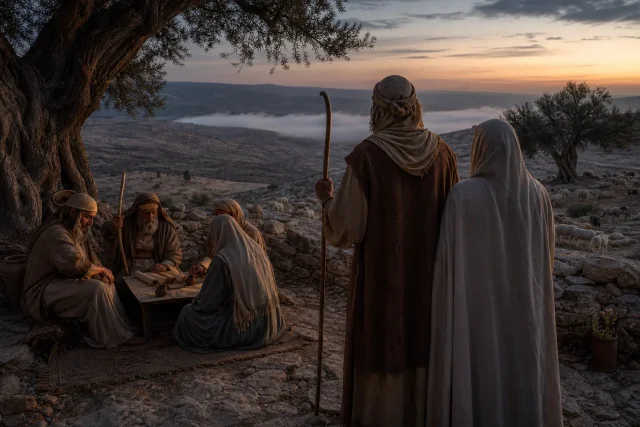
Surrender Through Biblical Meals and Jesus Teachings

Thy Will Be Done: Dining with Divine Purpose
Picture yourself at a feast. The table is laden with an array of dishes, the aroma of freshly baked bread mingling with the scent of roasted herbs. Around the table, the clatter of cutlery and the murmur of voices create a symphony of human interaction. This scene is not just about food; it is a dance of tradition, a moment of communal sharing that echoes through history. But in today's world, meals have often become fast, forgettable, and functional—a mere pit stop in our hurried lives. The sacred nature of dining has been overshadowed by convenience. The world today views meals through the lens of efficiency, where fast food chains reign supreme and dining is often solitary, disconnected from its ancient roots of community and ritual. Success is measured by how quickly we can consume, how little we can spend, and how we can multitask even while eating.
Imagine the scene at a modern fast-food restaurant. The drive-thru line snakes around the building, with cars idling in anticipation. Inside, individuals sit alone, eyes glued to screens, fingers tapping on smartphones, barely acknowledging the meal—or each other. Meals, once a time for reflection and connection, have become an exercise in speed and convenience. In this fast-paced world, the communal act of breaking bread has been replaced by solitary consumption. The deeper significance of sharing a meal with others—of surrendering time and attention—has been lost amidst the clamor of efficiency and productivity.
But the kingdom! Jesus invites us to a different kind of table, where surrender to God’s will is woven into the very act of breaking bread together. Let me take you back 2000 years to the dusty roads of Galilee, where Jesus and His disciples gathered for meals that were anything but ordinary.
The Divine Disruption
Picture yourself walking through ancient Palestine, following in the footsteps of Jesus. His meals were acts of radical hospitality, where the mundane act of eating became a profound declaration of God's kingdom. At the Last Supper, Jesus took bread, gave thanks, broke it, and said, "This is my body given for you; do this in remembrance of me" (Luke 22:19). It was a moment pregnant with meaning, a call to remember not just the act of eating, but the act of surrendering to God's will—a will that would soon lead Him to the cross.
The feeding of the 5,000 was another profound example of divine disruption. Imagine the scene on a grassy hillside, thousands gathered, hungry and expectant. With just five loaves and two fish, Jesus fed them all, demonstrating that surrendering to divine provision defies the logic of scarcity that the world knows so well. The archaeological evidence tells us that such gatherings were not just about physical nourishment; they were about the abundance of God's kingdom breaking into the world.
Then, there's the moment on the road to Emmaus, where Jesus, unrecognized by His companions, walked alongside them, discussing scripture. As evening fell and the sun dipped below the horizon, they invited Him to stay, to share a meal. It was in the breaking of the bread that their eyes were opened, and they recognized Him (Luke 24:30-31). Here, in this simple act, the veil between the seen and unseen was lifted. History comes alive when we realize that every meal with Jesus was an invitation to taste and see the goodness of the Lord.
Everything changes when we recognize the table not as a place of consumption, but as a sacred space where heaven meets earth. The practice of sharing a meal in ancient cultures—where everyone had a place and every guest was considered divine—embodies the kingdom's reversal of worldly hierarchies. It is a radical subversion where the last are first, and abundance springs from apparent lack.
The Beautiful Scandal
In a world that celebrates self-sufficiency and independence, the gospel's call to surrender through shared meals is downright scandalous. Imagine the audacity of claiming that true satisfaction doesn’t come from hoarding or speed, but from slowing down, opening our tables, and making room for the other. The kingdom is offensive to a culture that thrives on individualism and self-promotion.
The cross itself, the ultimate act of surrender, is foolishness to those who are perishing. It’s the paradox of power made perfect in weakness, a scandal to the worldly mind. Just as the cross subverts the notion of power, so too does the table subvert the notion of individual achievement. By breaking bread together, we acknowledge our need for God and for each other, a counter-cultural stance in an age that prizes autonomy.
Consider the communal table as a microcosm of the gospel's offense. In a society that prioritizes exclusivity and status, the open invitation of Jesus's table, where tax collectors and sinners find a place, challenges the very foundations of social stratification. The beauty of the scandal is that it calls us to a different kind of success, one measured not by personal gain, but by collective blessing.
The revolution looks like a meal shared, where the seemingly foolish act of pausing to eat with others becomes an act of trust in God’s provision. The stones cry out that in surrendering our time and resources, we find true abundance.
Subversive Saints
Throughout history, there have been those who have embraced the kingdom's radical call, living out the scandal of the shared table. Take, for instance, the early Christians in Acts of the Apostles, who "broke bread in their homes and ate together with glad and sincere hearts" (Acts 2:46). They embodied a community that defied cultural norms by prioritizing shared life over individual ambition.
Modern radicals continue this tradition. Think of community kitchens where volunteers serve meals to those in need, creating spaces where barriers dissolve and unity prevails. These acts of radical hospitality are echoes of Jesus's own practice, where surrendering to God's will means embracing others in love.
Even ordinary subversives, like your neighbor who hosts a weekly dinner for those on the fringes, live out this kingdom call. They remind us that the kingdom is not just for the select few, but for anyone willing to open their home and heart. Let me introduce you to Sarah, a single mother in your neighborhood who, despite financial stress, invites people over for Sunday dinners, believing that in the sharing, there is divine provision.
These saints remind us that surrendering to God's will involves seeing every meal as a chance to live out the Lord's Prayer: Thy kingdom come, Thy will be done, on earth as it is in heaven.
Joining the Revolution
So, how do you join this revolution of the table? Start by redefining success not as accumulation but as shared abundance. What would happen if you saw your dining room as a mission field, where every meal is an opportunity to invite someone into community?
Be intentional with your invitations. Who will you welcome to your table this week, not for what they bring, but for who they are? Picture yourself as the host of a simple gathering, where laughter and stories replace screens and distractions. It’s in these moments that God’s will is done, not in grand gestures but in the quiet act of breaking bread together.
And let’s not forget the power of small groups or community gatherings in our churches. How might they embody the truth of shared meals and surrendered lives? Imagine your small group planning a meal where everyone contributes what they can—time, resources, or simply company—and watch as God multiplies your offering.
Join the resistance by opening your heart and home. Embrace the beautiful scandal of the kingdom, where surrendering your table can change the world. This is the call of the revolution: to live Thy will be done through the simple, sacred act of sharing a meal.
Reflection Questions
- Prophetic: What empire patterns of self-sufficiency and independence need subverting in your dining practices?
- Action: Who will you invite to your table this week to experience the abundant life of God's kingdom?
- Relational: How could your small group embody the truth of surrendered and communal meals together?
Continue Your Bible Study
Explore more lessons and deepen your understanding of scripture
View All Lessons Ask AI a Question