Ruth's Bold Faith and Devotion Amidst Uncertainty

Ruth's Bold Faith Amidst Uncertainty
The Sacred Right to Cry
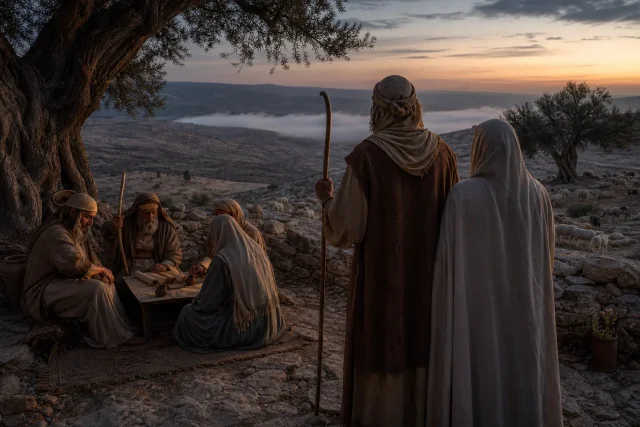
Picture yourself walking through ancient Moab, a land marked by dry winds and rugged terrain. Here, we meet Naomi, a woman whose life was once full. She held a husband and two sons close, yet now stands empty-handed, a widow in a foreign land. The quiet streets echo her loss, each stone a witness to her grief. Reality hits hard, and in the depths of her sorrow, any semblance of hope seems miles away, like a mirage wavering in the hot desert air.
In modern times, it might be like facing an unexpected job loss, staring at stacks of unpaid bills, or navigating the fallout of a fractured relationship. Our culture often pushes us to move swiftly past pain, to greet sadness with forced smiles. Yet, the Bible doesn't shy away from lament. Just as Naomi grieved, so too are we given permission to weep.
The Psalms of lament, Jesus weeping at Lazarus's tomb, and the cries of biblical mourners provide a tapestry of raw emotion, validating our own heartache. In my own life, I remember the crisis of faith at twenty, feeling lost amidst the ancient ruins of an archaeological dig, questioning everything I believed. I discovered then that the sacred right to cry was not a sign of faithlessness but a testament to my humanity.
We often feel the pressure to suppress our sorrow, to wrap grief in a neat package of platitudes and move on. But in the story of Ruth and Naomi, and throughout Scripture, we see a different narrative. Lament is not a detour on the faith journey; it is the road itself. When we acknowledge this, we start to understand that the stones cry out with us, bearing witness to our honest grief.
The Language of Loss
Imagine standing on the hills of Bethlehem, the wind brushing through golden fields of barley. Here, Ruth, a Moabite woman, makes a choice that defies logic. She clings to Naomi with a loyalty that transcends culture and circumstance. "Where you go, I will go," she declares, her words echoing the structure of biblical lament—naming the pain, yet clinging to something beyond it.
The language of loss is woven throughout Scripture. Look at the lament psalms: they begin with a cry, a desperate plea. The psalmists name their pain, whether it’s David hiding from his enemies or Jeremiah watching Jerusalem's downfall. Lament is structured, intentional, and deeply personal. It's a language we must learn to speak, not just with our mouths, but with our hearts.
In a practical sense, think of how you might feel stuck in traffic, late to an important meeting, with the car radio droning on about global crises. It's in these moments of helplessness that we can practice the language of lament. Name the loss: "I feel overwhelmed by the demands of life." Bring it before God, much like Ruth did when she left everything familiar, trusting not in the certainty of outcomes, but in the faithfulness of God.
Ruth’s lament was not only a response to her immediate situation but also an acknowledgment of the uncertainty of her future. When faced with the unknown, she didn't shy away from expressing her fears and doubts. And neither should we. To lament is to stand in the gap between what is and what should be, to voice the inexpressible, and to lay it bare before the Creator who hears every cry.
Meeting God in the Darkness
The night sky over Bethlehem would have been vast and silent, a canopy of stars witnessed by generations past. Under this sky, Ruth and Naomi journeyed, facing the uncertainty of the road ahead. It's in this darkness that they encountered God, not in a blaze of light, but in the subtle movements of providence—a field to glean, a kinsman-redeemer in Boaz.
God's presence is most profound in our darkest moments, meeting us not with grand gestures, but with whispers of love and assurances of His nearness. In my work with inner-city youth, I have seen this time and again. A young person struggling with the weight of poverty or violence often finds hope not in overnight solutions, but in the steady presence of mentors who walk alongside them. The divine tears of the suffering servant remind us that God is not distant, but intimately acquainted with our grief.
Consider the times when life feels like a string of grey skies and rain-soaked mornings. The relentless stress of financial burdens or health concerns weighs heavy like a shroud. Yet, even in these moments, we find God not only waiting at the end of the trial but right there with us in the midst of it. To meet God in the darkness is to recognize that He weeps with us, offering not just answers, but His presence.
Jesus, the ultimate suffering servant, knew the depths of human sorrow. He met people in their brokenness, offering compassion and healing. Just as Ruth found favor in Boaz's eyes, we find God's favor in our distress. In the quiet moments of our deepest lament, we are never alone. God’s presence transforms our perspective, turning despair into a fertile ground for faith to grow.
The Mysterious Turn
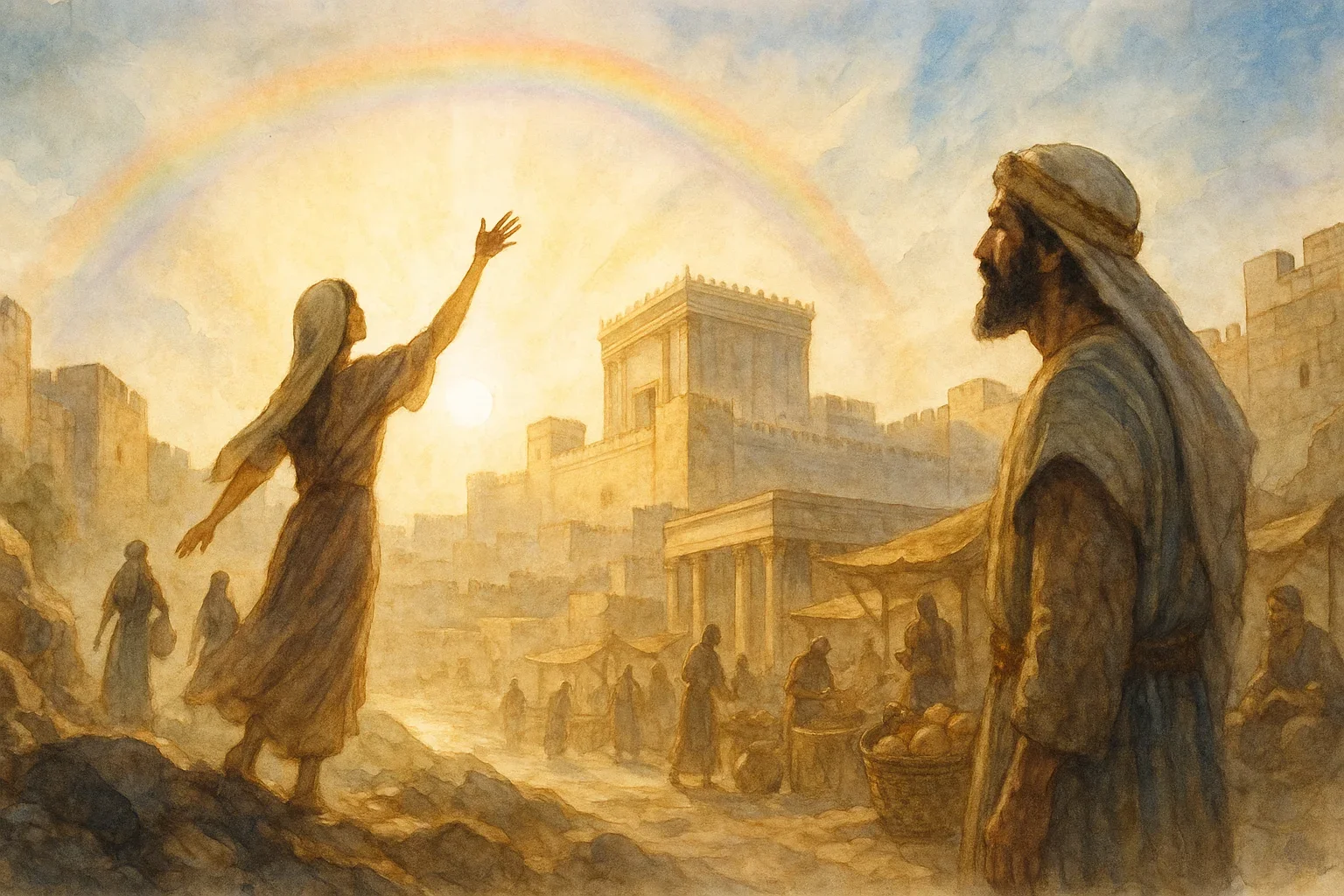
Watch what happens in the story of Ruth as the narrative pivots from lament to something unexpected. In the same fields where Ruth gleaned, a mysterious turn occurs. It doesn't happen with fanfare or instant resolution but through incremental steps of faith and providence. Ruth's story teaches us that transformation often comes quietly, like the first light of dawn breaking over the horizon.
In the Psalms, this turn is a recurring theme. The psalmist cries out in anguish, but then, almost imperceptibly, the tone shifts. Psalm 13, for instance, begins with despair but ends with trust: "But I trust in your unfailing love; my heart rejoices in your salvation." This pivot point is mysterious, a divine alchemy of grace that turns our mourning into a song of hope.
In my life, I recall a time when faith seemed fragile, hanging by a thread during a period of academic overwhelm in college. It was through small affirmations—a professor's encouragement, a friend's timely support—that I experienced this mysterious turn. The change didn't negate the struggle but infused it with purpose and resilience.
Ruth's journey from Moab to Bethlehem is a testament to this slow, transformative work of God. Faith doesn’t erase our questions or magically resolve our doubts; it invites us to trust in the midst of them. The mysterious turn from lament to trust is not about understanding the process but embracing the promise that God is at work, even when we cannot see it.
Songs from the Ruins
Something shifts in the heart of worship when we sing from the ruins. Ruth’s story culminates in a marriage that seemed impossible, a lineage that leads to King David, and ultimately, to Jesus. In the same way, our post-lament praise is richer, deeper, threaded with the scars of our journey yet resounding with hope.
Praise after lament is not a return to naivety but an acknowledgment of grace amidst the ruins. It’s like finding an unexpected bloom in a desert landscape—a bold declaration that life persists. In the aftermath of personal lament, I've witnessed this transformation in the young lives I mentor. Their stories of overcoming adversity become songs of resilience and faith, shaped by the trials they have endured.
Consider the everyday moments where praise emerges from pain—a single mother juggling jobs to provide for her children, a couple rebuilding trust after a betrayal, an individual finding peace in the midst of chronic illness. These songs are not sung in ignorance of the past but in defiance of despair.
When Ruth held her son Obed, she likely saw more than a baby; she saw the faithfulness of a God who rewrote her story in bold, unexpected ways. Our praise is similarly colored by the experiences that have shaped us, each note a testament to God's unwavering love. Praise after lament is not a happy ending but a sacred beginning, a new chapter where joy and sorrow coexist, and hope rises from the ashes.
Reflection Questions
Introspective: Where in your life reflects the truth about Ruth's Bold Faith Amidst Uncertainty?
Contemplative: Sit with this question: How does Ruth's Bold Faith Amidst Uncertainty challenge your current perspective?
Theological: What aspect of God's character reshapes your understanding of Ruth's Bold Faith Amidst Uncertainty?
Continue Your Bible Study
Explore more lessons and deepen your understanding of scripture
View All Lessons Ask AI a Question