Who Wrote Ezra and Why It Still Matters

Who Wrote the Book of Ezra
Creation moment
I was on a ridge above the Pacific near Half Moon Bay before sunrise, hoodie zipped against the cold, phone flashlight off so my eyes could adjust. Fog moved in slow layers over the water, and the bluff grass clicked in the wind. Pelicans cut across the gray horizon in a clean line, precise as drones running a mapped route. You stand there and feel small fast. Not erased. Just correctly scaled.
That kind of moment hits your internal interface hard. The ocean keeps rolling whether your Slack notifications are quiet or your inbox is melting down. The cliffs hold their line. The sky shifts from steel blue to orange in a gradient no monitor can fully render. Your brain starts asking source-code questions. Who authored order this dense, this layered, this durable?
Then your attention drops from vastness to detail. Salt beads on a dark rock pool. Tiny green anemones flex with the tide. A crab vanishes under a ledge with ridiculous speed, better pathfinding than half the NPCs in modern games. Scale flips from massive to microscopic, and both levels carry the same signature: coherence. The system is not random noise. It feels authored.
That instinct matters when you ask who wrote the Book of Ezra. At first, it can seem disconnected. One question stares at waves and stars. The other stares at parchment, imperial records, and shifting verb forms. Think of it like this app: both questions deal with authorship, reliability, and transmission. If creation hints that reality is not a glitchy accident, then Scripture invites you to ask whether its historical books were also compiled with purpose, care, and traceable design.
Ezra is one of those books where the seams are visible in a good way. You can detect memoir material, official documents, lists, and narrative transitions. It reads less like a random content dump and more like a well-built repository with multiple files committed into one functioning project. That does not weaken trust. It can strengthen it. The same God who works through weather patterns and seed structures often works through scribes, archives, and editors.
So when you ask, “Who wrote Ezra?” you are not chasing trivia. You are asking how God preserved memory after exile, how a restored people rebuilt identity, and how human authorship interfaces with divine intention. That question lands with wonder, not just data. You are reading a book born in the aftermath of empire, crafted in a world of decrees and temple dust, and carried forward because the Author above history was not done speaking.
The earth proclaims:
When Creation Speaks
The authorship of Ezra comes into focus when you stop treating the Bible as a flat file and start seeing it as a living library. The hills, seas, and skies press on you with layered complexity; Ezra does something similar in textual form. Scholars have long noted that the book contains first-person sections connected to Ezra himself, third-person narrative, and embedded official correspondence in Aramaic. That mix is not a bug. It is a feature of ancient historical writing.
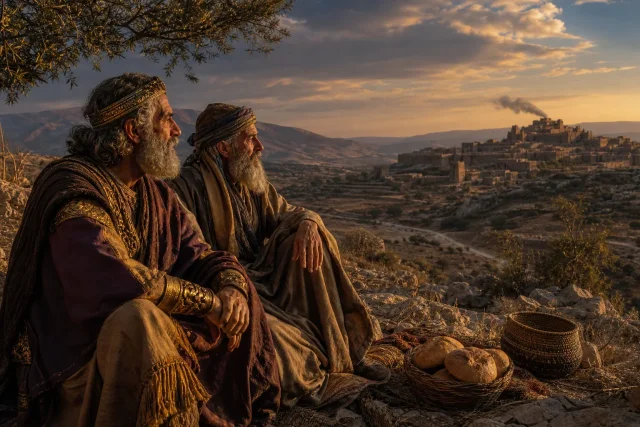
Jewish and Christian tradition often linked Ezra with the authorship or compilation of Ezra and Nehemiah, and that tradition has real weight. Ezra was a priest and scribe, exactly the kind of person equipped to preserve records, shape communal memory, and interface with Persian administrative documents. Ezra 7:6 gives a key profile:
“this Ezra went up from Babylon. He was a scribe skilled in the Law of Moses that the Lord, the God of Israel, had given, and the king granted him all that he asked, for the hand of the Lord his God was on him.”That sounds like a man built for archival work.
The internal evidence pushes in that direction too. Ezra 7 through 9 shifts into first person, which strongly suggests memoir material. You are reading the voice of someone who was there, not a late writer inventing atmosphere. Ezra 7:27 says,
“Blessed be the Lord, the God of our fathers, who put such a thing as this into the heart of the king, to beautify the house of the Lord that is in Jerusalem.”That line feels immediate. Personal. It reads like gratitude logged in real time after a high-stakes political breakthrough.
At the same time, most careful readers note that the final form of Ezra likely involved compilation. Think GitHub, not a single untouched draft. Someone gathered lists of returnees, temple inventories, royal decrees, and personal memoir, then arranged them into a coherent narrative about return, rebuilding, and covenant renewal. Ezra himself may have done much of that work. A later inspired compiler may also have finalized portions, especially if Ezra and Nehemiah once circulated as one unified work.
Linguistic studies add more signal. Parts of Ezra are in Hebrew, while Ezra 4:8 through 6:18 and 7:12 through 7:26 are in Aramaic, the administrative language of the Persian Empire. That is exactly what you would expect if official state documents were being preserved inside the narrative rather than paraphrased away. It is the ancient equivalent of attaching screenshots, PDFs, and email chains to a legal case. The text carries the texture of history.
So who wrote Ezra? Best answer: Ezra was likely a primary author or major compiler, working with firsthand memoir and official records, with the final shape possibly completed within the Ezra-Nehemiah tradition. That conclusion is not guesswork pulled from thin air. It comes from voice shifts, language data, historical fit, and the profile of Ezra himself. Time to upgrade your faith OS: careful scholarship can deepen confidence rather than drain it.
Creation groans:
The Original Commission
If you zoom out, Ezra’s authorship question belongs inside a bigger biblical pattern: God forms a people, places them in a world, and commissions them to order life around His word. That pattern starts in Genesis, but it keeps running through Psalms, Job, Romans 8, and Revelation. Creation is not background wallpaper. It is covenant stage, temple imagery, and kingdom theater. The same God who orders galaxies also orders communal memory.
Psalm 19:1 gives a baseline:
“The heavens declare the glory of God, and the sky above proclaims his handiwork.”That verse is not about vague spirituality. It points to intelligibility. The world is readable. In a parallel way, biblical history is readable too. Ezra stands in that stream as a scribe who helped a shattered nation process exile and restoration. He did not just copy data. He curated identity under God’s rule.
Job pushes the scale even wider. When God questions Job from the whirlwind, human arrogance gets debugged fast. Job 38 is basically divine server-admin mode. You do not run the cosmos. You did not lay its foundation. That same humility should shape how you approach biblical authorship. You are not dealing with a modern memoir written in a coffee shop on a MacBook Air. You are dealing with ancient covenant history formed through prophets, priests, archives, and communal preservation.
Romans 8 adds tension and hope at once. Paul writes,
“For the creation waits with eager longing for the revealing of the sons of God”and a few verses later,
“For we know that the whole creation has been groaning together in the pains of childbirth until now.”The exile behind Ezra fits that groaning pattern. Jerusalem was ruined. The temple was broken. The people were displaced. Ezra’s book is not just a report about paperwork and building permits. It is a restoration document in a groaning world.
Revelation closes the loop with renewed creation and renewed worship. History is headed somewhere. The point is not escape from the material world but its cleansing and renewal under God’s reign. That matters for authorship because Ezra is part of the long restoration algorithm. The book preserves how God kept covenant after judgment, stirred pagan kings, and reassembled His people around temple and Torah. You can think of Ezra as a critical patch in the redemption storyline.
Historical studies line up with this theology. The Persian period details fit what we know from imperial administration. The use of Aramaic fits the empire’s communication layer. The concern for genealogies, temple vessels, and legal decrees fits a post-exilic community fighting identity drift. If/then logic helps here. If the book contains authentic administrative material and firsthand memoir, then the case for Ezra’s substantial role gets stronger. If the final compiler preserved those materials faithfully, then divine providence was active through the whole process.
So the original commission in Ezra is not merely “who typed the words.” It is “who stewarded covenant memory for a restored people.” Ezra fits that task remarkably well: priest, scribe, reformer, teacher. The divine source code runs through human skill. That is how Scripture often works. Inspiration did not delete personality, context, or records. It directed them.
Listen to the land:
Groaning with Creation
You cannot read Ezra honestly without facing damage. The book rises out of loss: burned stones, emptied homes, fractured worship, compromised marriages, and a people trying to reboot after catastrophe. That is one reason the authorship question matters. A writer close to those wounds will preserve different details than a detached later storyteller. Ezra reads with the ache of people sorting rubble, not curating nostalgia.
That ache connects with the wider brokenness you see now. Open NASA climate dashboards, wildfire maps from Cal Fire, or photos of bleached reefs and shrinking ice fields, and you are staring at a world under strain. Species disappear before most people even know their names. Rivers carry plastic. Air turns hazardous orange over cities. Creation groans, and human rebellion is tangled up in the mess. The Bible is brutally realistic about that.
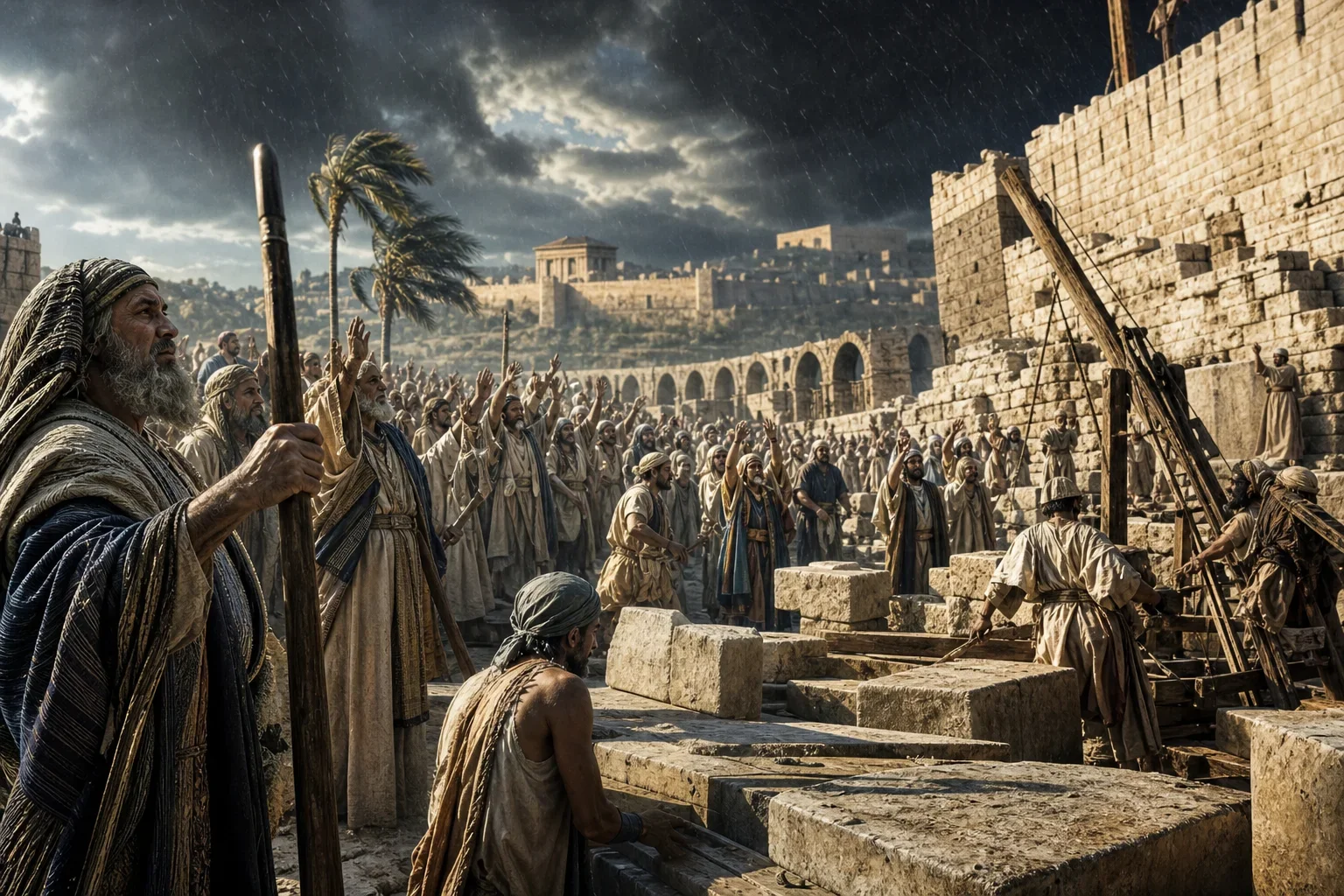
Ezra is realistic too. Restoration was not smooth. There was opposition, fear, delay, compromise, and public grief. Ezra 3 captures the emotional collision when the temple foundation was laid:
“And all the people shouted with a great shout when they praised the Lord, because the foundation of the house of the Lord was laid. But many of the priests and Levites and heads of fathers’ houses, old men who had seen the first house, wept with a loud voice.”That is not polished branding. That is real community pain.
Modern life can numb you to that kind of grief. You hop from Zoom call to Slack thread to Instagram Reels and never sit still long enough to process ruin. I have felt that personally. During my worst gaming addiction stretch in college, I could grind for hours and avoid every deeper question in my life. Sin often works as distraction software. Exile can happen in your soul before it hits your address. Ezra confronts that drift with names, records, repentance, and public obedience.
Historical criticism sometimes gets framed as a threat, but lazy criticism and lazy faith both miss the point. If you strip Ezra of historical grounding, you flatten real suffering into myth. If you refuse textual evidence because it feels complicated, you also dodge reality. Let’s debug this spiritual issue: truth is not fragile. The mixed languages, source materials, and editorial seams in Ezra fit a world where trauma had to be documented carefully so restoration would not turn into revisionism.
So yes, creation groans under pollution, extraction, and climate instability. Human communities groan under exile, injustice, and moral collapse. Ezra belongs in that soundscape. Its likely authorship by Ezra the scribe, with preserved state documents and community lists, means the groaning was recorded, not erased. God did not mute the pain. He archived it inside redemption history, where lament and rebuilding could run side by side.
The earth proclaims:
Tending the Garden
So what do you do with a book whose authorship points to scribal care, historical memory, and covenant repair? You practice stewardship. Tending the garden is not only about soil and compost bins. It is also about tending texts, communities, and truth. Ezra models that. He handled documents responsibly, called people back to obedience, and treated worship as the center of public life. That is discipleship with receipts.
Ezra 7:10 gives the clearest profile line in the whole book:
“For Ezra had set his heart to study the Law of the Lord, and to do it and to teach his statutes and rules in Israel.”That is a killer three-step process. Study. Do. Teach. Not “hot take first, facts later.” Not “clip one verse for social media engagement.” In a world of algorithm-fed outrage, Ezra’s pattern feels almost rebellious. It is a holy workflow.
Think of biblical scholarship as a form of creation care for the mind. You do not dump toxic waste into a river; do not dump sloppy claims into the church either. When someone on TikTok says Ezra could not have written Ezra because the book includes lists and official records, that is weak logic. Ancient authors used source material all the time. When someone else says every line must come from a single uninterrupted sitting by one hand, that is also weak logic. Real history is more textured than that.
Practical discipleship starts small and concrete. Build a reading system. Use Logos, Accordance, or BibleHub to compare translations and note where Ezra shifts between Hebrew narrative and Aramaic correspondence. Read a solid introduction from evangelical scholars who take both inspiration and evidence seriously. If you are in remote work mode all week, block thirty minutes before your first Google Meet and treat it as sacred bandwidth. You budget for software subscriptions; budget attention for truth.
Community matters too. Ezra’s world was public, not private. Gather a group and read Ezra alongside Nehemiah because many scholars see them as a once-unified work. Put the timeline on a shared Notion page. Track kings, decrees, temple milestones, and memoir sections. If your church has a tech team, run a Bible study for volunteers who are already thinking in systems and processes. Faith and reason are not enemies. They are teammates when submitted to Christ.
Tending the garden also means ethical witness in the physical world. If the God who preserved covenant history also cares about embodied life, then your habits matter. Reduce waste. Support habitat restoration in your city. Join a creek cleanup instead of only posting climate anxiety on X. Push your church to think about energy use, landscaping, and food distribution for local families. Not because activism saves, but because redemption upgrades how you inhabit the world.
And here is the fresh angle on Ezra: authorship itself is stewardship. Ezra likely gathered decrees, genealogies, inventories, and memoir because a restored people needed accurate memory to remain faithful. You need that too. Every generation faces data corruption. Revisionism. Spiritual amnesia. The answer is not cynicism. It is careful preservation under God’s authority. Ezra the scribe becomes a model for Christians in the information age: verify sources, honor truth, order life around the word, and keep the temple of worship central.
Creation groans:
All Things New
Hope is where Ezra lands, even with unresolved tension. The temple gets rebuilt, worship resumes, and the people are called back into covenant life. The story is partial, not complete. That is how biblical hope often works. You get real renewal now, with a larger restoration still pending. Ezra’s probable authorship by a priest-scribe fits that pattern beautifully. He was not just preserving the past. He was helping future generations wait for the greater rebuilding still ahead.
That future runs all the way to new creation. Revelation 21:1 says,
“Then I saw a new heaven and a new earth, for the first heaven and the first earth had passed away, and the sea was no more.”This is not deletion into nothingness. It is renewal under God’s presence. The exile story behind Ezra was a local restoration inside that larger promise. A ruined city became inhabited again. A shattered worship system came back online. It was a preview build of final redemption.
Isaiah had already spoken in that direction, and post-exilic readers would have felt the force of it. Restoration is never merely sentimental. It is covenantal, moral, and cosmic. The God who brings people home also cleanses, reforms, and reorders them. That is why Ezra spends so much energy on law, holiness, and community boundaries. New creation is not just prettier scenery. It is a healed world under righteous rule. Time to upgrade your faith OS: hope is ethical, not escapist.
This matters for authorship because the final form of Ezra is itself an act of hope. Somebody preserved these records because future generations needed confidence that God had acted in history. If your faith only runs on vibes, it will crash under pressure. If it is anchored in God’s acts, words, and promises, it can survive exile-level disruption. Ezra gives you named leaders, counted returnees, quoted decrees, and personal prayer. That is hope with documentation.
Creation participation starts here. Join the praise already rising from sea wind, bird flight, cedar grain, and human voices gathered around Scripture. Commit to earth-keeping in ways that match the gospel: concrete, humble, embodied. Commit to truth-keeping too: read carefully, cite honestly, refuse both anti-intellectualism and sterile skepticism. And pray with wonder. Lord, tune my life to Your order. Keep my memory clean. Make me a faithful steward of texts, places, people, and praise until all things are made new 🔥
Reflection Questions
Contemplative: Let this mystery: Who wrote the Book of Ezra, and why might God choose a priest-scribe working with memoir, archives, and imperial documents to preserve hope after exile?
Action: What is one concrete next step this week to debug shallow Bible reading—will you compare Ezra’s first-person sections, map the Aramaic portions, or start a shared study doc with friends on Google Docs or Notion?
Theological: Where else in Scripture reshape your view of authorship, inspiration, and restoration when you place Ezra beside Psalm 19, Romans 8, and Revelation 21?
Continue Your Bible Study
Explore more lessons and deepen your understanding of scripture
View All Lessons Ask AI a Question