What the Wilderness Census Reveals About Gods Care

When God Numbered a Wandering People
The Righteous Rage
Oh, dear one, I grieve the way we have made peace with counting people for all the wrong reasons. We count followers, donors, attendance, test scores, sales goals, political blocs, and the square footage of our buildings, yet we fail to count tears, burdens, lonely widows, anxious children, and the weary man sitting in traffic with both hands tight on the steering wheel because the cardiologist called that morning. We live in a culture that measures worth with spreadsheets, dashboards, and glowing phone screens, and too often the church has borrowed the world’s ruler and called it wisdom. The elephant in the room stands large and shameless: we use numbers to control, impress, exclude, and rank, then we drape that habit in religious language.
The book of Numbers confronts this idolatry in a way that still stings. Israel stood in the wilderness, not in a palace, not in a season of polished strength, but in dust and dependence. Yet many of us read the census and think only of military capacity or institutional efficiency. We miss the holy ache beneath it. We have built systems that count the polished and overlook the fragile. In grocery store aisles, I have watched a cashier with tired eyes move through a ten-hour shift while impatient customers glance at the self-checkout clock. In neighborhood meetings, I have seen single mothers ignored while confident men fill the air with opinions. In churches, I have watched budget conversations move briskly while prayer for the sick gets squeezed into three hurried minutes at the end.
Systemic injustice always begins with distorted counting. Some neighborhoods get counted only when taxes are due or elections are near. Some children get counted only when they fail a benchmark. Some elderly saints get counted only when they stop volunteering. Even our private fears bend toward false arithmetic. We count bills on the kitchen table, count sleepless nights after a hard diagnosis, count the days since a son returned a phone call, and we begin to believe that what can be totaled must also define us. Beloved, that is cultural idolatry with a respectable haircut. It is church compromise in sensible shoes. It is the old serpent whispering that value comes from measurable usefulness rather than from the steadfast gaze of a faithful God.
And when leaders count without reverence, people become inventory. That is why this matter is not small. When counting serves fear, pride, or control, it wounds souls. When counting serves love, stewardship, and covenant remembrance, it becomes holy. The question before us is sharp as desert wind: when God numbers His people in the wilderness, what kind of God is He revealing, and what kind of people must we become?
But God!
God's Alternative Reality
In my sixty years of walking with Jesus, I have come to cherish the tender strangeness of the Lord’s ways. He does not count as empire counts. He numbers a people in order to place them, order them, protect them, and remind them that not one tribe drifts outside His abiding notice. Numbers 1:2 says, “Take ye the sum of all the congregation of the children of Israel, after their families, by the house of their fathers, with the number of their names, every male by their polls.” Do you hear the tenderness tucked inside that command? Not merely bodies. Names. Families. Households. Memory. Belonging.
God’s alternative reality is not a cold census bureau in the sky. It is a covenant camp arranged around holy presence. The tabernacle stood at the center, and every tribe took its place around that dwelling. Their number did not create their worth; His presence named their worth. This is where biblical faith parts company with cultural optimism and religious certainty. Cultural optimism says, “The numbers will turn around.” Religious certainty says, “Our system is strong enough.” Biblical faith says, “The Lord is in the midst of us, and His presence orders our life.” That is an altogether different song, more akin to the old hymn, “Great is Thy faithfulness,” than to any boastful report.
Then the second census arrives after loss, failure, graves, rebellion, and long years of wilderness sorrow. Numbers 26:2 says, “Take the sum of all the congregation of the children of Israel, from twenty years old and upward, throughout their fathers' house, all that are able to go to war in Israel.” The Lord does not turn away from a chastened people. Through every season, He remains steadfast. He counts again, not because they impressed Him, but because His purposes had not withered in the desert sun. That speaks to every dear one sitting under financial stress, every wife studying a stack of medical bills at a dining room table under a yellow pendant light, every grandfather wondering whether his fractured family can ever be gathered with peace.
And listen to the heart of God in Numbers 6:24-26: “The Lord bless thee, and keep thee: The Lord make his face shine upon thee, and be gracious unto thee: The Lord lift up his countenance upon thee, and give thee peace.” This blessing rises from the same book many people avoid. What a mercy. In the wilderness, amid counting and marching and camp arrangements, the Lord speaks of shining face, grace, and peace. That is His alternative reality. Not a machine. A family under blessing.
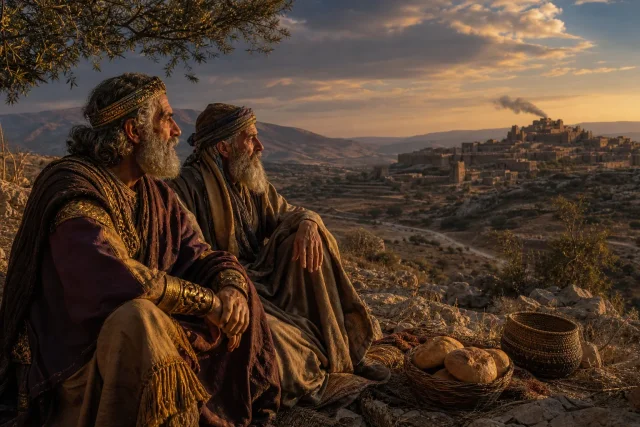
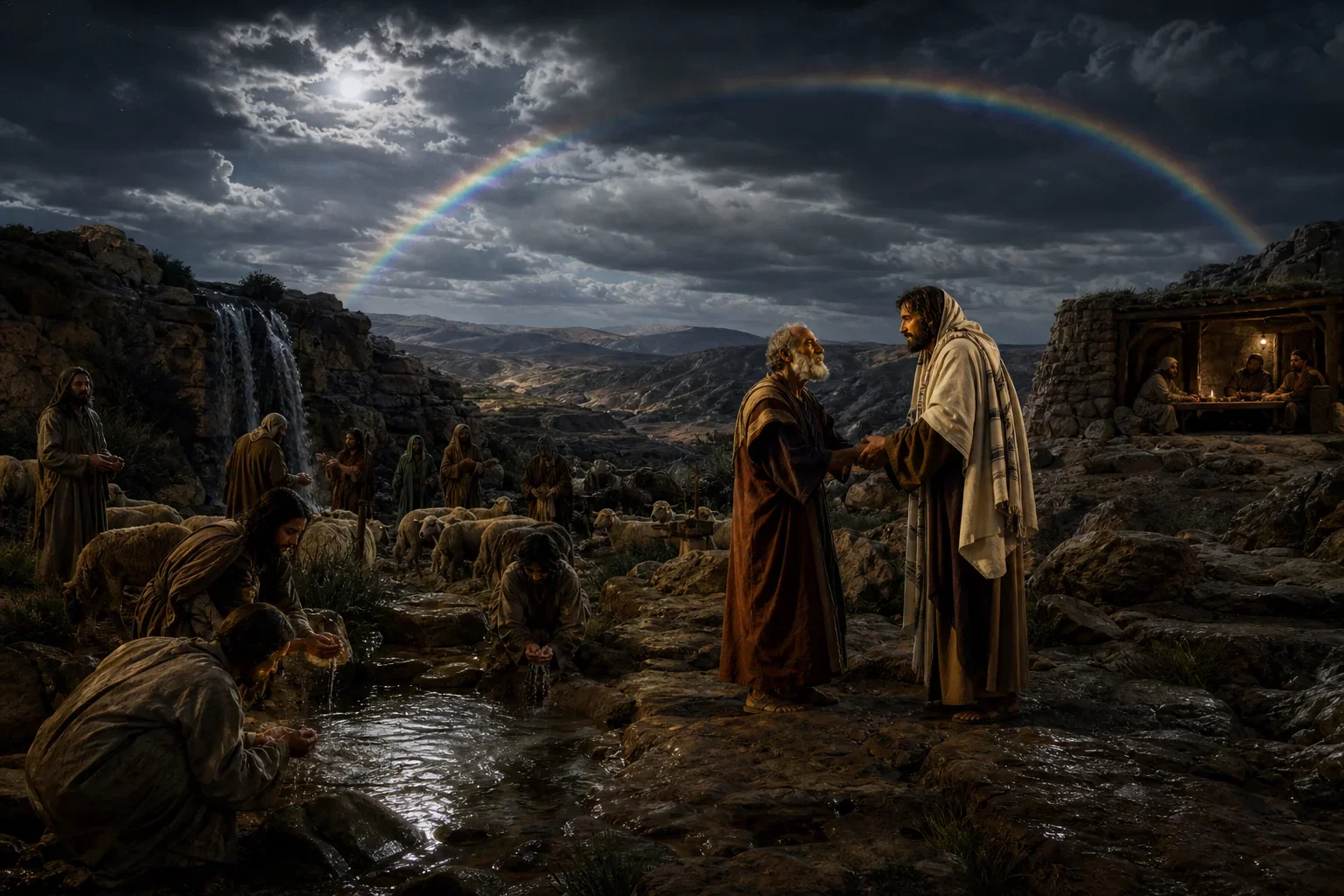
I picture it with concrete clarity: canvas tents snapping in the dry wind, cooking fires breathing out thin ribbons of smoke into an amber evening, children leaning sleepily against their mothers, elders tracing long memories in the dust with a staff. Tribe by tribe, place by place, the camp forms around the Holy One. No one invents himself there. No one earns his place there. God appoints, gathers, sanctifies, and keeps. The Lord whispered to my heart years ago, while I was deadheading roses in my backyard after my husband had gone to glory, “Grace, I still know where every root is planted.” Beloved, that is the vision. A counted people, not commodified but cherished, arranged around Presence, moving when the cloud moves, resting when the cloud rests, alive because God has drawn near.
The Spirit is moving:
When Heaven Invaded Earth
There have been holy moments, dear one, when this wilderness vision has broken into ordinary life with startling freshness. I have seen it in prayer meetings where no one cared who had the title, only who needed mercy. Years ago, in a modest fellowship hall with scuffed linoleum floors and a coffee urn humming in the corner, our church gathered after a factory closure hit three families at once. Men who had lost jobs sat with shoulders bent forward, women clutched legal pads covered in overdue amounts, and one teenage girl cried quietly because she feared they would lose their apartment. We did not reduce them to cases. We spoke their names before the Lord, and the body of Christ began to move with bread, rent money, child care, and job leads. That night felt like Numbers redeemed: people counted because they belonged.
I have seen it in the slow courage of intercessory prayer. A grandson of mine once carried a season of rebellion that put gray in his mother’s hair. There were slammed car doors, curt texts, and long silences at family meals. Yet his grandmother kept his name before the Lord the way a gardener keeps watering a bed that looks barren in late March. One autumn evening, with rain tapping the windows and the porch light reflecting on wet leaves, he sat at my kitchen table and asked if we could pray. His voice shook. Heaven invaded that ordinary room. Not with spectacle, but with repentance, tears, and the sweet nearness of Jesus.
I have seen it in neighborhood faithfulness too. During a brutal August heat wave, when the asphalt shimmered and the cicadas sang from the maple trees, a retired nurse on our block noticed an older man two houses down had not collected his mail. She did not pass by with polite distance. She knocked, called his daughter, and got help when he had fallen. That is kingdom counting. That is what happens when a person refuses to let another become invisible. The same spirit can meet us in a grocery line when the father ahead of you puts back cereal and cough medicine because his debit card declines, or in a traffic jam when the woman in the next lane is wiping her eyes before heading into a cancer treatment center.
Revival is not only a crowded altar and a hymn sung with trembling. Sometimes revival looks like a church that rearranges its budget to keep the pantry open, a Sunday school class that notices the widow who stopped attending after knee surgery, or a deacon who calls every shut-in by name before sleep. When God’s alternative reality breaks in, arithmetic becomes mercy. Counting becomes care. Structure becomes shelter. The camp forms again around the presence of the Lord, and those who had felt overlooked find themselves held in the faithful hands of God.
Can you see it?
The Price of Prophet
Beloved, to live this way costs more than sentimental words. If you refuse the world’s measuring stick, some will call you inefficient, naive, or disruptive. If you insist that the overlooked matter, you will slow meetings down, interrupt polished plans, and ask why the church can fund upgrades but not counseling help for the family in crisis. Prophetic faithfulness carries a price. It asks us to put our reputations on the altar and leave them there.
I know something of that cost. After my husband’s cancer grew fierce, I found that suffering rearranges friendships. Some dear souls drew near with casseroles, hymn cards, and quiet presence. Others slipped away because grief made them uncomfortable. Through every season, He remains. When you choose to count people with God’s tenderness, you will feel that same sifting. Some relationships prefer convenience over compassion. Some leaders prefer reports over repentance. Some churches would rather celebrate numbers than kneel beside pain.
The cost is personal too. It may mean opening your calendar when you wanted rest, opening your wallet when inflation has already pinched your budget, or opening your home when family tensions make hospitality feel risky. It may mean confronting a son about harshness, asking forgiveness of a daughter, or standing beside a neighbor whose medical news has shattered her composure. The prophet’s path is not cozy. It is obedient. It is sanctifying. It prunes self-protection the way a wise gardener cuts back a rose bush so that healthier blooms may come.
And there is spiritual warfare in this calling. The enemy loves abstraction because abstraction asks nothing. But when you say names in prayer, when you count the forgotten, when you make room at the table, when you challenge church compromise, hell takes notice. Yet I have learned to rest in His promises. The same God who ordered Israel’s camp still orders the steps of His servants. The same God who counted His people in the desert still keeps account of every costly act of love offered in Jesus’ name.
But God!
Rise Up O Sleeper
Now I must speak plainly, dear one. We do not need more holy talk about compassion while the overlooked remain unseen in our sanctuaries, neighborhoods, and homes. Rise up and count as God counts. Start at your own table. Write down the names of those carrying hidden strain: the sister with mounting prescriptions, the couple in sharp conflict, the young father working deliveries at night after his warehouse shift, the widow who sits alone near the back pew. Pray those names aloud. Put them where you will see them beside the sugar jar, on the refrigerator, in the notes app on your phone, tucked inside your Bible at Numbers 1.
Then act with holy specificity. At the grocery store, buy the gift card and hand it quietly to the customer service desk for the family who is short this week. In traffic, turn irritation into intercession and ask God to steady the frightened hearts trapped in the same snarl of brake lights and sirens. In your neighborhood, knock on the door of the man whose porch light has stayed off for three nights. In church, ask for the membership list not to admire statistics but to seek the absent, the grieving, and the slipping. Counting must become care, or it remains vanity.
Press further. If you lead, repent of using numbers to polish your image. Count testimonies of repentance, reconciled marriages, and children who feel safe enough to ask hard questions. Count meals delivered after surgery. Count rides given to appointments. Count how many names your congregation knows beyond its friend circles. Build systems that protect the vulnerable rather than platforms that flatter the visible. A faithful church should know who has been missing, who has no heat, who needs medicine, and who has stopped answering texts because despair has gone heavy in the room.
And do not shrink biblical faith into cheerful optimism. Optimism trusts favorable trends. Religious certainty trusts formulas. Faith kneels in the wilderness and says, “Lord, place us around Your presence again.” Faith believes that the God who counted Israel in barren places still gathers His people with tender precision. I can almost hear the rustle of tent cloth in the evening wind and the murmur of mothers settling children near the tabernacle’s glow. That vision must rise among us now. Cast down the idol of impressive totals. Take up the work of faithful naming. Call your people to prayer. Organize care. Visit the sick. Rearrange the budget. Tell the truth. And beloved, rise up, for the Lord still counts His people with steadfast love and calls His church to do the same.
Reflection Questions
How will you resist the empire habit of measuring people by usefulness, polish, or productivity when God is calling you to count the overlooked by name?
Who will you contact, pray for, and tangibly help in the next seven days so that your counting becomes care rather than sentiment?
How could your family, class, or small group build a shared practice of naming and supporting those under financial stress, relationship conflict, or health concerns?
Continue Your Bible Study
Explore more lessons and deepen your understanding of scripture
View All Lessons Ask AI a Question