Trust and Doubt in Habakkuk's Conversation with God

Habakkuk's Dialogue with God: Faith in Crisis
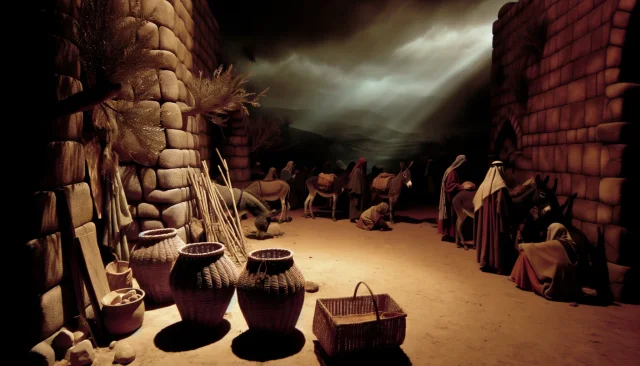
Imagine standing in a bustling marketplace, the air thick with the scent of spices and the cacophony of bartering voices. You overhear snippets of conversations filled with worry, fear, and doubt. Life is chaotic, and yet, amid the turmoil, a profound dialogue unfolds. This is the essence of Habakkuk’s story—a bold confrontation with God that reveals the heart of faith in the midst of crisis. How can a faithful God allow suffering? Why do the innocent suffer while the wicked prosper? These questions create a deep cognitive dissonance, showcasing a beautiful contradiction in our spiritual journey. The faithful believer grapples with the harsh realities of life, wrestling with seemingly opposing truths. In this paradox, we find a deeper understanding of God’s nature and our own humanity.
The Beautiful Contradiction
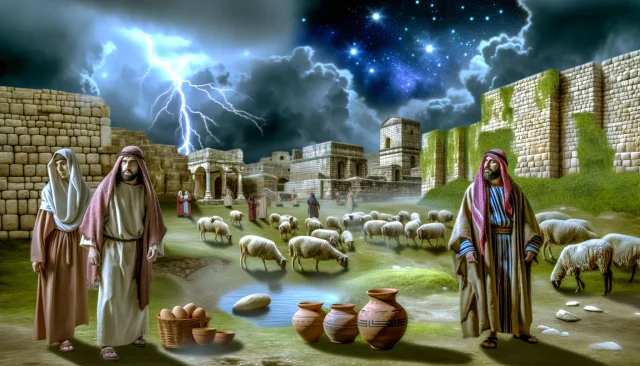
Picture yourself walking through ancient Judea, where Habakkuk’s anguished cries for justice resonate amidst a backdrop of oppression. The tension between faith and doubt is palpable. God’s chosen people are suffering, and Habakkuk boldly questions the very foundation of divine justice. Here, we encounter a striking biblical paradox: the last shall be first (Matthew 20:16), losing life to save it (Matthew 16:25), and finding strength in weakness (2 Corinthians 12:9). These opposing truths coexist in a divine tapestry woven by God’s mysterious hand. Just as Habakkuk stands firm with his questions, we too wrestle with the truths of our faith—how could God allow injustice, yet still be deemed good? Are we not, like Habakkuk, caught in this beautiful contradiction, where faith coexists with our deepest fears?
Our Struggle with Mystery
Now watch this: as human beings, we naturally crave resolution. We seek answers to the questions that plague our hearts. When life throws challenges our way—financial stress, relationship conflicts, or health concerns—the tension within us spikes. Imagine a moment when you’re stuck in traffic, frustration boiling over as the minutes tick by, and you can’t help but question why. In the same way, Habakkuk’s cry is a reflection of our own struggles. The world around us seems chaotic, yet we desperately seek a neat resolution—a logical explanation for our suffering. Cultural resistance to accepting mystery is palpable; we are trained to believe in clear-cut answers, yet life often defies this expectation. Habakkuk’s story invites us to sit in this discomfort, allowing our faith to wrestle with the unknown, much like our own personal struggles with ambiguity.
Living the Paradox
The plot thickens as we look at biblical figures who embody this paradox. Consider Paul, who writes about his “thorn in the flesh” in 2 Corinthians 12:7-10. His weakness becomes a platform for God’s strength, illustrating that sometimes, suffering is part of a divine plan that we cannot fully grasp. Or think of Mary, whose submission led to the miraculous birth of Jesus, embodying faith even in uncertainty. The narrative of her life invites us to reflect on our own situations where submission to God’s will is required, even when clarity eludes us. And then, there’s Jesus himself—his death on the cross appearing like defeat yet ultimately bringing life and hope (John 12:24). These biblical accounts reveal a pattern, showing that the paradox of faith is not a sign of weakness, but rather a testament to the strength found in vulnerability. Just as Habakkuk wrestles with God, so too do we find ourselves in moments of doubt, where faith and crisis intertwine.
The Hidden Unity
As we delve deeper, we uncover the hidden unity in these paradoxes—a divine logic that transcends our human understanding. God’s economy operates differently from ours; His ways are higher than our ways (Isaiah 55:8-9). Kingdom principles often turn worldly wisdom on its head. The idea of surrendering to gain, or dying to truly live, reflects a profound truth that invites us into a more expansive view of reality. What appears as chaos can reveal divine order, a tapestry of interconnected stories that shape our faith. It’s as if the stones cry out, urging us to recognize that God’s wisdom surpasses our own finite understanding. Habakkuk’s dialogue with God ultimately reveals that faith thrives within the mystery, as we embrace a perspective that acknowledges God’s sovereignty even in our darkest moments.
Dancing with Mystery
Embracing the paradox invites us to dance with mystery rather than seek to resolve it. There’s beauty in the unknown—an opportunity to cultivate a deep relationship with God, who invites us to rest in His presence. Daily practices, such as prayer and meditation, can help us engage with our uncertainties. Imagine starting your day with quiet reflection, allowing space for your questions to coexist with your faith. Mindset shifts are also crucial; rather than demanding ans
Continue Your Bible Study
Explore more lessons and deepen your understanding of scripture
View All Lessons Ask AI a Question