Faith and Conflict in Biblical History Through Key Incidents

Bible Rioting
Oh, dear one, as we look around our world today, we cannot help but notice the unrest that seems to bubble just beneath the surface of our society. It is a reflection of a deeper, insatiable yearning for justice, for truth, and for righteousness. The world operates under values and practices that often lead to unrest and conflict, particularly when it comes to matters of faith. In our historical and contemporary contexts, we have seen religious conviction become both a catalyst for constructive change and a provocation for destructive uproar. The patterns of unrest we observe in the Bible, such as the riot in Ephesus, the cleansing of the temple, and the stoning of Stephen, remind us of the complexities of faith and the human condition.
We live in a world where cultural norms dictate success metrics based on power, wealth, and influence. The prevailing winds blow towards a conformist mentality where dissent is often silenced, and peaceful protest can quickly turn into violence when pushed too far. The Ephesian silversmiths, feeling threatened by the teachings of Paul which turned people away from their trade, exemplify this as the crowd gathers, fueled by fear and anger—showing us how tightly intertwined our spiritual and economic lives can become. This was not merely a mob of unruly citizens but a collective response to what they perceived as an existential threat to their livelihoods and beliefs.
In the grand tapestry of scripture, we see this same dynamic: the call to faith often leads to unrest, as it challenges the status quo. The cleansing of the temple is another poignant moment where Jesus, in His righteous anger, disrupts the commercial activities that had infiltrated the sacred space, leading to outrage from the religious leaders. And then, the stoning of Stephen, the first Christian martyr, serves as a harrowing reminder of how faith can incite violence when it threatens established authority. The world’s response to divine disruption is often met with an equal and opposite reaction, revealing the power dynamics at play.
Yet, we must question our own assumptions. Is the unrest we witness a mere byproduct of misaligned values, or does it echo a deeper longing for righteousness? How do we, as people of faith, navigate this turbulent terrain? The challenges presented by the world compel us to reflect on how we might respond as agents of peace and reconciliation. In every era, God’s faithful have been called to reflect His light in the midst of darkness, and it is essential we examine how we can embody this call in our own lives today.
The Divine Disruption
Everything changes when we consider the contrast of God's kingdom—a divine disruption that seeks to reverse worldly values and practices. Throughout scripture, we see that Jesus' actions consistently subvert expectations. The Sermon on the Mount, for instance, is a manifesto of inversion, where the poor in spirit, the meek, and those who hunger for righteousness are deemed blessed. It is a radical departure from the world's metrics of success, which often place value on strength or wealth rather than on humility and mercy.
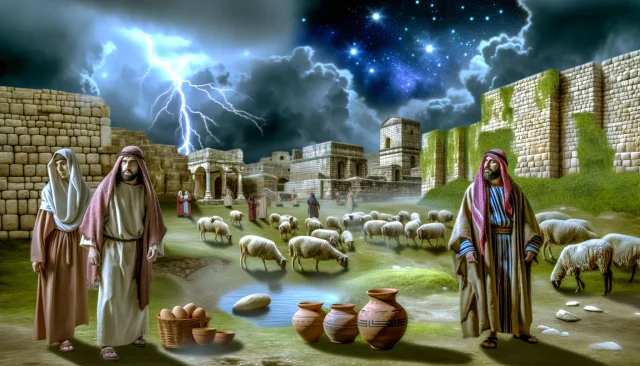
In Acts 19, the riot in Ephesus serves as a backdrop for understanding the clash between divine truth and human fear. Paul's proclamation of the Gospel challenged the very foundation of the silversmiths' trade, threatening their livelihood and their societal status. The riot that ensued revealed the fragility of their faith in the goddess Artemis, contrasting sharply with the steadfastness of Christian belief. The Kingdom of God disrupts the empire of human constructs, calling for a radical reorientation towards His ways, often invoking unrest amongst those clinging to the familiar.
Jesus' cleansing of the temple was another moment where the divine disrupted the status quo. The temple, intended to be a house of prayer, had become a den of robbers. Jesus’ actions communicated a powerful message about the sanctity of worship and the prioritization of the heart over mere ritual. When He overturned the money changers’ tables, it was not merely an act of frustration but a call to return to true devotion—a radical rethinking of what it means to honor God amidst the distractions of commerce and societal expectation. Oh, beloved, how often do we allow our own lives to become cluttered with distractions that pull us away from true worship?
In the instance of Stephen’s stoning, we witness the ultimate price paid for the disruption of divine truth. His faithfulness to proclaim the Gospel in the face of adversity serves as a testament to the courage that arises when one is fully surrendered to God's call. The kingdom way often appears scandalous, foolish, or threatening to those entrenched in earthly powers, yet it is this very disruption that beckons us to a deeper understanding of faith and grace.
The Beautiful Scandal
The revolu
Continue Your Bible Study
Explore more lessons and deepen your understanding of scripture
View All Lessons Ask AI a Question