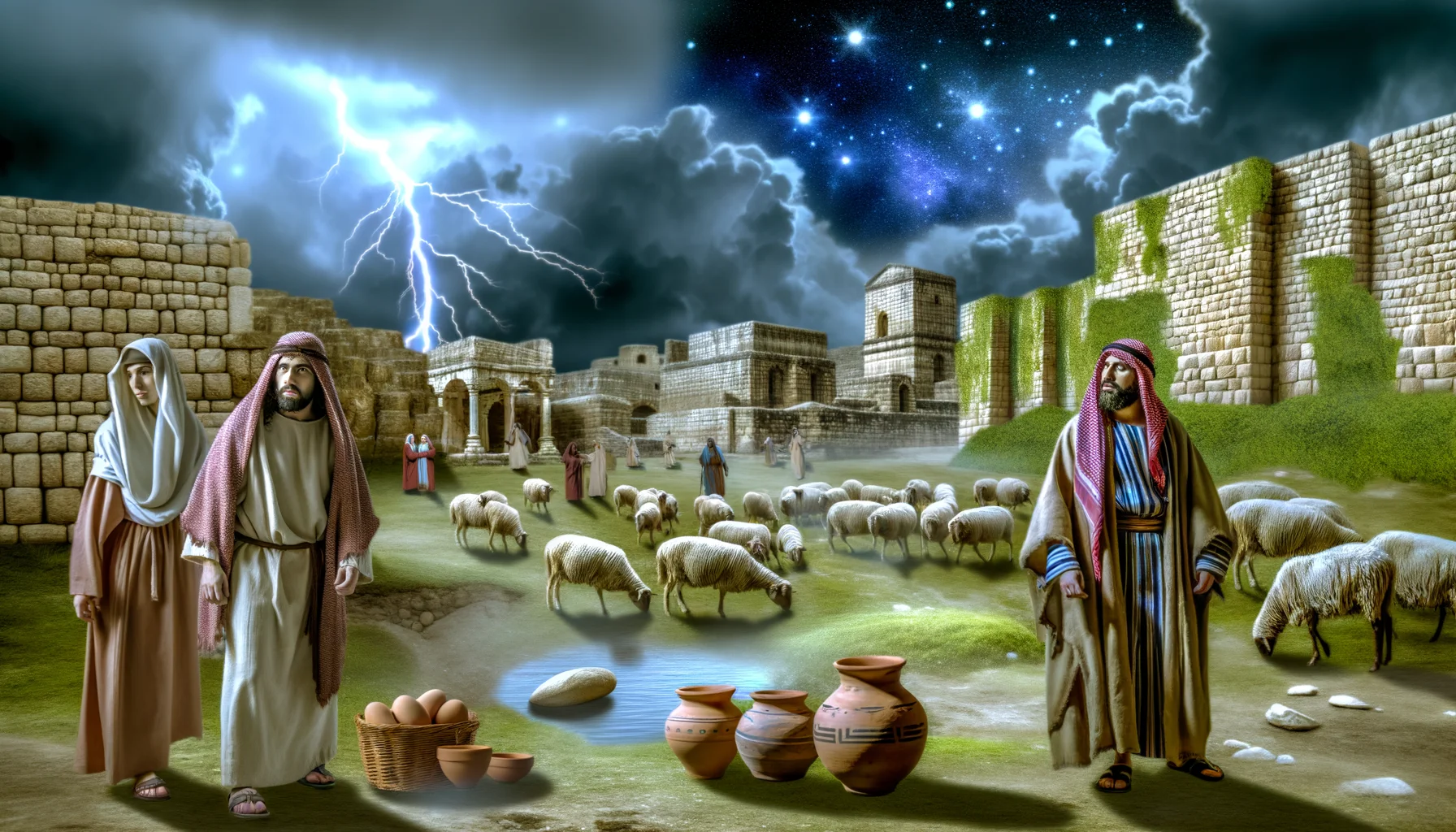
Nehemiah's Model for Community Restoration and Leadership

Nehemiah's Blueprint for Community Restoration
The prevailing patterns of our world often leave us feeling fragmented and disillusioned. Success is frequently measured by individual achievement, wealth accumulation, and the exercise of power. In this context, community is often sacrificed on the altar of personal ambition. We see cultural norms that prioritize competition over collaboration, fostering environments where isolation reigns and the collective well-being is neglected. The pressures of modern life—be it workplace competition, social media comparisons, or the relentless pursuit of status—cultivate a landscape where relationships are transactional rather than transformational. In the tech industry, a person’s worth can often feel tied to their ability to innovate quickly, leaving little room for the slow, deliberate work of building community. Amidst these dynamics, the question arises: what does true restoration look like, and how can we embody it in our communities?
Nehemiah's leadership journey, chronicled in the book of Nehemiah, provides a profound contrast to worldly patterns. His approach was not merely a reaction to crisis; it was a meticulously laid blueprint for community restoration that married spiritual vision with pragmatic action. Nehemiah did not rush into action; he first took the time to assess the situation strategically (Nehemiah 2:11-16). This assessment phase was crucial, as it allowed him to identify the specific needs of the community and develop a targeted plan for restoration. The contrast between Nehemiah's methodical approach and the often chaotic and reactionary responses of contemporary leadership practices is stark. Today, we frequently encounter leaders who act impulsively, driven by immediate pressures without a foundational strategy. Nehemiah's model invites us to pause, assess, and act with intention.
When Nehemiah finally acted, he mobilized a diverse group of people—including priests, nobles, and commoners (Nehemiah 3:1-32)—to engage in the restoration work. This coalition was essential for the success of the project, illustrating the importance of inclusivity and collaboration. In contrast, modern leadership often emphasizes hierarchy and power dynamics that can alienate rather than unify. Nehemiah's example challenges our assumptions about community leadership by highlighting that the strength of a community lies not in the power of a few but in the collective contributions of many.
The Divine Disruption
But the kingdom! In stark contrast to the world's values, God's kingdom presents a radical reorientation of priorities and practices. The Sermon on the Mount illustrates this beautifully, where Jesus teaches that the blessed are not the powerful or the affluent but the meek, the merciful, and the peacemakers (Matthew 5:3-12). This inversion of worldly wisdom is a hallmark of the kingdom of God. Nehemiah's story resonates with this theme; he exemplifies how God's kingdom disrupts the status quo by prioritizing restoration over personal gain.
Nehemiah’s heartfelt prayer (Nehemiah 1:5-11) reflects a deep dependence on God, a stark contrast to the self-sufficiency that often characterizes human endeavors. He does not rely solely on his own abilities but seeks divine guidance, demonstrating the interconnectedness of God's sovereignty and human responsibility. In this way, the work of restoration becomes a cooperative effort between the divine and the human, a relationship reminiscent of the collaborative nature of coding, where developers create robust applications through both their innovation and the systems they operate within.
Moreover, Nehemiah faces opposition from figures like Sanballat and Tobiah (Nehemiah 4:1-3), embodying the reality that kingdom work often invites conflict. However, rather than retreating, Nehemiah fortifies his community with prayer and action, illustrating how the kingdom of God empowers us to confront adversity through faith and solidarity. This is emblematic of Jesus’s own mission: confronting entrenched systems of oppression while inviting the marginalized into a transformative community. Nehemiah's leadership demonstrates a profound commitment to the welfare of his people, embodying the prophetic call to build rather than destroy.
The Beautiful Scandal
Everything changes when: we recognize the offense of the gospel. The kingdom of God often seems foolish to the world, where the message of the cross subverts conventional wisdom (1 Corinthians 1:18). Nehemiah's bold leadership and radical commitment to restoration may have appeared absurd to those entrenched in the power dynamics of their day. His willingness to leave a position of comfort in Persia to confront the dire state of Jerusalem exemplifies how kingdom work often requires personal sacrifice. This scandal of the gospel invites us to consider how we might confront our own comfort in the pursuit o
Continue Your Bible Study
Explore more lessons and deepen your understanding of scripture
View All Lessons Ask AI a Question