Thomas and the Path of Faith Through Doubt and Discovery

Navigating Doubt with Thomas's Journey to Faith
In our fast-paced world, the pull towards certainty often feels overwhelming. We're conditioned to chase assurance in everything—our jobs, our relationships, our faith. But what happens when doubt creeps in? We find ourselves in a culture that shames uncertainty, elevating confidence as the ultimate virtue. It operates like a machine: churn out successful stories, measure worth by achievement, and hide any sign of struggle. The message is clear: doubt is weakness, and vulnerability might as well be a crime. Just look at social media, where curated lives shine bright, while the shadows of insecurity are tucked away. In the hustle of our daily lives, whether navigating grocery aisles or traffic jams, we can feel the pressure to appear put together, leaving no room for the raw honesty of doubt. Financial stress, relationship conflicts, health concerns—they're often brushed under the rug, perceived as a failure to find the right answers. In this empire of certainty, we question our own doubts and wonder if we’re doing faith wrong.
The Way of the World
The world operates on a foundation of achievement, where success is quantified and displayed for all to see. We're taught to produce, to win, to climb the ladder—be it in our careers or social circles. The prevailing mentality is one of competition, where only the strongest survive. This creates a culture that idolizes self-sufficiency. If you're not self-assured, you’re left behind, often marginalized or ostracized. Just think about the workplace: how often are employees praised for their confidence while those who express uncertainty are pushed aside? In conversations, we often veer towards platitudes and away from the messiness of doubt. The pressure to conform to this narrative can be stifling, forcing us to wear masks that hide our brokenness.
In churches, this dynamic often manifests as an unspoken expectation to have it all together. Spiritual discussions can feel like a checklist. Are you attending every service? Serving in the ministry? Praying daily? When was the last time someone spoke openly about struggling with faith, especially in a community that often equates doubt with a lack of commitment? This mirrors the world’s metrics of success—if faith isn't performing, it's dismissed. Yet, deep down, we crave authenticity. The truth is, doubt often lurks beneath the surface, waiting for the right moment to disrupt our carefully constructed narratives, like a sudden storm cloud appearing on an otherwise sunny day.
But the kingdom!
The Divine Disruption
Jesus models an entirely different way, offering a radical invitation to embrace doubt and the messy journey of faith. The Sermon on the Mount, for instance, turns worldly values upside down. “Blessed are the poor in spirit, for theirs is the kingdom of heaven” (Matthew 5:3, NIV). This isn't a call to self-sufficiency but an acknowledgment of our need for God. He meets us in our brokenness, in our fragility, like a gentle hand holding our own in times of crisis. The divine disruption is found in moments when we admit we don’t have the answers, and that’s precisely where God’s grace meets us.
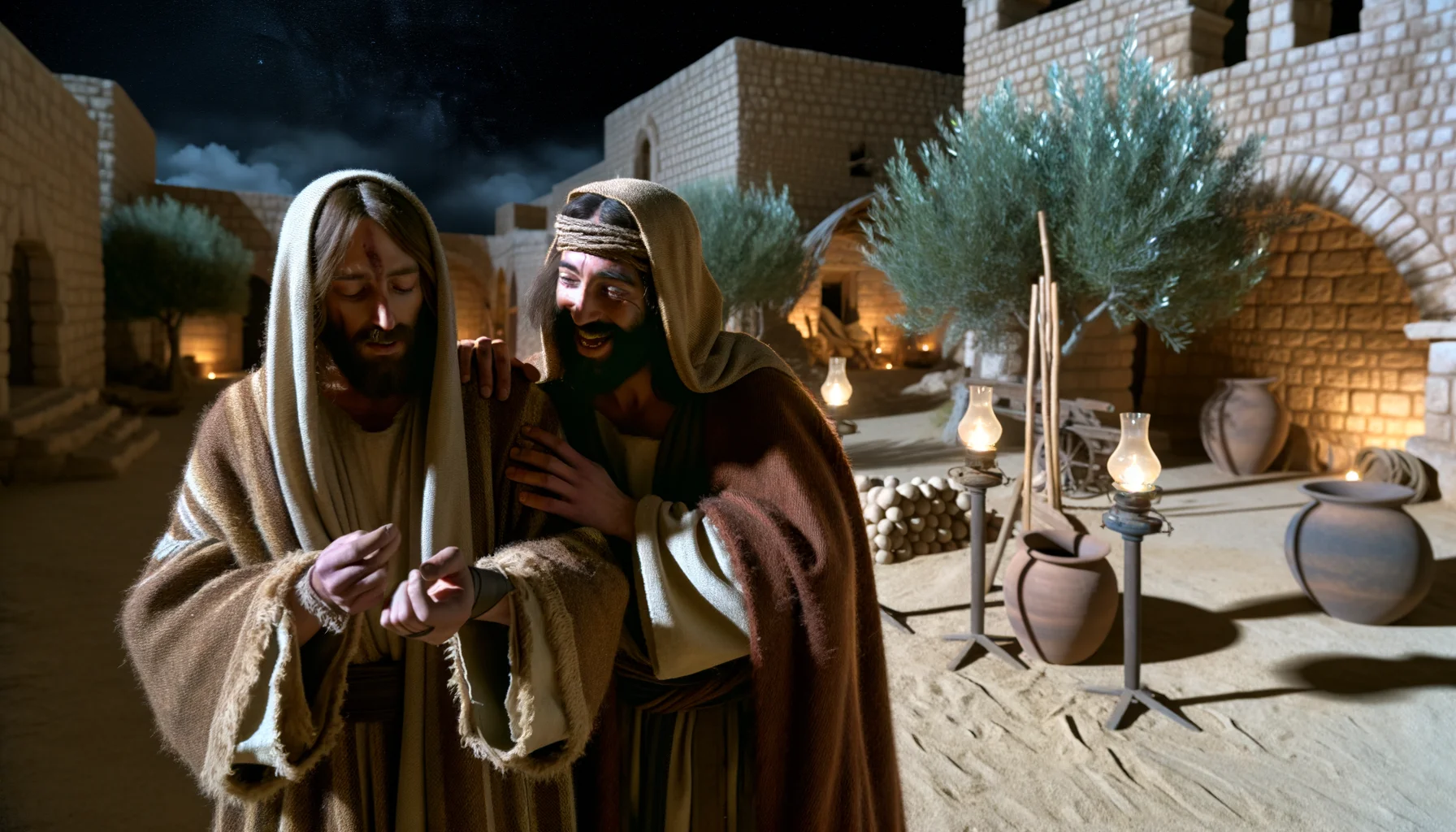
Remember Thomas, the disciple who dared to voice his doubt? After the resurrection, he declared, “Unless I see the nail marks in his hands and put my finger where the nails were, and put my hand into his side, I will not believe” (John 20:25, NIV). This wasn’t just skepticism; it was a raw, honest expression of his fear and confusion. Jesus didn’t scold him. Instead, He invited Thomas into deeper connection—“Put your finger here; see my hands. Reach out your hand and put it into my side. Stop doubting and believe” (John 20:27, NIV). This invitation is stunning because it illustrates a divine interruption in our human instincts to shy away from doubt. God embraces our questions, offering a space to wrestle with our faith and not shun it.
The apostles lived this out, too. Their community was defined by vulnerability and authenticity. They shared meals, broke bread together, and in doing so, created a tapestry of shared experiences. This communal life was a stark contrast to the isolation fostered by worldly values. They didn’t shy away from discussing their struggles; they held space for pain, allowing the presence of God to seep into their lives amidst uncertainty. Everything changes when we allow doubt to become a doorway rather than a wall. We can find healing in community, realizing faith is not about having all the right answers but about being in the presence of the One who meets us in our questioning.
The beautiful scandal is that God’s kingdom is not built on certainty but on relationships woven through vulnerability and trust.
The Beautiful Scandal
In our world, the offense of the gospel is apparent. The idea that weakness can be strength challenges everything we’v
Continue Your Bible Study
Explore more lessons and deepen your understanding of scripture
View All Lessons Ask AI a Question