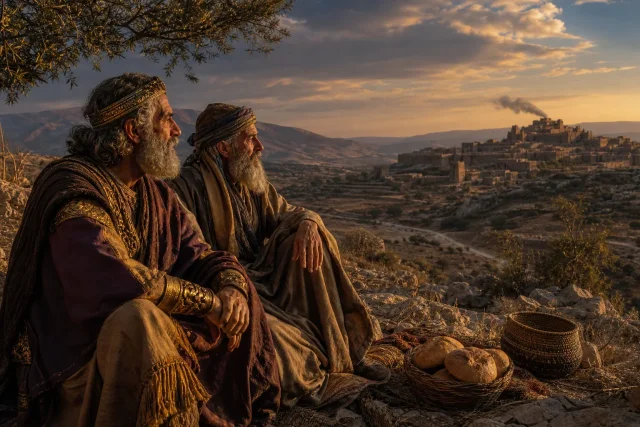
Testing the Latter Rain Movement by Scripture

Latter Rain Movement and the Steadfast Word of God
When Everything Falls Apart
Rain taps the windshield in the grocery store parking lot, and a woman sits behind the wheel with her purse open in her lap, counting folded bills twice because the cardiology copay came due the same week her husband’s hours were cut at the warehouse. Her phone glows with a message from a cousin inviting her to a revival meeting where, she is told, apostles are being raised up, hidden powers are being imparted by the laying on of hands, and a company of overcomers will soon move beyond ordinary church life into a higher realm. She is weary enough to listen. When pain presses hard, grand promises can sound sweeter than daily bread.
Across town, a young man eases his delivery van through stalled traffic, drumming his fingers on the steering wheel while a podcast preacher declares that the church has missed God’s newest wave because it still clings to old boundaries. He has been praying for his mother’s lungs to strengthen, for his own debts to shrink, for some clear sign that heaven has not gone quiet. The speaker says the latter rain is falling now through restored prophets and apostles, and only those who receive fresh impartation will be ready for the final victory of the saints. The claim lands in a tender place, because longing makes the heart vulnerable.
At a kitchen table under a humming light, a retired deacon scrolls through videos from ministries tracing their roots to the 1948 revival at Sharon Orphanage and Schools in North Battleford, Saskatchewan. Names appear: George Hawtin, Ern Hawtin, P. G. Hunt, Herrick Holt. The language is urgent: restored offices, personal prophecy, elite end-time maturity, the Manifest Sons of God, the church moving into unprecedented authority. He has buried a daughter, weathered a church split, and spent years begging God for revival. Claims of immediate power can feel intoxicating when ordinary faithfulness seems small beside headlines and spectacle.
In my sixty years of walking with Jesus, I have watched sincere believers stand in exactly such moments, not because they are foolish, but because they are hurting, hungry, and hopeful. A thirsty field welcomes any cloud that gathers over it. Yet not every storm brings the gentle watering that makes roots healthy; some winds flatten tender plants and leave the soil confused. The crisis around the Latter Rain Movement has never been merely historical or academic. It reaches into hospital corridors, family arguments, church prayer rooms, and the quiet ache of saints who want God so deeply that they may accept a voice He never truly spoke.
Because of this...
Ancient Cries Timeless Pain
The ache beneath these movements is not new. Job sat in ashes after losing children, wealth, and health, and his friends arrived with polished speeches that did not fit the wound. Human sorrow often creates a marketplace for oversized spiritual explanations. When grief has wrung the heart dry, people can be tempted by any message that promises secret causes, instant elevation, or a shortcut around the slow and tender work of God.
David knew betrayal from men close enough to wound him deeply. He wrote with raw honesty, Psalm 55:12-14: “For it is not an enemy who taunts me—then I could bear it; it is not an adversary who deals insolently with me—then I could hide from him. But it is you, a man, my equal, my companion, my familiar friend. We used to take sweet counsel together; within God’s house we walked in the throng.” That is the cry of a heart injured not by strangers alone, but by trusted voices within the circle of worship. Discernment becomes especially necessary when spiritual language is carried by familiar hands.
Hannah also stands before us, not as a symbol polished smooth, but as a woman whose body shook under longing. 1 Samuel 1:10 says, “She was deeply distressed and prayed to the Lord and wept bitterly.” Her pain did not make her less faithful; it made her more desperate for the Lord Himself. There is a tender distinction here. Hunger for God is holy, yet hunger can be redirected by bold teachers who promise rank, status, and unusual access rather than humble communion with Christ.
The Latter Rain teachings gained force in part because they touched real biblical desires: revival, spiritual gifts, prayer, holiness, and the active ministry of the Spirit. In 1948, amid Pentecostal expectation, leaders in Saskatchewan began promoting restored apostles and prophets, prophetic presbytery, impartation of gifts through laying on of hands, and an end-time company attaining extraordinary sonship. Some streams later fed ideas associated with dominion teaching and triumphal visions of the church. The emotional appeal was powerful. Who would not want dry ground drenched, weak saints strengthened, and the church awakened?
Yet the ancient pattern remains steady as an old hymn. Israel often wanted visible power when the Lord was calling for covenant obedience. Saul reached for unauthorized sacrifice when waiting felt too costly. The Galatians were pulled from the sufficiency of Christ toward another message dressed in religious fervor. Through every season, He remains faithful, and His Word keeps calling wounded hearts away from spiritual excitement that outruns truth. The pain is ancient, beloved, and so is the temptation to confuse intensity with holiness, novelty with anointing, and human charisma with the abiding voice of God.
This changes everything:
The Unbreakable Promise
When prayerful meditation rests on Scripture, God’s heart concerning movements such as Latter Rain becomes clearer, not harsher. The Lord is not stingy with His children, and He is not threatened by spiritual hunger. He simply refuses to let His beloved build on shifting sand. The covenant answer to confusion is not cynicism, but a steadfast return to what He has spoken in Christ and through the apostolic witness already given.
Ephesians 2:19-20 gives a precious anchor: “So then you are no longer strangers and aliens, but you are fellow citizens with the saints and members of the household of God, built on the foundation of the apostles and prophets, Christ Jesus himself being the cornerstone.” A foundation is laid once. In Methodist pews and Pentecostal prayer meetings alike, that truth steadies the soul. The apostles and prophets in this verse are not a revolving class of superior rulers adding fresh doctrine to the church; they belong to the foundational work by which Christ established His people.
Hebrews 1:1-2 speaks with holy clarity: “Long ago, at many times and in many ways, God spoke to our fathers by the prophets, but in these last days he has spoken to us by his Son, whom he appointed the heir of all things, through whom also he created the world.” The progression of revelation reaches its fullness in Jesus. Any movement that magnifies elite messengers, new ranks, or end-time spiritual classes in a manner that overshadows the sufficiency of Christ has already drifted from the covenant center. The Lord whispered to my heart many years ago that any teaching making Jesus seem less sufficient is too expensive, no matter how dazzling its music or testimony.
Jude 3 adds another fence around the garden: “Beloved, although I was very eager to write to you about our common salvation, I found it necessary to write appealing to you to contend for the faith that was once for all delivered to the saints.” Once for all delivered. That sweet phrase cuts through fog. The faith is not waiting for completion by latter-day elites, nor is the church lacking a secret layer of authority that only special circles can impart. Gifts are real, prayer is powerful, and the Holy Spirit is gloriously active, yet He never contradicts the Word He breathed.
This is where meditation becomes a lamp. As one sits with open Bible and open heart, patterns emerge. The New Testament honors elders and pastors, prizes prophecy tested in community, and exalts servanthood over spiritual rank. It never presents a doctrine of Manifest Sons who rise into invincible status before Christ’s return. It never teaches that the church will be perfected through impartation chains led by restored apostles who carry near-unquestionable authority. It keeps bringing us back to Christ crucified, risen, reigning, and coming again.
2 Timothy 3:16-17 remains one of the church’s safest shelters: “All Scripture is breathed out by God and profitable for teaching, for reproof, for correction, and for training in righteousness, that the man of God may be complete, equipped for every good work.” Complete, dear one, not deficient until a movement upgrades the saints. God’s covenant promise is enough. He gives His Son, His Spirit, His written Word, His church, His means of grace, and His abiding presence. “Great is Thy faithfulness,” we sing, and the line is no mere sentiment. It is a doctrinal refuge. The faithful Lord has not left His people at the mercy of every revival claim. He has spoken, and His promise does not tremble.
Here’s where it gets revolutionary:
The Sacred Transformation
Discernment regarding the Latter Rain Movement is not formed by suspicion alone. It grows in the soul the way a healthy garden grows: through regular tending, patient watering, and roots sinking deep where truth is steady. Prayerful meditation on Scripture trains the heart to love what God loves and to refuse what wears holy clothing without holy substance. I have seen believers become either gullible or bitter; the Lord calls us to be neither. He calls us to be tender and tested.
The first practice is slow reading of the Word with a pencil in hand and pride laid down. When a preacher claims restored apostles with governing authority, open Ephesians 2, Acts, the Pastoral Epistles, and Jude. When someone promises impartation as the missing key to spiritual fullness, place that claim beside the whole counsel of God. When teachings about end-time overcomers begin to swell, read the passages on suffering, perseverance, resurrection, and the return of Christ. Meditation is not passivity; it is disciplined attention before the face of God.
The second practice is prayer in accountable fellowship. In my little Methodist circles over the years, the safest saints were not the loudest but the most rooted in Scripture and community. A woman troubled by prophetic claims should sit with a mature pastor, a wise Sunday school teacher, or praying elders who will search the Word with her. A family watching revival videos late into the night should bring their questions into the light of the gathered church. The Spirit delights to guard sheep through the body of Christ.
The third practice is measuring fruit with sobriety. Jesus said in Matthew 7:16, “You will recognize them by their fruits.” Fruit includes doctrine, character, humility, treatment of correction, and the place given to Christ. If a movement breeds elitism, pressure, untested revelations, dependency on personalities, or disdain for ordinary means of grace, the gardener’s eye must take notice. Healthy rain nourishes the whole field. Counterfeit rain often pools around platforms and titles.
I have learned to rest in His promises, and that rest does not make a believer passive; it makes her stable. We pray, we test, we compare, we wait, and we obey. The church does not need feverish chasing after every new wind. She needs the abiding Christ, the faithful Scriptures, and the sanctifying work of the Spirit who is gentle enough to form holiness slowly and strong enough to preserve truth through every season.
Because of this...
Living as Covenant People
Life shaped by covenant truth looks wonderfully ordinary and quietly radiant. A man in traffic, hearing grand claims on the radio, turns it off and prays Psalm 23 instead. A grandmother choosing between groceries and prescriptions asks her pastor for prayer before she follows a stranger’s promise of instant breakthrough. Neighbors talking by a chain-link fence speak less about celebrity ministers and more about the kindness of Christ in daily obedience. That is not spiritual poverty. That is health.
In one church I knew, a cluster of dear believers became captivated by conferences promoting impartation and end-time spiritual rank. Tension spread through the congregation. Some felt superior because of secret-sounding revelations; others felt second-class because they had not received them. After months of patient Bible reading, shared prayer, and pastoral correction, the fever cooled. The saints returned to serving meals, visiting the sick, singing old hymns, and reading the Word together. The atmosphere changed from strain to peace.
At the grocery store checkout, covenant people still feel financial stress. In the doctor’s office, they still face health concerns. In neighborhood conflicts over barking dogs, property lines, and sharp words, they still need grace. Yet they are no longer easily swept away by movements promising spiritual shortcuts. They know that sanctification is often quiet, prayer is often hidden, and Christ is often nearest in plain faithfulness. Through every season, He remains.
So I make this declaration with grandmotherly steadiness and a full heart: Lord Jesus Christ, You are enough for Your church. Your gospel is complete, Your Word is faithful, Your Spirit is holy, and Your covenant mercy is steadfast. Keep us from counterfeit rain and plant us by streams of living water. Let our roots go deep, let our fruit be true, and let the next generation inherit not confusion, but the clear and tender knowledge of the faithful Savior. “Blessed assurance, Jesus is mine,” and that beloved confession is still strong enough to carry the church home.
Reflection Questions
Introspective: Where in your life does weariness or disappointment make you most vulnerable to teachings that promise spiritual rank, secret access, or shortcuts beyond the sufficiency of Christ?
Action: What specific step will you take this week to test a ministry claim about apostles, prophecy, impartation, or end-time victory by reading Scripture with a trusted pastor or mature believer?
Prophetic: What patterns of spiritual elitism, personality-driven authority, or neglect of biblical testing need to be confronted with truth and gentleness in your church or prayer circle?
Continue Your Bible Study
Explore more lessons and deepen your understanding of scripture
View All Lessons Ask AI a Question