Insights from Nature and Parables of Spiritual Growth

Parables of Growth Lessons from Nature
In today’s fast-paced world, the values and practices that dominate our lives often revolve around immediate gratification, productivity metrics, and a relentless pursuit of success. The empire we inhabit prizes efficiency and results over relational and spiritual growth. This prioritization shapes our perceptions of worth and success, leading us to measure ourselves against a yardstick of achievement rather than the deeper, more transformative principles of growth embedded in God's creation.
Consider the cultural norm that equates productivity with value. In business settings, for instance, employees are often judged based on their outputs, with burnout becoming an all-too-common consequence of the pressure to perform. Personal relationships, too, can suffer from this mindset; we may find ourselves scheduling interactions as if they were merely tasks to complete rather than opportunities to cultivate genuine connections. This pattern is further amplified by social media, where the number of likes and follows can dictate a sense of personal significance. Our society's focus on individual achievement often drowns out the quieter, yet profoundly rich, lessons of growth found in the natural world.
The power dynamics at play in our world also reflect this empire mentality. Those in positions of authority often wield their influence to maintain control, leading to a hierarchical structure that stifles genuine collaboration and communal growth. In such an environment, vulnerability and interdependence are deemed weaknesses, while self-sufficiency is lauded as a virtue. Yet, the Scripture presents a radically different perspective on what it means to thrive. As we look closely at the parables of growth, we begin to see how these teachings subvert worldly wisdom and reveal a kingdom economy that values growth through connection and dependence on God.
The Divine Disruption
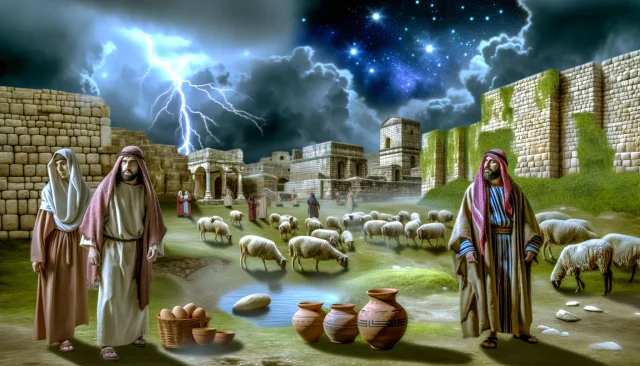
But the kingdom! The teachings of Jesus, particularly in the Sermon on the Mount, provide a divine disruption to the empire's values. In Matthew 13, the parable of the mustard seed illustrates the unexpected nature of God's kingdom. This tiny seed, when planted, can grow into a tree where birds come to nest, a beautiful image of unexpected growth and refuge. Here we see that what appears insignificant has the potential for vast impact. This parable challenges the notion that only grand beginnings yield great outcomes.
Another powerful example is the parable of the sower found in Matthew 13:3-9 (ESV):
"And he told them many things in parables, saying: 'A sower went out to sow. And as he sowed, some seeds fell along the path, and the birds came and devoured them. Other seeds fell on rocky ground, where they did not have much soil, and immediately they sprang up, since they had no depth of soil. But when the sun rose, they were scorched, and since they had no root, they withered away. Other seeds fell among thorns, and the thorns grew up and choked them. Other seeds fell on good soil and produced grain, some a hundredfold, some sixty, some thirty. He who has ears, let him hear.'"This parable powerfully illustrates the varied responses to the gospel and emphasizes the importance of the soil—our hearts—where the seeds of truth are sown.
The apostolic practice further enforces this divine disruption. In Acts 2:44-47 (ESV), we read about the early church:
"And all who believed were together and had all things in common. And they were selling their possessions and belongings and distributing the proceeds to all, as any had need. And day by day, attending the temple together and breaking bread in their homes, they received their food with glad and generous hearts, praising God and having favor with all the people. And the Lord added to their number day by day those who were being saved."Here, we see a communal approach to growth that stands in stark contrast to individualistic ambitions. Their unity and shared resources exemplify the interconnectedness that the kingdom calls for.
The Beautiful Scandal
Everything changes when we recognize that the kingdom's way often seems foolish or scandalous to the world. The cross of Christ, an emblem of weakness and defeat, becomes the very foundation of our faith. In 1 Corinthians 1:18 (ESV), Paul writes:
"For the word of the cross is folly to those who are perishing, but to us who are being saved it is the power of God."This is the beautiful scandal of the gospel that disrupts worldly expectations.
Additionally, the kingdom teaches that true strength is found in humility and service. In Mark 9:35 (ESV), Jesus states,
"If anyone would be first, he must be last of all and servant of all."This notion of losing to win runs counter to the empire's values of dominance and self-promotion. Instea
Continue Your Bible Study
Explore more lessons and deepen your understanding of scripture
View All Lessons Ask AI a Question