Faithful Under Pressure and Free in Christ
Religious Freedom in the Sacred Space of Suffering
Religious freedom sounds polished when it lives in court filings, policy panels, and opinion columns. In real rooms, it often feels much more bruised. It looks like a nurse whispering Psalm 23 under her breath after a supervisor warns her not to “bring faith into patient care,” even though she only prayed when a dying woman asked. It looks like a father in a small apartment in western China lowering his voice while reading the Gospels to his children because the hallway camera outside the door is always on. It looks like a grocery store cashier in my city wearing a tiny cross under her uniform because customers have mocked her before, and she is tired in her bones.
I think about this through the lens of trauma care. When the body is trapped, breath gets shallow, vision narrows, and survival takes over. Communities can do that too. Governments, institutions, workplaces, even families can press so hard against conscience that people begin to live spiritually braced, shoulders up around their ears, always waiting for impact. In the 3 AM darkness, I have cared for patients whose bodies were free to walk out the door while their nervous systems were still living in captivity. Religious coercion can leave that same internal bruise. It can make worship feel dangerous, prayer feel hidden, and truth feel expensive.
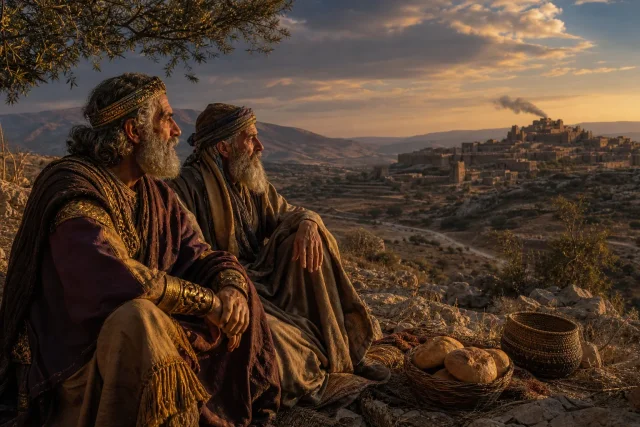
Prayerful meditation on Scripture does not hand me a slogan. It brings me into God’s presence where the pulse of His heart becomes steady enough to regulate my own. When words fail, presence speaks. As I sit with the stories of exiles, kings, prophets, and ordinary faithful people, I do not meet a God who panics when rulers threaten. I meet a God who holds conscience as sacred ground because worship belongs to Him, not to Caesar, not to a boss, not to public approval, not even to church culture when church culture gets controlling.
Naming What Must Die
Before we can talk about religious freedom in a healing way, something in us has to die. Not faith. Not conviction. What has to die is the craving to control worship, whether that control comes from the state, from a religious system, or from our own frightened hearts. There is a counterfeit security that tries to keep belief alive by force. It appears in governments that punish prayer, and it appears in churches that shame questions, pressure appearances, and confuse conformity with holiness. God meets us in our breaking, and one of the first breakings is this: coerced devotion is not devotion.
I have seen a version of this in hospital work. A family once crowded around a patient in respiratory failure, each person insisting on what kind of prayer should be said, who should say it, and which words were acceptable. The patient’s eyes were wide with panic. Everyone was talking about God, but no one was holding space for pain. Religious freedom begins, in part, by letting die the impulse to dominate another person’s encounter with God. Love does not need a chokehold.
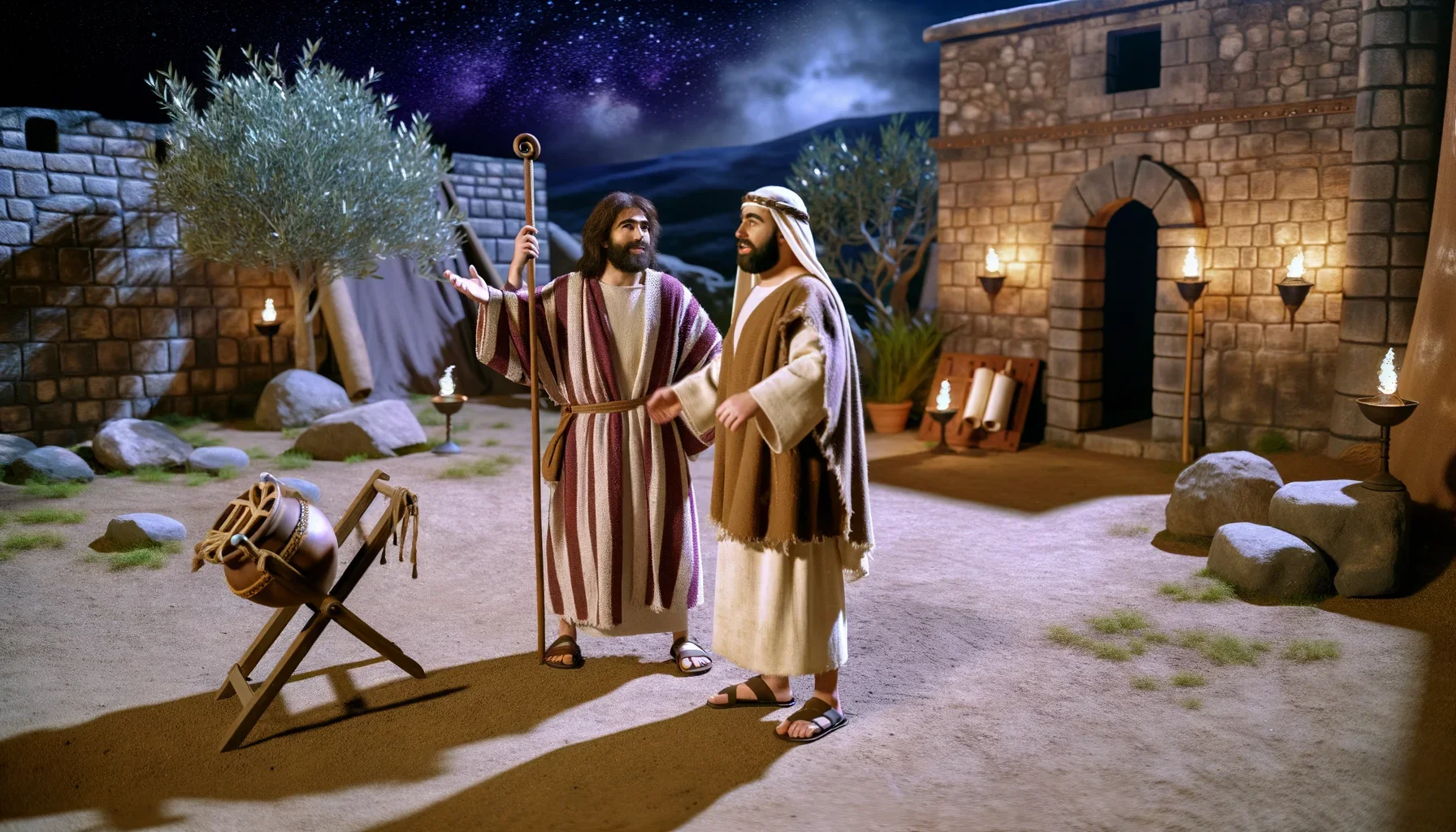
The story of Nebuchadnezzar’s golden image in Daniel 3 presses on this nerve. The issue was not merely private belief. The king demanded public, bodily compliance. Bow when the music plays. Perform loyalty with your knees. The death named here is the death of false worship and the death of the lie that power can manufacture reverence.
“Shadrach, Meshach, and Abednego answered and said to the king, ‘O Nebuchadnezzar, we have no need to answer you in this matter. If this be so, our God whom we serve is able to deliver us from the burning fiery furnace, and he will deliver us out of your hand, O king. But if not, be it known to you, O king, that we will not serve your gods or worship the golden image that you have set up.’” Daniel 3:16-18
That “but if not” undoes prosperity logic and fear-based religion in the same breath. Their freedom was not rooted in outcome control. It was rooted in belonging. Meditation on this passage exposes what must end in me too: my addiction to being safe, approved, and externally protected before I will obey. It also confronts the church’s temptation to seek influence without cost. If my faith only survives where it is applauded, then I am leaning on applause as a life support machine.
Religious freedom also asks another death from us, and this one can sting. The fantasy that Christians only care about freedom when our own rights are threatened has to die. If conscience is sacred, then it is sacred even when the person across from me is not praying my prayers. That does not flatten truth. It refuses coercion. The God who invites worship does not need me to become a spiritual enforcer.
Then comes the dying:
The Descent into Death
The dying part is where most of us tense up. We want the clean headline version of courage, not the sweating, trembling, sleepless version. But religious freedom in Scripture is often forged in enclosed places: palace corridors, lion dens, prison cells, occupied lands. Daniel did not face pressure in a vacuum. He lived under surveillance in a system where politics and worship were braided together tightly enough to choke. The decree in Daniel 6 did not outlaw spirituality in general. It criminalized petition directed anywhere but the king. That is always the deeper wound of coercion: it tries to reroute dependence away from God.
“When Daniel knew that the document had been signed, he went to his house where he had windows in his upper chamber open toward Jerusalem. He got down on his knees three times a day and prayed and gave thanks before his God, as he had done previously.” Daniel 6:10
I love the plainness of that verse. No dramatic soundtrack. No public speech. He went home. He opened the windows. He kept his rhythm. In therapy language, that is regulated resistance. Not performative defiance. Not panic. A grounded return to what is true. Prayerful meditation on Daniel 6 presses me to ask where I have let fear rearrange my habits. Not my opinions, my habits. Because conscience is not only what I say I believe. It is what I keep doing when pressure closes in.
A few months ago, one of our newer nurses asked if she could step into the supply room during a break because she was shaking after a pediatric code. Under fluorescent lights, between stacked saline bags and cardboard boxes of gloves, she told me she wanted to pray but felt embarrassed because another coworker had mocked “religious coping” in the break room. Her hands were trembling so hard she could barely twist the cap off her water bottle. We stood there breathing in for four, holding for four, out for six, letting her nervous system come down from the ceiling. Then she prayed in a whisper. No platform. No spotlight. Just breath and need and God’s tender presence.
That is part of the descent. Freedom is not always winning the policy fight by noon. Sometimes it is refusing to let intimidation colonize your inner room. Sometimes it is grieving the cost. Daniel spent a night with lions. Jeremiah was thrown into a cistern. The early church scattered. There is loss here: promotions missed, reputations bruised, invitations withdrawn, family tension thick as humidity at the dinner table. If you have ever been the single woman in church culture who does not fit the approved mold, you already know how spiritual pressure can feel both subtle and suffocating.
Jesus speaks into this descent with a hard, holy sentence:
“Whoever finds his life will lose it, and whoever loses his life for my sake will find it.” Matthew 10:39
Religious freedom, held biblically, is not the right to worship comfort. It is the costly space in which allegiance to Jesus remains unowned by human power. In the darkness, ego dies there too. The need to be seen as brave. The fantasy that faithfulness will always feel triumphant. A lot of dying looks ordinary from the outside. Inside, it feels like Gethsemane breath.
Holy Saturday Waiting
There is a waiting that comes after the cost has been paid and before relief arrives, and I think this is where many believers quietly unravel. We are not being dramatic. We are tired. Holy Saturday is the day after the arrest, after the trial, after the public humiliation, after the sealed tomb. It is the day when promises feel clinically absent, when your spiritual vital signs seem faint, when you keep checking for movement and seeing none. Religious freedom has its Holy Saturdays too.
I think of believers in places where church buildings were shut down, not for a weekend but for years, and families kept reading photocopied pages of Scripture in kitchens with the curtains pulled. I think of a Muslim-background believer I heard speak at a conference in Nashville, her voice steady and soft as she described being cut off by relatives after baptism. No cinematic rescue. No instant reconciliation. Just the sacred space of suffering, where love for Jesus remained and everything else felt stripped.
The psalms are oxygen here because they refuse to rush grief off the table.
“How long, O Lord? Will you forget me forever? How long will you hide your face from me? How long must I take counsel in my soul and have sorrow in my heart all the day?” Psalm 13:1-2
Prayerful meditation on lament gives religious freedom a deeper root than activism alone. It keeps our hearts from becoming brittle. It allows us to tell the truth: being silenced hurts. Being misunderstood hurts. Watching laws tighten, watching neighbors grow suspicious, watching faith caricatured in public life, all of that lands somewhere in the body. Jaw clenches. Sleep frays. Appetite changes. Tears come late in the shower after holding it together all day. God can hold that. He is not threatened by unedited sorrow.
In my own life, Holy Saturday has often felt less like persecution and more like the ache of hiddenness. Praying for healing that did not come quickly. Asking God why certain doors stayed shut. Sitting in church while everyone seemed paired off and settled, and I felt both faithful and painfully out of place. That waiting taught me something I carry into this conversation: freedom is not only external permission. It is internal spaciousness in God’s presence, where my soul can breathe even before circumstances change.
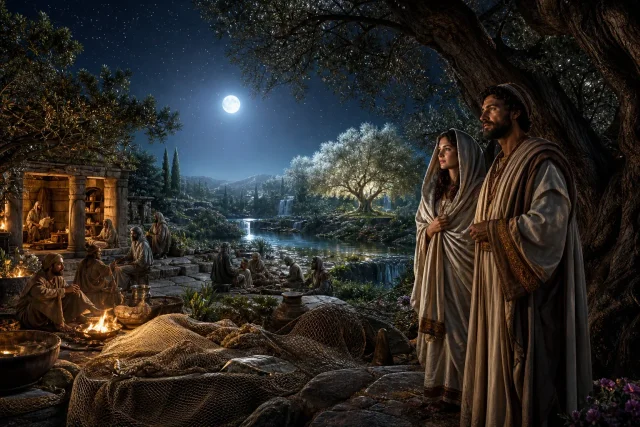
In the darkness, I return to one of the most tender promises in exile literature:
“When you pass through the waters, I will be with you; and through the rivers, they shall not overwhelm you; when you walk through fire you shall not be burned, and the flame shall not consume you.” Isaiah 43:2
Notice the promise is not evacuation from all danger. It is presence in it. When words fail, presence speaks. Holy Saturday waiting trains the church to treasure God Himself more than religious convenience. That waiting can feel buried. Still, buried is not abandoned.
But Sunday is coming:
The Unexpected Morning
Resurrection often enters quietly enough that we almost miss it at first. Not every answer arrives as a legal victory or a headline reversal. Sometimes new life breaks in as courage where panic used to live. Sometimes it comes as a community that refuses fear. Sometimes it arrives in the strange mercy of discovering that chains did not own the soul after all. The morning is unexpected because God does not always restore on the timetable our nervous systems beg for, yet He restores with a depth that reaches beyond the presenting wound.
Acts 16 has become precious to me here, not because it is tidy, but because it is disruptive in all the right ways. Paul and Silas were beaten, then jailed, then immobilized in stocks. Their bodies were not free. Their worship still was.
“About midnight Paul and Silas were praying and singing hymns to God, and the prisoners were listening to them, and suddenly there was a great earthquake, so that the foundations of the prison were shaken. And immediately all the doors were opened, and everyone’s bonds were unfastened.” Acts 16:25-26
I cannot read that without feeling my own chest open a little. Not because I expect every prison to shake by morning, but because worship in confinement is a form of resurrection already beginning. Their praise was not denial. It was defiant attachment to God in a place built to reduce them. Prayerful meditation on this scene reveals God’s heart about religious freedom in a way arguments alone cannot: He is not only concerned with unrestricted speech. He is fiercely near to unrestricted devotion.
And then there is the jailer, trembling, asking what salvation looks like. That detail matters. Resurrection freedom does not merely protect insiders. It spills outward. When conscience is free before God, even those enforcing the chains may become recipients of mercy. That is a deeply charismatic kind of miracle to me. The Holy Spirit does not only comfort the bruised believer. He can convert the atmosphere, the room, the relationship, even the person on the other side of the locked door.
I have seen smaller resurrections in hospital halls. A chaplain once advocated for a patient whose family wanted her denied spiritual care because they disapproved of her conversion. After hours of tense conversation, the patient was finally allowed a private visit. She held the chaplain’s hand, oxygen tubing hissing softly, rain tapping the window, and said, “I can breathe now.” I have never forgotten that. Religious freedom at its most human can sound like that: I can breathe now.
But Sunday is coming in ordinary neighborhoods too. It looks like a believer who once hid her Bible starting a lunchtime reading group at work with gentleness, not aggression. It looks like parents teaching children to pray without teaching them to hate those who disagree. It looks like churches defending the conscience rights of people outside their tribe because truth does not need coercion to stay true. Resurrection is surprising that way. It comes with scar tissue, and still it is life.
Learning to Live Again
Resurrection life around religious freedom is not swagger. It is steadiness. It is a soul no longer ruled by fear, no longer addicted to dominating, no longer collapsing when pressure rises. I think of Jesus after resurrection, still bearing wounds, still speaking peace. That matters to me as a trauma-informed believer. Healing does not erase memory. It restores capacity. We can live again without pretending nothing happened.
Practically, this means we cultivate habits that keep conscience anchored in God’s presence. We pray before outrage. We read Scripture slowly enough for it to move from argument into bloodstream. We bless our enemies without surrendering truth. We advocate for legal protections, yes, and we also tend to the interior life so activism does not become another furnace. If you feel activated reading this, pause and breathe with me: in for four, hold for four, out for six. Let your shoulders drop. God is near in your body too.
Paul’s words in Romans keep calling me back to the center:
“For none of us lives to himself, and none of us dies to himself. For if we live, we live to the Lord, and if we die, we die to the Lord. So then, whether we live or whether we die, we are the Lord’s.” Romans 14:7-8
That belonging reframes everything. When I know I am the Lord’s, I do not have to clutch power with white knuckles. I can protect the vulnerable. I can speak when conscience is threatened. I can refuse manipulation in church settings. I can honor the dignity of the coworker who does not share my creed. I can sit in a traffic jam after a hard shift, forehead against the steering wheel at a red light, and still remember that no institution gets the final claim on my worship.
Religious freedom also changes how we move through everyday life. In the grocery store checkout line, it means the woman in front of me with the headscarf or the atheist bumper sticker is still a neighbor, not an enemy avatar. In neighborhood conflicts over school policy or holiday displays, it means speaking with conviction without treating people as targets. In financial stress, when fear whispers that survival matters more than integrity, it means refusing to sell the soul for security. In health concerns, when pain narrows the world, it means guarding the sacred interior room where God still meets us.
This is where I end up after sitting with these texts in prayer: God’s heart about religious freedom is deeply personal because worship is deeply personal. He formed the inner room. He does not force the knee. He invites the heart. And He asks His people to live in such resurrection-shaped freedom that we neither bow to idols nor build them for others. That kind of life is tender, brave, and very much alive.
Resurrection Invitation
If you want religious freedom only as a weapon, let that die. If you want safety more than faithfulness, bring that to the cross too. If you have been bruised by coercive religion or frightened by public hostility toward faith, Jesus is not asking you to become numb. He is calling you to die to fear’s rule so you can live in His presence with clean, unforced breath.
There is life on the other side of this dying. Not polished life. Resurrected life. Life that can pray with windows open, sing in midnight cells, lament on Saturday, and still rise to love. God meets us in our breaking, and He is able to restore what fear has constricted.
Prayer: Jesus, take what is controlling, defensive, and afraid in us, and let it die with You. Raise in us a holy freedom that worships without coercion, speaks without cruelty, and stands without panic. Holy Spirit, hold those whose consciences are under pressure tonight. Regulate their breath, strengthen their inner being, and make room in them for courage, tenderness, and truth. Amen.
Reflection Questions
Introspective: What fear, false security, or need for control in me is resisting the death required for true religious freedom?
Contemplative: Hold this paradox before God: how can I remain deeply convicted in worship while refusing to coerce another person’s conscience?
Action: What is one concrete practice this week—private prayer, public advocacy, a hard conversation, or defending someone else’s conscience—that will help me live this resurrection-shaped freedom?
Continue Your Bible Study
Explore more lessons and deepen your understanding of scripture
View All Lessons Ask AI a Question