Christ Our Bread and Presence With Us

Corpus Christi and the death of a thin faith
Corpus Christi can sound unfamiliar to many Protestant ears, or loaded with debates that arrive before reverence ever has a chance to breathe. Yet the phrase simply means the body of Christ, and once you say that, the room gets quiet. You are not dealing with a hobby, a church add-on, or a quaint ritual from another branch of Christianity. You are standing before the staggering claim that Jesus gives himself to his people and gathers them into one living people through his broken body and shed blood.
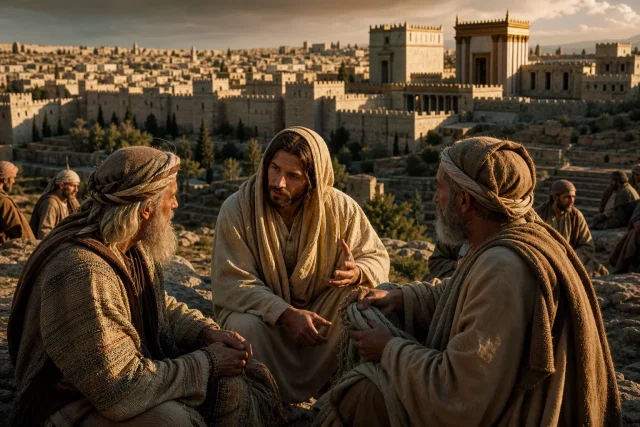
Picture yourself walking through ancient Jerusalem during Passover week, dust lifting under sandals, roasted lamb in the air, lamps flickering against stone walls, and every family telling the old story of rescue. History comes alive when you realize that Jesus places himself right inside that story of deliverance. Corpus Christi is not mainly about a feast day on a calendar; it is about the gospel pressing into your actual life, where exhausted parents, anxious students, overworked nurses, and people stuck in traffic on I-35 need more than religious memory. You need Christ himself.
I say that as somebody who nearly lost faith in college. At twenty, I could handle debates, dates, inscriptions, and arguments about empire, but I hit a wall when faith felt thin and symbolic in the worst way, all idea and no bread. Years later, after handling pottery shards on an archaeological dig and then sitting with teenagers from hard neighborhoods who knew real hunger, I could not read the feeding stories or the table scenes as decorative religion. The stones cry out, and the witness of Scripture presses hard: Jesus does not offer vague inspiration. He gives himself to sustain a dying people.
Naming What Must Die
Corpus Christi first confronts a death, and if you skip that death, the meal becomes sentimental. What must die is your illusion of self-sufficiency, that polished modern identity that says you can feed your own soul with achievement, entertainment, outrage, or control. You see it in the woman checking grocery prices with a calculator on her phone while trying not to cry, in the teacher smiling through financial stress after a second job shift, in the guy pounding the steering wheel in traffic because his whole day rests on whether he can control ten thousand variables he does not own. Those are not random moments. They expose a hunger deeper than inconvenience.
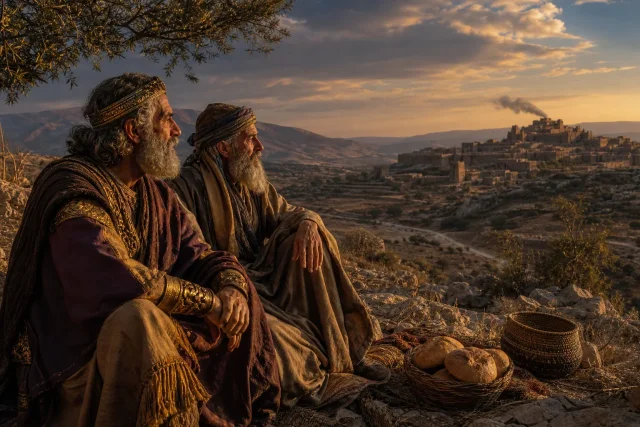
Israel knew that hunger in the wilderness. Exodus 16:3 records their desperation: “And the children of Israel said unto them, Would to God we had died by the hand of the Lord in the land of Egypt, when we sat by the flesh pots, and when we did eat bread to the full; for ye have brought us forth into this wilderness, to kill this whole assembly with hunger.” That is raw, unedited human speech. Slavery starts to look attractive when your stomach is empty and your future feels uncertain.
What needs to die is not only obvious rebellion. Sometimes it is your nostalgia for Egypt, your preference for familiar bondage over dependent trust. Corpus Christi presses on that false security. You cannot come to Christ’s table clutching the lie that your bank account, your discipline, your theological tribe, your political anger, or your carefully managed image will keep you alive.
There is also an old identity that must end: consumer Christianity. In that version of faith, you attend, sample, critique, and move on. You treat the people of God the way somebody scrolls restaurant reviews, asking whether this place meets your preferences. Yet Paul writes in 1 Corinthians 11:28, “But let a man examine himself, and so let him eat of that bread, and drink of that cup.” Examination means the death of casualness. The meal is not fast food for the religiously curious. It is covenant communion for people who admit they cannot live apart from Christ.
Picture an ancient storehouse unearthed by archaeologists, grain jars lined in rows, each jar a witness to dependence on harvest, weather, and provision. Ancient people knew what many of us forget behind debit cards and delivery apps: daily bread is fragile. Corpus Christi names the death of the fantasy that you are invulnerable. Before resurrection joy, there is this hard confession: you are hungry, you cannot save yourself, and your life must be received as gift.
Then comes the dying:
The Descent into Death
The dying is not poetic at first. It feels humiliating. Corpus Christi takes you from abstract belief to embodied surrender, and that can sting because your body keeps score of your fear. You kneel with unresolved conflict, unpaid bills, a medical test pending in your patient portal, and a text thread gone cold with somebody you love. The bread and the cup do not flatter you. They strip away your performance and ask whether you will come as a beggar.
Picture Elijah under the broom tree in 1 Kings 19, not triumphant, not cinematic in the superhero sense, but depleted enough to want out. Verse 4 says, “But he himself went a day's journey into the wilderness, and came and sat down under a broom tree: and he requested for himself that he might die; and said, It is enough; now, O Lord, take away my life; for I am not better than my fathers.” That line wrecks your pride. “I am not better.” There is the death of ego, the burial of spiritual swagger.
Corpus Christi belongs in that terrain because the body of Christ meets people whose false strength is collapsing. In many Christian traditions, believers speak differently about Christ’s presence in the meal, and it is right to admit that honestly. Yet across those differences stands a shared conviction that this table is no empty prop. Christ meets his people, nourishes faith, and binds them to his saving death. The meal calls you away from self-salvation and into surrendered dependence.
I think about a teenager I mentored who carried himself with that tough, chin-up look kids develop when life has taught them not to need anybody. One evening after basketball, under the buzzing lights of a school gym that smelled of floor polish and sweat, he admitted he was tired of pretending he was fine. That confession was not weakness; it was a descent. Faith often begins there, when the mask finally dies.
The Gospels place Jesus in Gethsemane, and the scene is almost unbearably physical. Night air. Olive trees. Friends fighting sleep. Sweat and grief. He does not drift toward the cross with numb detachment. He enters the crushing place willingly. Corpus Christi makes no sense unless you see that the body given for you is first the body offered in obedience through anguish.
Isaiah 53:5 says, “But he was wounded for our transgressions, he was bruised for our iniquities: the chastisement of our peace was upon him; and with his stripes we are healed.” That is not decorative language. It is covenant blood and real suffering. The bread points to a body broken, not to a motivational slogan. The cup points to blood poured out, not to a vague feeling of spirituality.
So the descent into death means relinquishing your demand to be fed on your own terms. It means confessing sin before you blame your spouse, your boss, your parents, or your church. It means laying down the curated self that looks calm on Instagram while panic gnaws at your ribs at 2:13 a.m. It means admitting that if Christ does not sustain you, you do not have life in yourself.
In the darkness:
Holy Saturday Waiting
Holy Saturday is where many believers secretly live. Not Good Friday shock, not Easter sunrise singing, but the long gray interval where the promise feels hidden. Corpus Christi speaks into that waiting because the meal trains you to live by promise when sight is thin. You receive before you fully feel. You trust before every prayer is answered. You come hungry, and hunger itself becomes part of the witness.
Picture the disciples behind closed doors, the room dim, the air stale, every sound in the street making shoulders tighten. They have memories of bread multiplied, storms stilled, and a friend called from a tomb, yet now those memories crash against the sight of a crucified Messiah. Saturday faith is not glamorous. It is the faith that stays in the room and waits.
Psalm 34:18 gives language for that room: “The Lord is nigh unto them that are of a broken heart; and saveth such as be of a contrite spirit.” Nearness in Scripture is not always noisy. Sometimes the witness of God arrives in the silence of not being abandoned. Corpus Christi can steady you there. Whether your tradition emphasizes memorial, mystery, sacrament, or communion, the meal calls your body to receive what your emotions cannot manufacture.
I think of museum cases holding ancient oil lamps, tiny clay vessels blackened by flame. They are not flashy artifacts. They speak of ordinary endurance, of households waiting through dark hours with enough light for one more step, one more conversation, one more prayer. That is Holy Saturday faith. Not spectacle, but persistence.
In modern life, that waiting may look painfully ordinary. It is the couple sitting in a parked Honda after a hard doctor appointment, not ready to drive home yet. It is the single mom comparing grocery totals under fluorescent lights, putting back cereal because rent is due. It is the son answering another call from a parent whose memory is slipping away. Corpus Christi does not erase those scenes. It places Christ’s given body and covenant mercy right in the middle of them.
The waiting also exposes whether you want Christ or merely quick relief. That is hard truth. Plenty of us want resurrection without remaining at the tomb long enough to let old desires lose their grip. Saturday asks whether you will remain with Jesus when the room is quiet and the answers are late. The bread and cup become an enacted prayer: sustain me while I wait, keep me in your people, do not let my faith rot into private despair.
But Sunday is coming:
The Unexpected Morning
Resurrection breaks in with surprise, and Corpus Christi is radiant only because the crucified one is alive. If Jesus remains in the tomb, the meal collapses into memorial nostalgia. But the witness of the New Testament is not nostalgia. It is astonishment. The risen Christ still gives himself to his people, still gathers, still nourishes, still confronts, still comforts.
Luke 24 gives one of my favorite scenes because it is so human. Two disciples walk the road to Emmaus carrying shattered expectations, and Jesus comes near while they do not recognize him. Then verse 30-31 says, “And it came to pass, as he sat at meat with them, he took bread, and blessed it, and brake, and gave to them. And their eyes were opened, and they knew him; and he vanished out of their sight.” Picture that table: tired feet, dust on clothing, evening light across the room, and sudden recognition exploding in ordinary bread.
History comes alive when you realize resurrection recognition often arrives at the table. Not because bread is magic, and not because Christians in every tradition explain the mystery the same way, but because the risen Jesus delights to make himself known in the shared meal he appointed for his people. Corpus Christi becomes a gospel feast of recognition. You come saying, I thought I was alone on the road. Then Christ meets you.
I remember a season after college when faith returned gradually, not with cinematic thunder but with stubborn mercy. I was reading Acts with a group of students, and the scenes stopped feeling distant. Meals, prayers, shared possessions, wounds, courage, prison cells, ordinary bread in ordinary houses. The archaeological evidence tells us the early church lived in real streets under real pressure, not inside stained-glass fantasy. And suddenly I saw it: Jesus was not asking me for detached admiration. He was calling me into his living body.
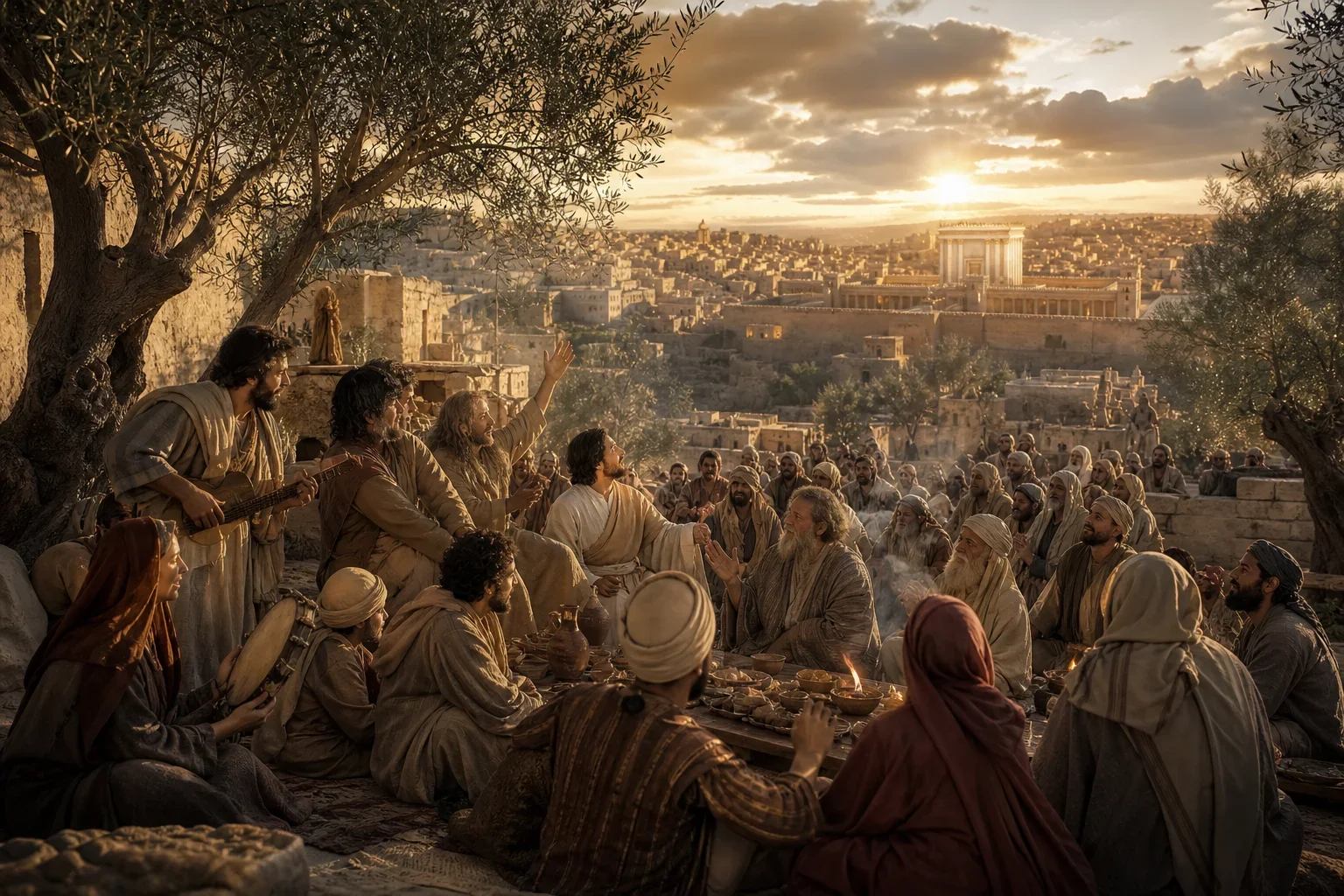
Acts 2:42 records that life with striking simplicity: “And they continued stedfastly in the apostles' doctrine and fellowship, and in breaking of bread, and in prayers.” There it is, resurrection life with a pulse. Doctrine and fellowship. Bread and prayers. Truth and table. Corpus Christi, framed through the whole biblical story, is not a side issue. It belongs to the risen Christ forming a people who remember him, receive from him, and bear witness to him.
The morning is unexpected because resurrection does not merely restart the old life. It creates a new kind of community. The angry man in traffic becomes capable of patience. The lonely retiree becomes welcomed at a church table instead of fading into invisibility. The college student tangled in doubt finds that Christ is not threatened by questions and still feeds the hungry heart. The body of Christ becomes visible when people who should remain isolated are joined in grace.
Picture the stone rolled away, the damp chill of dawn, women carrying spices, and grief being interrupted by impossible news. That same pattern echoes every time Christ revives deadened faith. The meal no longer says only, he died. It also announces, he lives, and because he lives, your hunger is not the end of the story.
Learning to live again
Resurrection life after Corpus Christi is beautifully practical. It means you stop treating communion as a detached religious moment and start receiving it as training for daily faithfulness. If Christ gives himself for you, then your life is no longer a private fortress. You become bread for others in the derivative, servant-hearted sense: available, broken open, generous, present. Not a savior, but a witness.
That changes neighborhood interactions. You notice the older man two doors down whose lawn has gone wild since his surgery, and you bring help instead of polite distance. It changes relationship conflicts. You put the phone down, sit at the table, and tell the truth without weaponizing it. It changes financial stress. You still budget, still call the utility company, still work the extra shift, yet fear no longer gets the last word because your security is anchored in Christ, not in the illusion of endless supply.
Paul ties the table to communal responsibility in a way that should shake every isolated version of Christianity. You cannot claim devotion to Christ while despising his people. You cannot receive the sign of costly grace while nursing contempt. Resurrection life means repentance has hands and feet.
Micah 6:8 says, “He hath shewed thee, O man, what is good; and what doth the Lord require of thee, but to do justly, and to love mercy, and to walk humbly with thy God?” That humility belongs at the table and in the parking lot after the service. It belongs in staff meetings, group chats, oncology waiting rooms, and school pickup lines. Corpus Christi sends you back into the world as somebody marked by received mercy.
The first Christians lived under pressure from empire, scarcity, and suspicion. Picture narrow streets, shared loaves, whispered prayers, and the constant awareness that allegiance to Jesus carried a cost. Yet their life together became a witness stronger than fear. The stones cry out from ancient houses and meeting places: a fed people can endure. Not because they are naturally tough, but because Christ sustains them.
So here is the resurrection invitation. Let your false life die. Bring the self-sufficient mask, the consumer faith, the private bitterness, the polished image, and lay them down before the crucified and risen Christ. Receive the promise of life: he does not mock hungry people; he feeds them. And pray this with open hands: Lord Jesus, body given and life risen, kill what is false in me, keep me near in the waiting, and raise me into a life that bears your witness at every table you place before me.
Introspective: What false security in your life needs to die so that Corpus Christi becomes more than a ritual phrase and turns into living dependence on Christ?
Contemplative: Sit with this question: where are you living in Holy Saturday right now, and what might it mean to receive Christ’s sustaining presence before your circumstances change?
Action: At your next meal, church gathering, or neighborhood interaction, who can you welcome, reconcile with, or serve in a way that bears witness to the body of Christ?
Continue Your Bible Study
Explore more lessons and deepen your understanding of scripture
View All Lessons Ask AI a Question