
Saturday, October 10, 2026
Good morning. Today we stand beside Naaman at Elisha’s door, where a powerful man had to choose between offended pride and obedient humility.
Today's Verse
"So Naaman came with his horses and with his chariot, and stood at the door of the house of Eliseus. And Eliseus sent a messenger to him, saying: Go, and wash seven times in the Jordan, and thy flesh shall recover health, and thou shalt be clean. Naaman was angry, and went away, saying: I thought he would have come out to me, and standing would have invoked the name of the Lord his God, and touched with his hand the place of the leprosy, and healed me. Are not the Abana and the Pharphar, rivers of Damascus, better than all the waters of Israel, that I may wash in them and be made clean? So as he turned, and was going away with indignation, his servants came to him, and said to him: Father, if the prophet had bid thee do some great thing, surely thou shouldst have done it: how much rather what he now hath said to thee: Wash, and thou shalt be clean? Then he went down, and washed in the Jordan seven times, according to the word of the man of God, and his flesh was restored, like the flesh of a little child, and he was made clean."— 2 Kings 5:9-14
Reflection
Naaman arrived with rank, horses, and expectations. Elisha did not come out; he sent a simple instruction: wash in the Jordan seven times. Naaman wanted a dramatic cure and nearly lost healing because his pride was bruised. Only when he listened to his servants and obeyed did his skin become like a child’s. We do the same when we resist plain counsel, apologies, or small acts of obedience because they feel beneath us.
Humility begins when we stop demanding a grand path and obey the simple good set before us.
1-Minute Study: Understanding humility
Humility in Naaman’s story is not weakness or poor self-worth; it is the willingness to receive God’s help on God’s terms. Naaman was a commander used to deference, so Elisha’s messenger felt like an insult. His pride was exposed not by failure, but by a simple instruction he considered too ordinary. That is often how humility is tested: in the email we need to answer honestly, the correction we do not like, the apology we owe, the task that seems below our status. Naaman’s servants saw clearly: he would have done something heroic, but stumbled over something plain. Scripture shows this pattern elsewhere. Moses is called meek, yet he led firmly. Christ washed feet. Humility does not erase strength; it puts strength under obedience. In autumn, leaves fall and landscapes change. Naaman’s turning point also came through letting something fall—his insistence on being treated according to his own importance.
Cross References: James 4:10 • Luke 14:11 • Philippians 2:3-4
Prayer of the Day
Lord God, when my pride wants attention, ceremony, or control, bring me back to the Jordan. Teach me to accept simple correction, honest counsel, and the small obedience in front of me. As Naaman was cleansed when he bowed to Your word, wash away my stubbornness and grow humility in me. Amen.
Today's Challenge
Today, do one task you usually avoid because it feels beneath you—quietly, without explaining yourself or seeking notice.
Sacred Art Spotlight
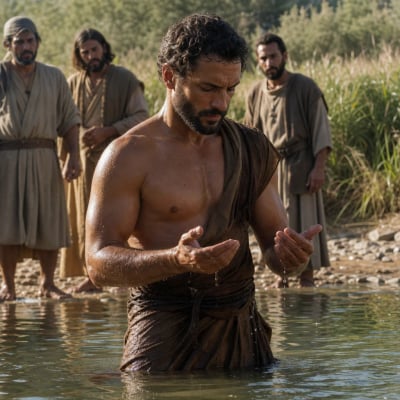
Naaman, the Syrian commander, stands in the Jordan after dipping seven times, his attendants watching as his skin is restored like that of a little child.