Monday, September 14, 2026
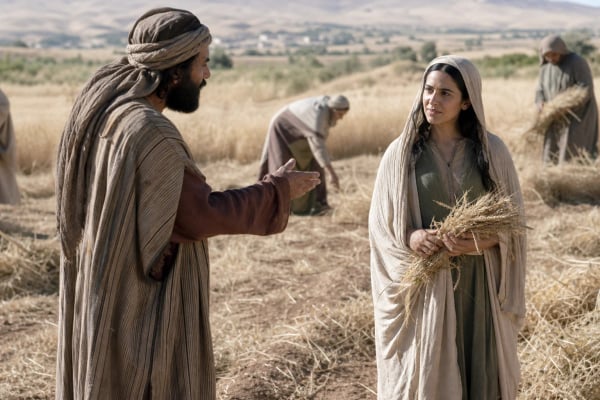
Good morning, and welcome to Hail Mary Daily. Today we walk into Boaz’s field, where Ruth gathers leftover grain and meets a man whose generosity has hands and instructions.
Today's Verse
"Then said Booz unto Ruth, Hearest thou not, my daughter? Go not to glean in another field, neither go from hence, but abide here fast by my maidens: Let thine eyes be on the field that they do reap, and go thou after them: have I not charged the young men that they shall not touch thee? and when thou art athirst, go unto the vessels, and drink of that which the young men have drawn. Then she fell on her face, and bowed herself to the ground, and said unto him, Why have I found grace in thine eyes, that thou shouldest take knowledge of me, seeing I am a stranger? And Booz answered and said unto her, It hath fully been shewed me, all that thou hast done unto thy mother in law since the death of thine husband: and how thou hast left thy father and thy mother, and the land of thy nativity, and art come unto a people which thou knewest not heretofore. The LORD recompense thy work, and a full reward be given thee of the LORD God of Israel, under whose wings thou art come to trust."— Ruth 2:8-12
Reflection
Ruth arrives in Boaz’s field as a widow and foreigner, gathering leftover grain behind the reapers. Boaz does more than permit her to glean. He tells her where to work, makes sure the men leave her unharmed, and invites her to drink the water already drawn. His generosity is structured, practical, and protective. In harvest season, this speaks plainly: generosity is not vague kindness, but making room in our budgets, schedules, tables, and workplaces so vulnerable people can actually gather what they need.
Generosity leaves margin on purpose so someone else can live from what God has placed in our hands.
1-Minute Study: Understanding generosity
Boaz’s generosity begins with obedience. Israel’s gleaning laws required landowners not to strip their fields bare, so the poor, widow, and stranger could gather food. Boaz honors that command, but he goes further: he speaks kindly to Ruth, keeps her safe, and gives her access to water. Generosity in Scripture is often this concrete. It is not only giving extra after comfort is secured; it is arranging ordinary life so the vulnerable are remembered. Ruth did not ask for luxury. She needed grain, safety, and dignity. Boaz provided all three. That pattern still matters. Generosity may look like leaving extra in the grocery budget for a struggling neighbor, paying a day laborer promptly, sharing produce from a garden, or making sure a new employee is not left to navigate alone. In each case, generosity is more than sentiment. It notices need, protects dignity, and opens a path for another person to gather daily bread.
Cross References: Leviticus 19:9-10 • Deuteronomy 24:19 • Acts 20:35
Prayer of the Day
Lord God, Thank You for the field of Boaz, where Your care reached Ruth through a generous man. Teach me to leave room in what I own, earn, and plan, so others can gather what they need. Make my generosity practical, protective, and respectful. Let me reflect Your provision in the ordinary work of this day. Amen.
Today's Challenge
Set aside one specific portion of this week’s harvest—garden produce, grocery money, or a prepared meal—and give it to a widow, newcomer, single parent, or neighbor under strain.
Sacred Art Spotlight
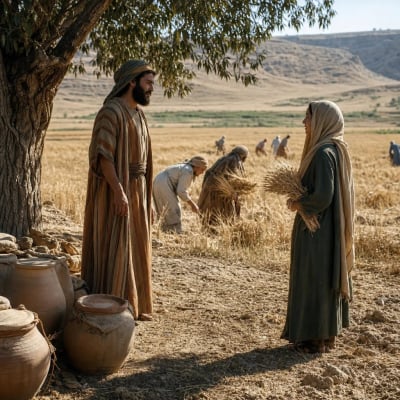
Boaz stands at the edge of a golden harvest field speaking kindly to Ruth, while reapers work nearby and water jars wait in the shade.