Will All Jews Return to Jerusalem in Prophecy

All Jews Return Jerusalem
The Empty Chair
The empty chair at a table can preach a sermon all by itself. A plate sits ready, the fork turned just so, the glass catching the late afternoon light, and no one comes to claim the place. I have sat before such silence after widowhood, and I have watched children in school cafeterias pretend not to mind eating alone, though their shoulders told another story. Hunger is never only in the stomach; it settles in the heart, in memory, in the ache to belong somewhere without apology.
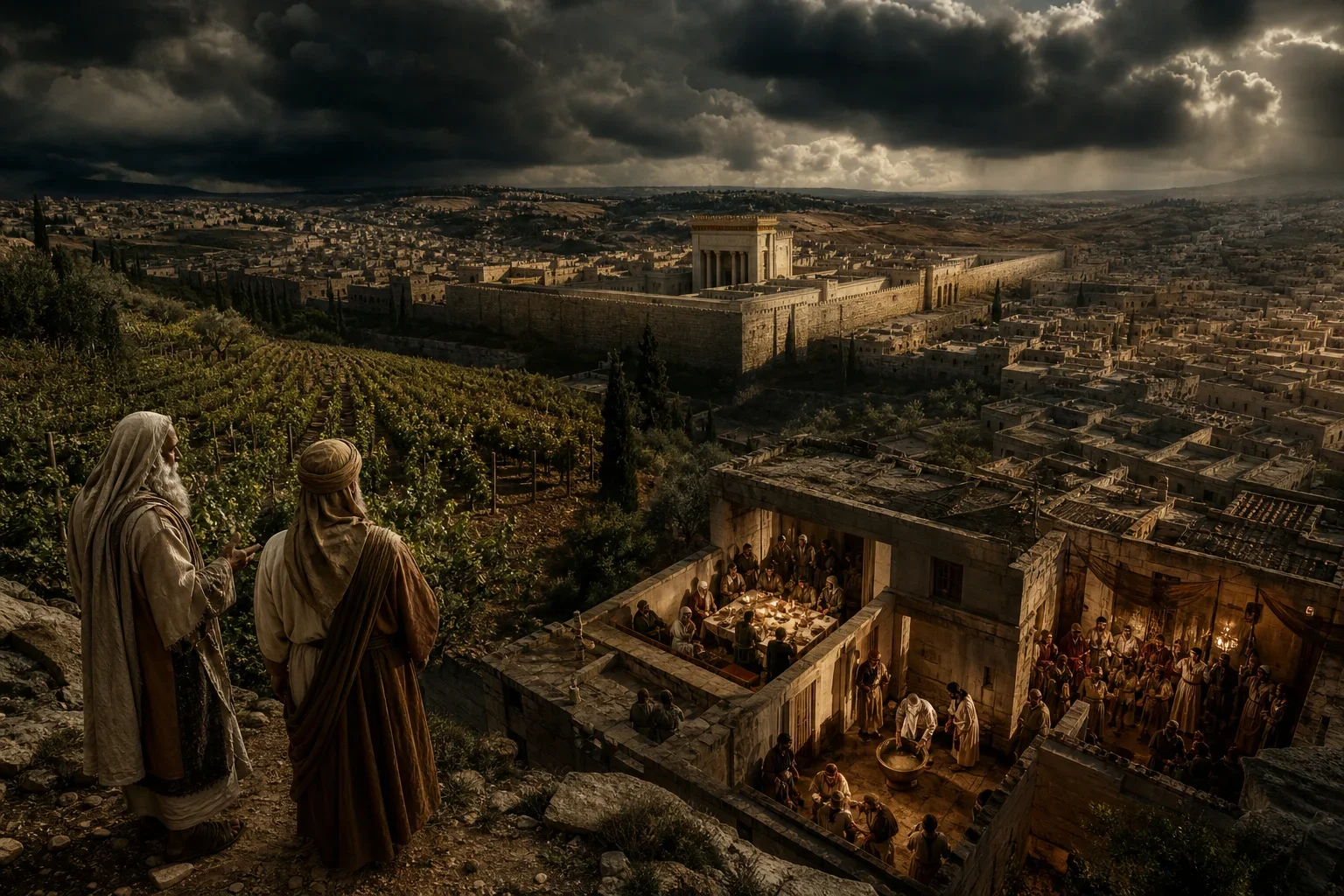
Jerusalem carries that ache in Scripture. The city is not merely stone, market, gate, and hillside, but a table-place in the purposes of God, the appointed room where names, promises, and worship gather. When Jewish people were scattered among the nations, the pain was not only geographic. It was the pain of distance from the place where the Lord had set His name, the pain of a chair left empty for generations, the pain of songs remembered beside foreign rivers.
Psalm 137:1 “By the rivers of Babylon, there we sat down, yea, we wept, when we remembered Zion.”
That verse does not speak in the language of policy papers. It speaks in tears. In my sixty years of walking with Jesus, I have noticed that the Lord often deals with peoples and persons through this tender mystery: He addresses public matters without losing private sorrow. The longing for Jerusalem in Jewish memory bears the weight of exile, identity, worship, and promise all at once, much as a grandmother’s table may hold grief, blessing, and history in one loaf of bread.
Even now, one may stand in a supermarket line in Brooklyn, Paris, Buenos Aires, or Johannesburg and see the many forms of displacement. A man checks rising grocery prices with a tired brow. A woman answers a message from an aging mother across an ocean. A teenager in a neighborhood argument wonders where home truly is. Financial stress, family conflict, and health concerns press upon ordinary days, and the deeper human cry remains: where is the place prepared for us, and who will gather us in peace.
The question of all Jews returning to Jerusalem rises from that ancient hunger. It is not fed by slogans. It must be brought reverently before the faithful Word of God, where longing is named honestly and where the Lord’s purposes are handled with clean hands and a prayerful spirit.
Pull up a chair:
The Scandalous Dinner Guest
When I turn to the Gospels, I meet a Savior who repeatedly entered the world of tables. He received invitations from Pharisees, sat among tax collectors, fed crowds on open ground, and took bread into His holy hands on the night He was betrayed. His presence at table was never accidental. Each setting became a living sign that God gathers the estranged, names sin truthfully, and still extends mercy with astonishing freedom.
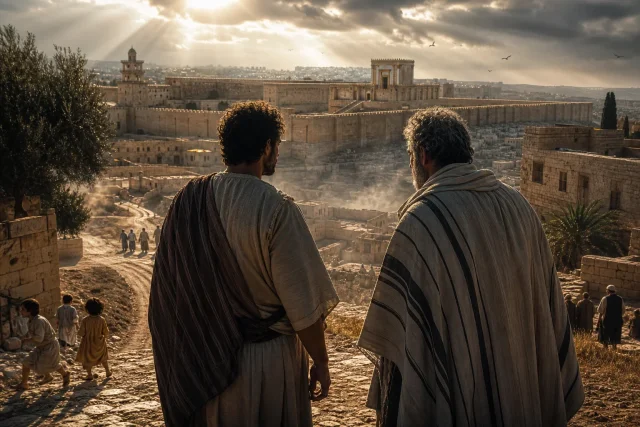
The matter before us, all Jews returning to Jerusalem, must be placed beneath the authority of this same Jesus. He was born a Jew, circumcised under the Law, devoted to His Father, and deeply bound to Jerusalem. He did not treat the city lightly. He went up to it, taught within it, wept over it, died near it, and rose in the power of God. Any Christian meditation on Jewish return that forgets Jesus’ Jewishness and His tears over Jerusalem has already set the wrong table.
Luke 19:41 “And when he was come near, he beheld the city, and wept over it.”
That weeping matters. It keeps us from turning prophecy into a cold chart. The Lord’s heart toward Jerusalem is neither detached nor cynical. It is personal, wounded, righteous, and steadfast. Through every season, He remains the faithful One. Yet Jesus also refused shallow expectations. Many in His day longed for visible national restoration while missing the visitation of God standing in their midst.
At His tables, Jesus gathered people who had no business sitting comfortably anywhere. The scandal was not only that sinners were present, but that grace sat down among them without becoming unclean. This gives a precious caution to Christians discussing Israel, aliyah, and Jerusalem in present history. We must not speak as if God’s purposes can be reduced to headlines, party loyalties, or sentimental enthusiasm. The Messiah receives no crude handling.
Still, we dare not dismiss the prophetic thread. Jesus’ ministry fulfilled Israel’s story rather than erasing it. He fed multitudes in a wilderness setting that echoed the Lord’s care in earlier generations. He instituted the Supper within Passover memory. He promised a coming kingdom banquet. His table ministry widened mercy to the nations while preserving the integrity of God’s dealings with Israel.
Romans 11:1-2 “I say then, Hath God cast away his people? God forbid. For I also am an Israelite, of the seed of Abraham, of the tribe of Benjamin. God hath not cast away his people which he foreknew.”
Paul’s words are as steady as an old hymn tune. “Great is Thy faithfulness,” we sing, and here the apostle says much the same in doctrine. The Jewish people remain within the mysterious, abiding purposes of God. That does not settle every political question, nor does it grant uncritical approval to every earthly action of any modern state. It does keep Christians from arrogance, replacement pride, and careless speech.
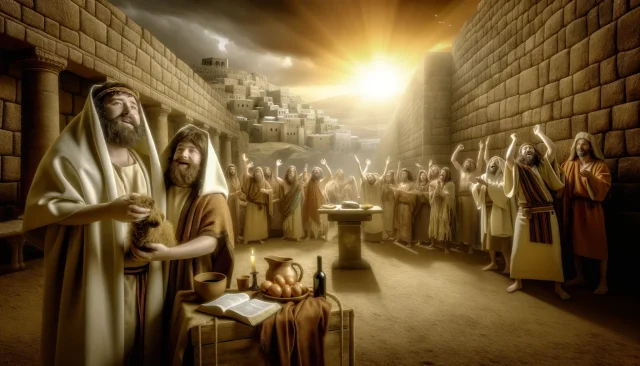
At the Last Supper, our Lord set before His disciples bread and cup as signs of the new covenant in His blood. That table looked backward to Israel’s redemption and forward to the coming reign of God. In that holy setting, we begin to see Jerusalem not merely as contested ground, but as a place bound to redemptive memory and future promise in ways the church must handle with trembling reverence.
Pass the bread:
Theology of the Table
A table in Scripture is often a place of ordering. Names are gathered, portions are assigned, remembrance is kept, and belonging is enacted. In sacramental life, bread and cup do not become trivial emblems for me. As a Methodist woman, I have long cherished the grace of Holy Communion as a tender means by which Christ meets His people. We do not master the mystery; we receive it. We come hungry, and He nourishes faith.
That sacramental pattern offers a careful way to think about Jerusalem and the return of Jews. The Lord who appoints a table also appoints times, places, and purposes. He gathers bodies, not merely ideas. He works in history, not only in inward sentiment. So when prophets speak of Israel’s regathering, they speak of something embodied, communal, and visible, though never detached from cleansing, renewal, and the knowledge of God.
Ezekiel 36:24-26 “For I will take you from among the heathen, and gather you out of all countries, and will bring you into your own land. Then will I sprinkle clean water upon you, and ye shall be clean: from all your filthiness, and from all your idols, will I cleanse you. A new heart also will I give you, and a new spirit will I put within you.”
There is the richness of it. Return to the land is named, and spiritual cleansing is named in the same breath. I have learned to rest in His promises without forcing them into one narrow timetable. Some Christians insist every prophetic line has already reached its fullest expression only in the church. Others speak as though national return alone completes God’s intention. Ezekiel keeps both land and heart before us. The table has bread upon it, and it has washing beside it.
Then comes the valley of dry bones and the joining of what was divided. That vision carries national resonance, resurrection fragrance, and covenant tenderness. The Lord gathers what human history has scattered. The same God who can revive a brittle people can also preserve a promise across centuries of exile, persecution, migration, and return. Such faithfulness humbles me.
Ezekiel 37:21-22 “Thus saith the Lord God; Behold, I will take the children of Israel from among the heathen, whither they be gone, and will gather them on every side, and bring them into their own land: And I will make them one nation in the land upon the mountains of Israel.”
The theology of the table keeps us from two errors. One error is treating Jerusalem as irrelevant because Christ fulfills all things. The other error is treating Jerusalem as self-sufficient apart from Christ. The feast of God always centers on His presence, His holiness, and His redeeming mercy. Earthly Jerusalem matters in biblical prophecy, yet the deepest hunger of Israel, of the church, and of every nation is met only in the Messiah who gives Himself as bread for the life of the world.
The table is set:
Setting the Table
When theology stays in books alone, it can grow thin and bloodless. The Lord often presses truth into our hands through ordinary acts. I think of a church fellowship hall with fluorescent lights humming softly, folding tables dressed in paper cloths, and crockpots lined along the wall. I think of a Jewish neighbor in a brick apartment building, carrying groceries up two flights of stairs while arthritis slows each step. I think of traffic stalled under a gray sky, where irritation exposes how little patience we possess for one another.
If we pray about all Jews returning to Jerusalem, our conduct must bear the fragrance of reverence, humility, and tangible kindness. Christians are not called to use Jewish people as prophetic talking points. We are called to bless, to pray, to resist antisemitism in every polished or crude form, and to speak of God’s purposes with sobriety. If a coworker repeats a slur, if a child at school mocks a Jewish classmate, if a neighbor carries inherited suspicion, the table of the Lord requires a different witness.
In practical terms, that may mean inviting a lonely widow from the synagogue-adjacent apartment building to sit on your porch while soup simmers. It may mean reading Romans 9 through 11 in a small circle before Wednesday prayer meeting. It may mean giving financially to ministries of mercy that serve both Jewish and Arab communities in the land with fairness and compassion. It may mean refusing the shrill spirit that so often governs public speech about Jerusalem.
I have seen families carry heavy burdens into evening hours: a husband studying medical bills at the dining room table, a daughter upset after a sharp argument, a grandmother waiting for biopsy results. In such homes, prayer for Jerusalem can seem far away. Yet Scripture binds the far and the near. As we ask the Lord to fulfill His purposes for Israel, He also sanctifies our own tables, teaching us to welcome, to listen, to bless, and to repent of hardness.
Gardeners know that rows do not ripen by tugging on green fruit. We prepare soil, water faithfully, and wait beneath the sun God gives. So it is here. We set the table through prayer, truthful speech, peacemaking habits, and concrete acts of neighbor-love. The Lord Himself governs the harvest of history. Our place is faithful intercession and holy conduct.
Pull up a chair:
Foretaste of the Feast
The prophets and apostles do not leave us with scattered fragments. They lift our eyes toward a consummation in which God’s promises are not abandoned. Jerusalem, Israel, the nations, and the redeemed church all stand within the radiant scope of His final purpose. I speak carefully here, because many details are debated by earnest believers. Yet the broad melody is clear: the Lord is gathering, cleansing, reconciling, and bringing history toward His appointed feast.
Zechariah 8:7-8 “Thus saith the Lord of hosts; Behold, I will save my people from the east country, and from the west country; And I will bring them, and they shall dwell in the midst of Jerusalem: and they shall be my people, and I will be their God, in truth and in righteousness.”
That is table language in prophetic dress. To dwell in the midst of Jerusalem under the truth and righteousness of God is more than relocation. It is restored relation beneath His rule. In my own life, after my husband went home to be with the Lord, I clung to every promise that spoke of reunion, restoration, and the mending of what death had torn. This promise bears that same fragrance of divine steadfastness on a people-wide scale.
The New Testament adds its own holy note. Paul speaks of a mystery concerning Israel, warning Gentile believers against pride. He speaks of a future mercy that will magnify the wisdom of God. I do not pretend to map every step with certainty. I do bow before the faithful character of God, who does not forget what He has spoken.
Romans 11:25-26 “For I would not, brethren, that ye should be ignorant of this mystery, lest ye should be wise in your own conceits; that blindness in part is happened to Israel, until the fulness of the Gentiles be come in. And so all Israel shall be saved.”
Many have wrestled over those words. I hold them with humility and hope. They keep the church from boasting. They keep prayer alive. They keep Jerusalem within view as part of God’s redemptive theater, not as a relic, not as an idol, but as a place still touched by promise. The wedding feast of the Lamb will not be a thin spiritual abstraction. It will be full, embodied, holy gladness, with the redeemed from every tribe and the vindicated faithfulness of God shining over all.
So I end by setting a table in prayer. Beloved, bring your longings here: the empty chair, the family strain, the strained budget, the aching body, the troubled headlines, the ancient promises. Ask the Lord of the feast to accomplish all that is in His heart for Jerusalem, for the Jewish people, and for the nations in Christ. “Come, thou Fount of every blessing,” we sing, and I hear in that hymn an invitation still. May He prepare us for His banquet, keep us tender in prayer, and make us faithful until the great day when every appointed guest is gathered.
Reflection Questions
Relational: With whom will you share this truth about God’s abiding purposes for Jerusalem and the Jewish people, so that your conversation may be marked by humility, prayer, and peace?
Action: What one concrete step will you take this week to set a more gracious table in daily life, perhaps through neighborly kindness, informed prayer for Israel and Jerusalem, or gentle correction of careless speech about Jewish people?
Contemplative: Breathe with this truth: the Lord gathers both peoples and persons with steadfast wisdom; where do you sense Him asking you to rest in His promises rather than force His timing?
Continue Your Bible Study
Explore more lessons and deepen your understanding of scripture
View All Lessons Ask AI a Question