King Abijah and Courage in the Face of Conflict

King Abijah and the danger of borrowing truth without bowing to it
The Crossroads Moment
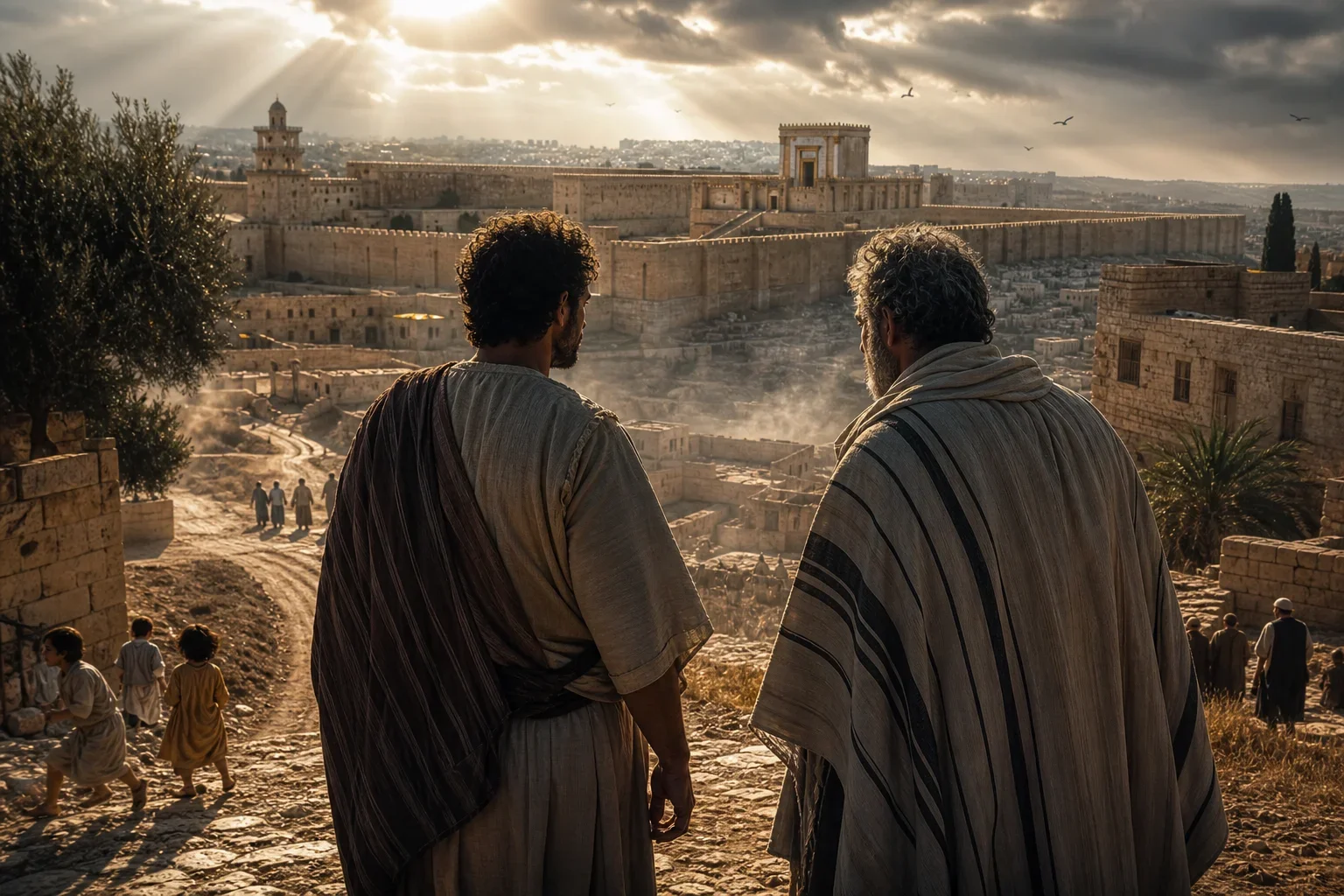
Let’s get real here. King Abijah is not an easy man to size up. In one place, he stands on a battlefield and talks straight about the covenant with David, the true priesthood, and the foolishness of golden calves. In another place, his life gets summed up with hard words: “And he walked in all the sins of his father, which he had done before him: and his heart was not perfect with the LORD his God, as the heart of David his father” (1 Kings 15:3). That creates a real dilemma. Was he a faithful king, or a compromised one? Was he building on solid ground, or was he a man using good lumber to cover a cracked foundation?
That tension hits close to home. Picture a man sitting in his truck outside a jobsite at 6:20 on a cold Tuesday morning, heater ticking, coffee going lukewarm in the cup holder. He knows the right words to say in the safety meeting. He can talk about standards, accountability, and doing the job clean. Then he turns around and cuts corners on payroll, snaps at his wife by text, and ignores his son’s call about trouble at school. That man is not dealing with a lack of information. He is dealing with a split heart. That is where Abijah lives.
Now bring it into ordinary life. A mother stands under fluorescent lights in a Kroger checkout line, calculator open on her phone, deciding whether groceries or a prescription gets paid first. A husband grips the steering wheel in bumper-to-bumper traffic on I-75, jaw tight, replaying a fight from the kitchen that morning. A neighbor smiles over the fence while holding bitterness from a property-line dispute that started with a fallen oak limb and turned into months of cold silence. Wisdom in those moments is not about sounding right. It is about being right before God when the rubber meets the road.
Abijah forces us to face a hard truth. A man can speak truth accurately and still not surrender fully. He can stand in the right place publicly while drifting privately. No sugar-coating this. That is not only a king problem. That is a church problem, a business problem, a father problem, my problem, your problem. So we need more than a quick take on Abijah. We need a solid frame for reading his life honestly.
Voices from the Cloud
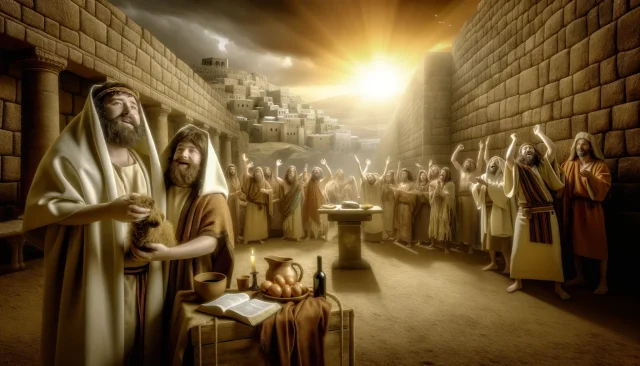
Another voice speaks: the chronicler in 2 Chronicles puts Abijah in the middle of conflict and records his public stand. He faces Jeroboam with outnumbered troops, mountain air sharp around them, armor catching the sun, war horns ready. Abijah says Judah has not abandoned the LORD the way Israel has. He points to the sons of Aaron, the temple order, and the covenant line of David. Then the battle turns, and Judah wins. Scripture records it this way: “And Abijah and his people slew them with a great slaughter: so there fell down slain of Israel five hundred thousand chosen men” (2 Chronicles 13:17). At face value, that chapter tells us God gave Judah victory while Abijah spoke truth about worship and covenant.
Another voice speaks: Kings gives the other side of the board, and this is where the studs and joists of the whole picture come into view. “And he walked in all the sins of his father, which he had done before him: and his heart was not perfect with the LORD his God, as the heart of David his father” (1 Kings 15:3). Here’s the bottom line. Abijah was not measured by one speech or one military win. He was measured by his heart. Baptist folks need to keep that in front of us. Public alignment with right doctrine does not cancel private compromise. A man may defend truth with his mouth while refusing it in his inner life.
Consider also: Proverbs speaks with the plain wisdom of a foreman checking a slab before the walls go up. “Keep thy heart with all diligence; for out of it are the issues of life” (Proverbs 4:23). That fits Abijah exactly. The issue was not that he lacked a platform. The issue was that he lacked a fully guarded heart. He could identify Jeroboam’s false worship, but he did not keep his own life clean before God. I have seen that in business. A contractor can spot weak concrete from thirty feet away and still ignore termites eating his own office floor.
From a different angle: James talks tough to double-minded people, and he needs to. “A double minded man is unstable in all his ways” (James 1:8). Abijah reads that way. He was not all false, and he was not all faithful. He was unstable. Some men think that is a softer problem than open rebellion. It is not. Double-mindedness will wreck a home, a church class, a company, and a witness at the ballfield. One day a dad prays with his daughter before her driving test. The next day he lies to a supplier about an invoice date to dodge a late fee. That split life is rotten framing behind fresh paint.
Consider also the words of Jesus, because He never let outward religion hide inward decay. “This people honoureth me with their lips, but their heart is far from me” (Matthew 15:8). That verse is a hammer blow against performance faith. Abijah honored God with battlefield words. Kings tells us his heart was not fully there. Paul adds one more brace to the structure: “Examine yourselves, whether ye be in the faith; prove your own selves” (2 Corinthians 13:5). That does not mean a saved man lives scared all day. It means an honest man checks the foundation. Abijah warns us that being right in argument is not the same as being right with God.
Wisdom Across Cultures
Consider also: church history has wrestled with men who defended truth while living crooked lives. Augustine fought hard against error, yet he also wrote with painful honesty about the divided will. He knew a man can say one thing and crave another. That old struggle is not locked in dusty books. It is alive in a hospital parking garage at 9:40 p.m. when a tired husband gets bad test results on his wife, then feels the pull to numb out with anger, scrolling, or secret sin instead of prayer. Abijah belongs in that conversation because his life carries both true confession and divided loyalty.
The early church fathers often pressed this point: orthodoxy without holiness is a cracked beam under a heavy roof. Chrysostom could preach to crowded streets and warn that eloquent speech means nothing if the life underneath is soft. That lands hard on a Sunday school teacher, and I feel that personally. A man can teach teenagers from James on Sunday morning, then bark at a subcontractor on Monday because the drywall delivery hit the site late. No sugar-coating this. If truth stays in the mouth and never reaches the temper, the budget, or the browser history, something is off.
From a different angle: global Christianity adds a needed voice. Talk to believers in Nigeria, India, or parts of South America, and many of them read kings through the lens of costly allegiance. In places where following Christ can cost a job, a lease, or family peace, split-hearted religion gets exposed fast. A believer in Lagos who turns down a bribe may miss rent. A pastor in rural India may preach under a tin roof while monsoon rain pounds overhead and local pressure keeps rising. Those brothers and sisters often spot Abijah’s weakness quickly. He spoke true things, but did he stand under those true things with his whole life?
Church history also gives us men who finished stronger because they refused that split. Think of Polycarp standing firm in old age, or the Reformers insisting that truth belongs not only in creeds but in conscience. Closer to my world, I think about old deacons and tradesmen I knew growing up. Rough hands, worn boots, Bibles marked up, words few. They were not flashy. But if they told you they would meet at 6:00, they were there at 5:50. If they said they were praying, they were praying. Building on solid ground looks a lot like that.
The Wisdom Tapestry
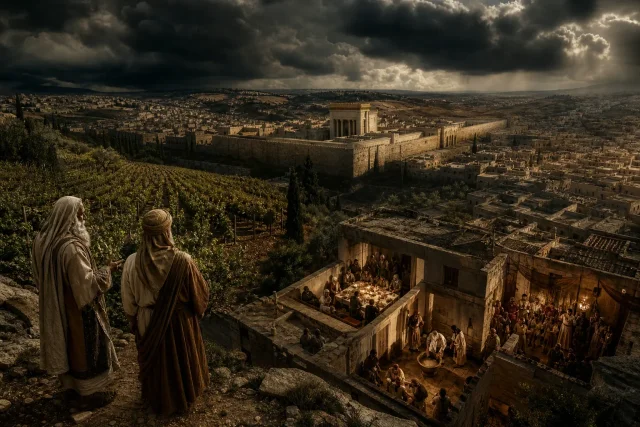
From a different angle: put all these voices together and Abijah comes into focus with a fresh biblical angle. His life teaches that God may honor a true public stand without giving blanket approval to the man who makes it. That matters. Some people read victory and assume full endorsement. Some read failure in character and assume every true thing the man said was fake. Scripture will not let us do either one. Abijah’s battlefield speech appears true at face value, and his heart assessment appears true at face value. Both boards belong in the same frame.
Here’s the bottom line. Abijah is a warning against borrowed conviction. He spoke from the heritage of David, the temple, the priesthood, and covenant truth. Yet Kings says his heart was not perfect with the LORD. That means a man can stand near truth, speak for truth, benefit from truth, and still not yield fully to the God of truth. I have seen sons in good homes borrow their daddy’s language the way they borrow his socket set. Useful in the moment, but not really owned. Then pressure comes, and the whole setup rattles.
That gives us a practical matrix for reading our own lives. First question: What am I saying that is right? Second question: What am I doing that contradicts it? Third question: What does my private life reveal when nobody claps? You can run that grid in a grocery aisle, a board meeting, a truck cab, or a bleacher seat during your daughter’s softball game. A man may talk about trusting God, then panic-buy on a credit card because inflation has him scared. He may quote verses on peace, then rage in traffic when a gray Nissan cuts across three lanes without signaling.
Consider also the mercy in Abijah’s account. Even with his divided heart, the line of David continued by God’s promise. First Kings ties that mercy to David, not to Abijah’s merit. “Nevertheless for David’s sake did the LORD his God give him a lamp in Jerusalem, to set up his son after him, and to establish Jerusalem” (1 Kings 15:4). That is solid gospel ground in seed form. Our hope is not in our clean record but in God’s covenant faithfulness. Still, covenant mercy is never a permit for compromise. It is a call to repentance.
So the integrated wisdom here is sturdy and honest. Speak truth. Stand publicly when needed. Do not mistake a right speech for a right heart. Check your foundation in the hidden places. Bring your life under the same truth you defend. When the rubber meets the road, Abijah tells us that partial loyalty is unstable framing. God is not after polished appearances. He wants the whole man.
Walking in Wisdom
Wisdom invitation starts here: take one hard, honest look at where your public words and private life do not match. Sit at the kitchen table before the house wakes up. Coffee steam rising, phone face down, Bible open, not for performance but for inspection. Read 1 Kings 15 and 2 Chronicles 13 side by side. Ask the Lord to expose any place where you speak better than you live. That kind of prayer is not fancy. It is real, and real is where God does solid work.
Build a habit of heart-checking before platform-taking. If you teach, post, lead, sing, coach, or manage people, pause first. Ask, am I dealing honestly with sin, or am I using truth talk to hide it? James is good for this. Proverbs is good for this. Keep short accounts. If you blew up in traffic, confess it. If you were cold to your wife during a fight over money, deal with it before bed. If you padded a bid, shaded the numbers, or delayed paying a small vendor while upgrading your own phone, make it right.
Another voice speaks: bring in accountability that can actually bear weight. Not a soft circle where everybody nods and nobody asks straight questions. Get one godly man who will look you in the eye and ask about your temper, your purity, your money, and your truthfulness. I have had to do that in business and in church. Good framing inspection catches hidden weakness before the roof caves in. Fathers, do this in front of your kids too. Teenagers can spot fake from a mile away.
In daily life, practice whole-hearted obedience in small places. At the grocery store, thank the cashier and mean it, even when the total is higher than you hoped. In neighborhood tension, walk across the driveway and deal with the issue before bitterness hardens. In health trouble, when the lab report on the patient portal hits your chest hard, pray before spiraling. In traffic, when brake lights stack up red in the rain and somebody leans on the horn behind you, treat that moment as heart training. Building on solid ground happens board by board, choice by choice.
So here is the call. Do not be content to borrow the language of faith. Bow to the Lord of faith. Start today with one concrete act of repentance in the place where your heart has been divided. Then pray plain: Lord, make me true in private and public. Set my feet on solid ground. Keep me from Abijah’s split heart, and build in me the kind of faith that holds when nobody is watching. Amen.
1. Introspective: In what ways do you reflect the truth about King Abijah, speaking right in public while holding back part of your heart in private?
2. Theological: Where else in Scripture does God grant mercy for His covenant name’s sake, and how does that reshape your view of King Abijah?
3. Action: What one specific act of repentance or honesty will you take this week to bring your private life under the same truth you confess publicly?
Continue Your Bible Study
Explore more lessons and deepen your understanding of scripture
View All Lessons Ask AI a Question