When You Want to Die and Scripture Points to Safety

Want to Die and the God who meets you in the graveyard
If you want to die, this is not small. This is not drama. This is death talking in the language of exhaustion, shame, terror, and numbness. You may be reading this with your phone glowing in a dark room, or in a grocery store parking lot with the engine off and the receipt on the passenger seat, or after another traffic jam, another bounced payment, another argument that left the apartment air hot and sharp. Name it plain. The death is real.
You need one urgent word before anything else. If you are in immediate danger of harming yourself, call emergency services now or go to the nearest emergency room. If you are in the United States or Canada, call or text 988 right now for the Suicide and Crisis Lifeline. If you are elsewhere, contact your local crisis line immediately and tell one real person near you today. The kingdom demands more than comfort, and that means the church must speak plainly: staying alive tonight is holy work.
Naming What Must Die
When you say, “I want to die,” the first task is not romance. It is truth. Often what must die is not your body but the lie that your body is disposable. What must die is the script that says your pain has made you useless, your debts have erased your dignity, your diagnosis has swallowed your calling, or your failure has become your name. In the streets where I have served, I have watched young men bury friends and then start talking as if they were already ghosts. That ghost talk must die.
Another thing must die. The isolation that keeps your suffering secret. Suicide grows in locked rooms, muted phones, and church cultures that clap for miracles but punish confession. God is calling His church to wake up from that religious performance. If your congregation can cast out demons in public but cannot sit with a brother through a psychiatric intake, something false needs a funeral.
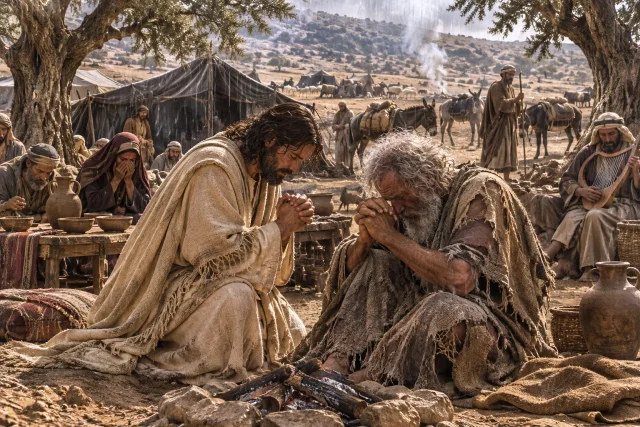
False strength must die too. The inner vow that says, “I will carry this alone.” Elijah had power on Mount Carmel and collapse under the broom tree. Paul had revelation and still spoke of crushing pressure. Prophetic people are not machines. Intercessors are not iron. Preachers bleed. Mothers bleed. Teenagers in hoodies on city buses bleed inside while staring at a cracked phone screen.
1 Kings 19:4 — “But he himself went a day's journey into the wilderness and came and sat down under a broom tree. And he asked that he might die, saying, ‘It is enough; now, O Lord, take away my life, for I am no better than my fathers.’”
Hear that text with context. Elijah is not a villain in that moment. He is depleted, hunted, disoriented. The Bible does not hide suicidal speech from the sacred record. That matters. It means your words do not shock God. Yet the lie that death is your only exit must die. The Spirit is moving in the streets, and He moves against every voice that tells image bearers to disappear.
Then comes the dying: the death of spiritual superstition. You cannot cast out every dark thought with slogans while ignoring sleep deprivation, trauma, medication needs, abusive environments, or access to weapons. An African proverb says, when death wants to enter, it first removes shame from the doorway. Shame must die first, so truth can enter the house and keep you alive.
The Descent into Death
The descent is brutal because it asks you to surrender what has been falsely keeping you alive. Despair can become a ritual. You wake, scroll, compare, shrink, and rehearse your exit. You drive past the same intersection, sit through the same fluorescent shift, stock the same grocery shelves, answer the same customer with the same dead eyes, and a private ceremony of disappearance begins. To live, that ceremony must be interrupted.
The Bible speaks with startling precision here.
2 Corinthians 1:8-9 — “For we do not want you to be unaware, brothers, of the affliction we experienced in Asia. For we were so utterly burdened beyond our strength that we despaired of life itself. Indeed, we felt that we had received the sentence of death. But that was to make us rely not on ourselves but on God who raises the dead.”
Paul does not tidy the sentence. He says he despaired of life itself. That is not light sadness. That is collapse language. Yet notice the revolution in the text. The issue is not merely mood. It is the breaking of self-reliance. The death pattern here is not your annihilation. It is the killing of the lie that you are your own savior.
That killing hurts. You may need to hand your car keys to someone. You may need to ask a friend to stay in your apartment. You may need to remove pills, blades, ropes, or firearms from your reach. You may need to tell your pastor, your doctor, your sister, your roommate, your youth leader, “Do not leave me alone tonight.” Pride screams against that. Ego resists that. But where is the prophetic voice that says survival is not weakness? It is warfare.
Jesus in Gethsemane did not perform invincibility. He told the truth about sorrow. He stayed in prayer. He stayed in relationship. He submitted His will through agony, not through denial. You do not honor God by pretending you are fine while death circles your mind. You honor God by dragging the truth into the light and refusing secrecy its throne.
Mark 14:34 — “And he said to them, ‘My soul is very sorrowful, even to death. Remain here and watch.’”
That verse does not reduce Christ to your condition, and it does not reduce your condition to mere spirituality. It gives you a pattern. Speak the sorrow. Stay with people. Keep watch. In gang intervention work, we never left a young brother alone when retaliation fever was rising. Same principle. When self-destruction starts talking, community must close ranks fast.
Then comes the dying: the stripping away of fantasy solutions. One prayer meeting by itself may not settle a suicidal crisis. One worship song may not do it. One altar call may not do it. The church needs oil on its hands and a safety plan on paper. That is not lack of faith. That is faith with muscle, faith in the flesh, Acts faith at street level.
Holy Saturday Waiting
In the gospel story, Saturday is the day nobody posts about. No applause. No open tomb. Just silence, sealed stone, and frightened disciples. If you want to die, you may know that Saturday territory well. You told the truth, reached out, got evaluated, started therapy, changed medications, called 988, slept at your auntie’s house, handed over the pills, and still woke up with heaviness. This middle place is real.
In the darkness: do not misname waiting as failure. Holy Saturday is not proof that God has abandoned the scene. It is the severe mercy of unfinished resurrection. The kingdom often works in hidden rooms before it erupts in public squares. Seeds split underground before anybody in the neighborhood sees green.
Psalm 88:18 — “You have caused my beloved and my friend to shun me; my companions have become darkness.”
That is one of the hardest lines in Scripture. No polished ending. No quick uplift. The canon keeps this psalm because God refuses fake religion. You may sit in a waiting room under cold LED lights while a social worker asks if you have a plan, means, and timeline. You may feel numb while traffic hisses outside on wet pavement. That moment is not outside biblical faith. It belongs inside the cry of the saints.
Holy Saturday also demands practical order. Make a written safety plan. Put crisis numbers in your phone and on paper. List three people you can contact day or night. Remove access to what you could use to harm yourself. Set the next appointment before you leave the clinic. Tell one church leader who is steady, not sensational. If somebody says, “Just pray harder,” while refusing to help with transportation, child care, or hospital paperwork, that is dead religion talking.
I have seen this in neighborhood ministry. A teenager gets jumped after school, starts talking about not wanting to be here, and the adults around him call it attention seeking. Then the same adults post grief slogans after disaster lands. No. The Spirit is moving in the streets, and the Spirit pushes God’s people toward intervention before funerals, not speeches after them.
An African proverb says, the child who is not embraced by the village will feel its cold from outside. Holy Saturday is where the village must gather. Sit on the couch. Ride to the appointment. Stand in the pharmacy line. Wait through the intake forms. Resurrection often starts with somebody refusing to leave.
The Unexpected Morning
But Sunday is coming: not as hype, not as denial, not as instant fireworks. Resurrection in suicidal crisis often arrives quietly. The first sign may be tiny. You eat half a sandwich. You answer one text. You sleep four hours instead of none. You tell the truth without apologizing. You make it through the grocery store without abandoning the cart under the buzzing freezer lights. Small mercies are still resurrection footprints.
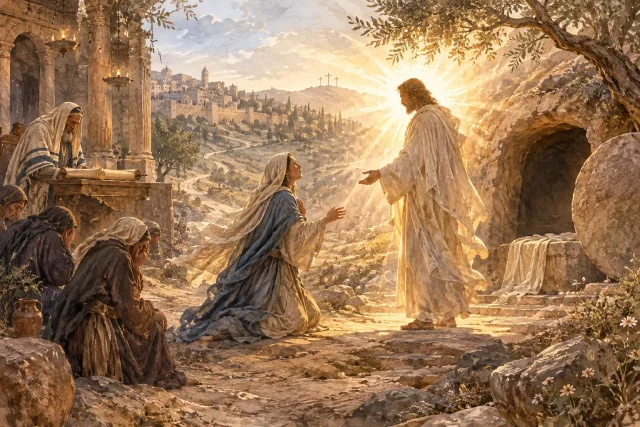
The risen life in Scripture often appears by surprise. Mary thinks Jesus is the gardener. The disciples think the stranger on the road is just another traveler. Recognition comes gradually. That matters for you. If you expect healing only as one explosive moment, you may miss the radical work of God in slow return. The kingdom is not allergic to process.
Lamentations 3:21-23 — “But this I call to mind, and therefore I have hope: The steadfast love of the Lord never ceases; his mercies never come to an end; they are new every morning; great is your faithfulness.”
Those words were not written from a beach with soft music in the background. They rose out of wreckage, siege, smoke, and public grief. Original context matters. This is not shallow optimism. This is faith speaking from the ash heap of a ruined city. Biblical hope is not a grin. It is rebellion against the verdict that devastation gets the last word.
Divine healing fits here with sobriety and fire. Healing may come through prayer in the altar line, through medication that steadies the brain, through trauma therapy, through deliverance from tormenting lies, through a friend sleeping on your couch for three nights, through a church benevolence fund paying the copay, through a grandmother anointing your forehead and refusing to stop interceding. God is not trapped in one method. Where is the prophetic voice that will stop ranking mercies?
Spiritual gifts also have a place, but not as spectacle. The gift of discernment can notice danger before words are spoken. The gift of mercy can stay patient in the emergency room at 2:17 a.m. The gift of helps can drive, cook, and organize child pickup. The gift of faith can hold vision for a future you cannot see yet. Prophecy in this terrain is not spooky performance. It is Spirit-filled speech that breaks agreement with death and calls your name back into life.
But Sunday is coming: and when it comes, it often carries scars. Jesus rose with wounds still visible. Resurrection is not amnesia. It is transformed survival. You may still need follow-up care. You may still hit dark evenings. You may still shake in traffic after a panic surge. Yet the grave no longer owns the final sentence. Comfortable Christianity is dead Christianity, and resurrection faith gets its shoes dusty in the work of keeping people alive.
Learning to Live Again
Resurrection life is practiced, not merely announced. If you have wanted to die, living again may mean structure before emotion. Wake at a set time. Take prescribed medication as directed. Keep therapy appointments. Eat even when appetite is thin. Walk the block. Sit by a window. Attend worship with one trusted person who knows your truth. The kingdom demands more than comfort, and that includes disciplined care for your body and mind.
Relationships also get rearranged. Some voices cannot keep access to you. The person who mocks your pain, manipulates your guilt, or weaponizes Scripture must lose influence. New life needs boundaries. In Acts, the people of God shared burdens in material ways. That means rent help when financial stress is crushing you, conflict mediation when home life is volatile, meal trains after hospitalization, and follow-up after the altar tears have dried. Revival without responsibility is fraud.
If you are helping someone who wants to die, do not become theatrical. Stay steady. Ask directly if they are thinking about suicide. Stay with them. Help them contact crisis support. Go with them to the hospital or call 988 together. Remove immediate means if you can do so safely. Pray, yes. Anoint with oil, yes. But also fill the gas tank, watch the children, text the next morning, and keep showing up next week. The Spirit is moving in the streets, and love needs legs.
Faith now differs from cultural optimism and religious certainty. Cultural optimism says everything will work out because vibes are good. Religious certainty says pain disappears if doctrine is recited correctly. Biblical faith stands at the tomb and still expects God to move, even with tears on the face and dirt under the nails. Scandalous divine love does not love you because you are polished. It loves you while you are shaking, guarded in triage, owing bills, and fighting to stay another night.
So receive this resurrection invitation. Let the lie die. Let secrecy die. Let false strength die. Rise into the hard, holy work of staying alive with others, before God, by the power and presence of the Holy Spirit. I pray life over your mind, justice over the systems crushing your breath, healing over your body, and a radical company of people around you who will not leave you in the dark. Rise. Not alone. Never alone.
Reflection Questions
Introspective: Which lie about your worth, your pain, or your future needs to die right now so you can tell the truth and stay alive?
Contemplative: Dwell on this image: a sealed tomb in the gray silence of Saturday, with disciples waiting in fear. Where do you feel that suspended place in your own life today?
Action: Before this day ends, who will you contact, what means will you remove, and what concrete safety step will you take so death does not get privacy with your pain?
Continue Your Bible Study
Explore more lessons and deepen your understanding of scripture
View All Lessons Ask AI a Question