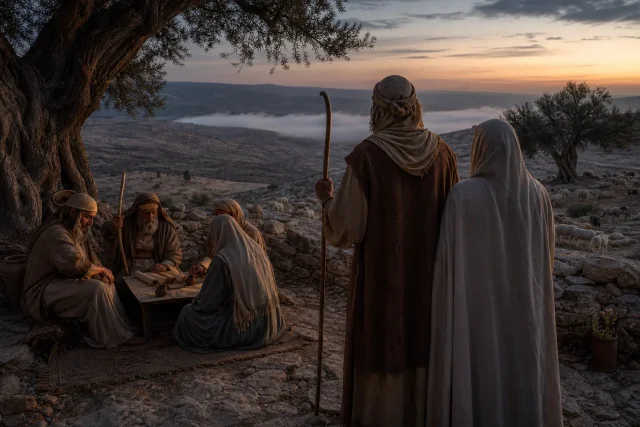
Samaria Glory to Ashes and Hope Through Faith

The Story of Samaria
The Sacred Right to Cry
Let's get real here—lament isn't a sign of weakness; it's a sacred right. We often rush past tears, eager to plaster on a smile and say, "Everything's fine." But just like in construction, rushing leads to cracks. The Bible gives us permission to grieve. Psalms are filled with cries of pain and sorrow. King David, a man after God's own heart, frequently poured out his soul, as seen in Psalm 13:1-2: "How long, O Lord? Will You forget me forever? How long will You hide Your face from me?" That's not toxic positivity; that's raw honesty.
Remember when Jesus wept for Lazarus in John 11:35? He didn't just gloss over death with a "better place" sermon. He stood there, tears streaming down, acknowledging the reality of loss. It's a lot like when a foundation cracks in a building project—you can't ignore it if you want the structure to stand. Jesus didn't ignore the pain; He entered into it. It's okay to admit that life hits hard and sometimes all you can do is cry.
Samaria, too, has a history soaked in tears. When the Assyrians laid siege to the city (2 Kings 17:5), it was a harrowing time. Imagine the desperation of a three-year blockade, the hunger gnawing at families. A city once thriving now reduced to whispers of survival. This is lament—a recognition that things have gone terribly wrong.
So no sugar-coating this—lament is a part of the human experience. It's vital, and it's biblical. When the rubber meets the road, ignoring the pain isn't an option. Building on solid ground requires acknowledging the cracks first.
The Language of Loss
Now that we've laid the foundation, let's talk about how to lament. The Bible gives us a framework through the structure of lament psalms. They start with an address to God, a cry for help, describing the pain, and then sometimes, they offer a glimpse of hope. But let's not get ahead of ourselves. The language of loss is deep and personal.
Consider Jeremiah's lament for Jerusalem in Lamentations 1:1: "How deserted lies the city, once so full of people! How like a widow is she, who once was great among the nations!" It's a vivid picture—a vibrant city now empty and broken. It's not a distant, ethereal concept; it's real and tangible.
Think of a construction worker who sees his prized project collapse. His lament is specific—he can point to where the beam cracked or the foundation shifted. In the same way, our laments should name the pain precisely. Are you grieving a lost job? A broken relationship? Name it. Own it.
Learning from Samaria's history, we see the importance of facing facts. The city's fall wasn't just a chapter in a history book; it was a real event with real consequences. It's like when a business faces bankruptcy—you can't move forward without first acknowledging what went wrong.
Lament isn't just venting; it's structured, intentional, and honest. It's about bringing your rawest emotions before God. No shortcuts, no glossing over. That's how you build honesty into your faith.
Meeting God in the Darkness
Yet even here, in the midst of lament, God meets us. We might think God is only present in the light, but He's there in the darkness too. Psalm 23:4 reminds us, "Even though I walk through the darkest valley, I will fear no evil, for you are with me." He's there, right beside us in the trenches.
Consider the story of Job. He lost everything, yet in his darkest moments, God wasn't absent. Job 38 shows God engaging with Job face-to-face, not with easy answers but with presence. It's the same in our lives—divine presence doesn't mean immediate solutions but a God who walks with us through the storm.
The same can be said of Samaria in its darkest days. The city's story didn't end with the Assyrian siege. It was through those trying times that God continued His narrative. The loss was real, but God’s presence persisted.
Picture a father whose child is in trouble. He doesn't sit back and wait for things to get better; he steps into the chaos, his love evident in every action. That's our God—active, present, not afraid to step into the mess with us.
God's presence in our lament doesn't negate the pain but transforms it. It's in these times that our faith deepens, much like how a builder learns from every setback, making the next project stronger and more resilient.
The Mysterious Turn
Something shifts when we persist in our lament. There's a mysterious turn from despair to trust. It's not forced, and it's certainly not rushed. In the Psalms, this often comes not because the situation changes, but because the psalmist's perspective does.
Take Psalm 13, for example. It starts with anguish but turns in verse 5: "But I trust in your unfailing love; my heart rejoices in your salvation." This isn't denial; it's a shift from focusing on the problem to focusing on God's character.
It's like a construction project that hits a roadblock. At first, all seems lost, but as the team revisits the plans, new solutions emerge. The project evolves to something stronger, more resilient.
In the story of Samaria, we see a similar turn. Jesus, in His encounter with the Samaritan woman at the well (John 4), transforms a place known for its painful past into one of redemption. The conversation shifts from her brokenness to the living water only Jesus can provide.
This turn doesn't erase the scars. It acknowledges them, integrating them into a living testimony of God's faithfulness. It's like seeing beauty in a weathered, well-used tool—its history makes it valuable.
Songs from the Ruins
Watch what happens when lament gives way to praise. It's a different kind of praise than before. It's deeper, more nuanced, like the sound of a choir that has sung through the night and greets the dawn not with naive joy, but profound gratitude.
Psalm 30:11 says, "You turned my wailing into dancing; you removed my sackcloth and clothed me with joy." This isn't about forgetting the past; it's about celebrating the God who walked with you through it.
Samaria's redemption echoes this truth. From a city marked by division and loss, it becomes a place where Jesus breaks down barriers, offering hope. And later, in Acts 8, Philip preaches the gospel there, and many believe. The city sings a new song of redemption.
In our lives, praise post-lament isn't about ignoring the scars. It's about letting those scars become testimonies. A business that rises from bankruptcy often becomes wiser, more compassionate. A family that navigates through hardship often emerges stronger, more united.
Here's the bottom line: Lament shapes our praise. It's not about singing louder but singing with more heart. It's about building on solid ground, trusting in the God who is faithful through every storm.
Reflection Questions
Introspective: Where in your life are you acknowledging the cracks and allowing God to meet you in the depths?
Contemplative: Hold this paradox: How does lament transform your understanding of God's presence in your struggles?
Theological: How does the story of Samaria reveal God's ongoing redemption through history?
Continue Your Bible Study
Explore more lessons and deepen your understanding of scripture
View All Lessons Ask AI a Question