Moses and the Mystery of Speech and Leadership

Did Moses Stutter
The Beautiful Contradiction
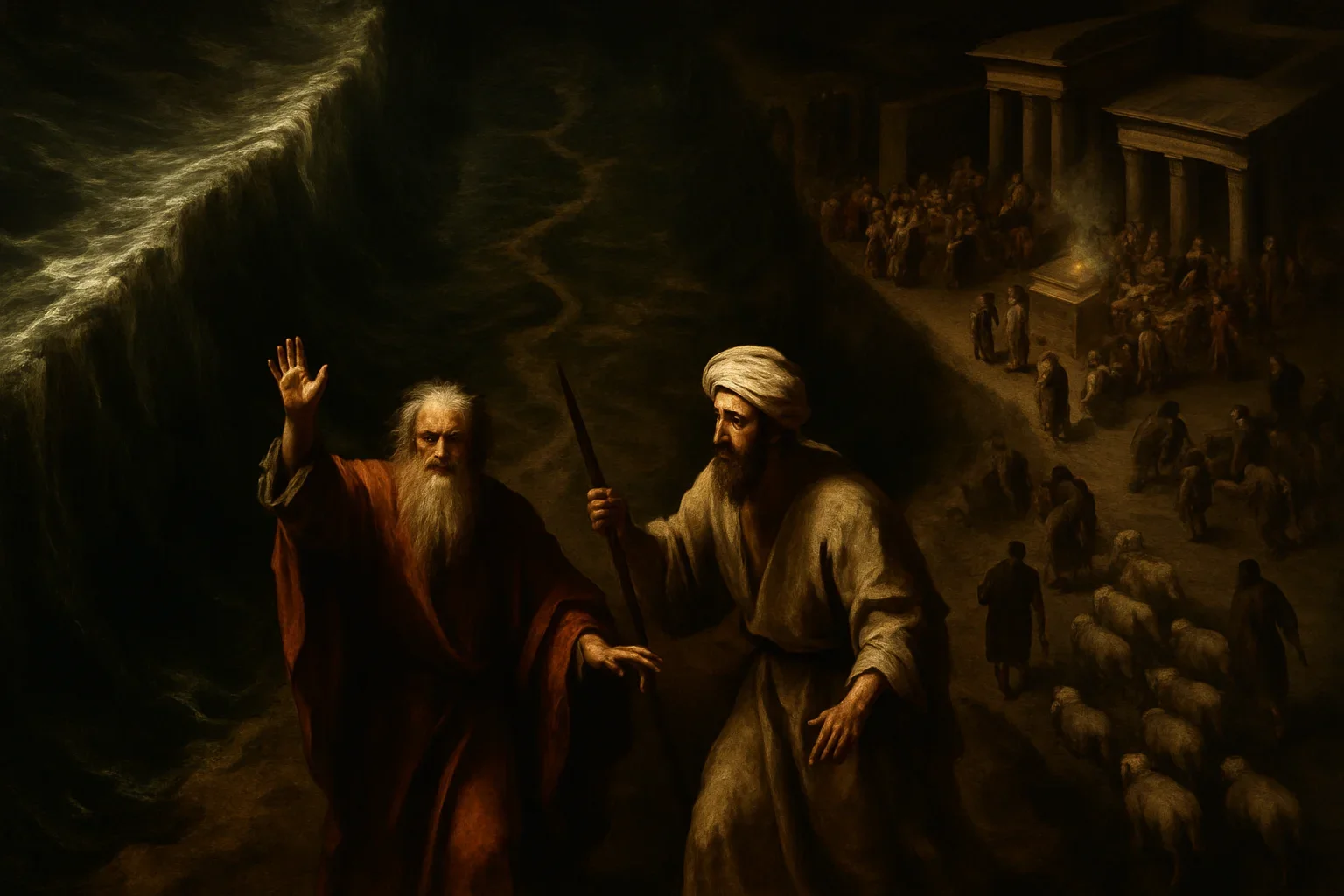
Let's get real here. When you think of Moses, you probably picture him as a mighty leader, parting the Red Sea, and leading the Israelites out of Egypt. But when the rubber meets the road, we're confronted with a paradox that throws a wrench into our expectations. How could someone tasked with such a monumental leadership role claim to have a speech problem?
Exodus 4:10 puts it right out there: "Moses said to the Lord, 'Pardon your servant, Lord. I have never been eloquent, neither in the past nor since you have spoken to your servant. I am slow of speech and tongue.'" Now, some folks jump to the conclusion that Moses had a stutter, while others think he just wasn't confident speaking publicly. But here's the bottom line—we don't have a clear-cut answer.
God chose Moses, a man who claimed he couldn't speak well, to be His spokesperson. That’s like picking a guy afraid of heights to be a roofer. It’s a beautiful contradiction that challenges our ideas about what makes a good leader. We often think strength means having it all together, but here, God seems to say otherwise. Strength in weakness? That’s a paradox we see over and over in Scripture. We might question why God didn't choose someone who already had the gift of gab. But maybe, just maybe, there's more going on than what meets the eye.
It's a tough pill to swallow for those of us who like things neat and tidy. Moses, a leader with a speech impediment? That's just not how we’re used to doing things. Yet, this contradiction sits at the heart of God’s message, and it’s worth drilling down into.
Our Struggle with Mystery
When I first started my construction business, I thought I had to have it all figured out—every blueprint, every estimate, every contract. But if there's one thing I've learned, it’s that life rarely fits into our tidy little plans. The same goes for our spiritual walk. We want answers, not mysteries. But life's not always that accommodating. We resist what we can't put our finger on, and Moses’ story makes us wrestle with that.
Let’s face it, most of us like things square and level. We grow up in a world that preaches efficiency and productivity. But when it comes to faith, God’s ways aren’t always our ways. Moses' perceived limitation flies in the face of our cultural norms. We want our leaders to be polished and pristine, but God’s choice in Moses says something different.
I’ve seen it in my own life too. When I was first called to teach Sunday school, I thought, “Me? Stand up in front of a group and talk?” It felt like asking a plumber to do electrical work. Not in my wheelhouse. But God's got a way of using our weaknesses as platforms for His strength. And that’s a mystery we often fight against.
We live in a 'fix-it' culture. Got a problem? There's a self-help book for that. But Moses wasn’t given a quick fix. Instead, he was given a promise—God would be with his mouth and teach him what to say. That promise is as solid as concrete, but it requires us to let go of our need for control.
No sugar-coating this—embracing mystery is hard work. It means accepting that not every piece of the puzzle has to be in place for God to do His work. It's about trusting that even if our lives look like a construction site mid-renovation, God’s got the blueprint all worked out.
Living the Paradox
Let's dive right into the nitty-gritty of how this paradox plays out in real life. Take Moses, standing there by the burning bush, arguing with God. Here’s a guy who’s been tending sheep, not giving TED Talks. Yet God calls him to speak for an entire nation. It's like asking a guy who’s been laying brick to design the whole building—seems a bit off, doesn't it?
But Moses isn’t the only biblical figure living out this paradox. Look at Paul, who talks about his thorn in the flesh in 2 Corinthians 12:7-9. "But he said to me, 'My grace is sufficient for you, for my power is made perfect in weakness.'" Paul lived with a constant reminder of his own limitations, yet that became the very platform for God's power to shine through.
And let's not forget Jesus. His death brought life to the world. Talk about a paradox! In John 12:24, Jesus says, "Very truly I tell you, unless a kernel of wheat falls to the ground and dies, it remains only a single seed. But if it dies, it produces many seeds." Jesus embraced the ultimate paradox—life through death.
Then there’s Mary, a teenager told she’d give birth to the Savior of the world. Talk about a curveball in your life plans! Her response? Complete submission to God's will, despite the personal cost and societal expectations. How often do we let our own plans take precedence over God’s calling because we can't see the end result?
Here's the bottom line: God uses the unlikely to accomplish the unimaginable. Moses led his people out of slav
Continue Your Bible Study
Explore more lessons and deepen your understanding of scripture
View All Lessons Ask AI a Question