When Jeremiah Was Written and Why It Matters

When Jeremiah Was Written and Why the Spirit Still Disturbs the Church
The Righteous Rage
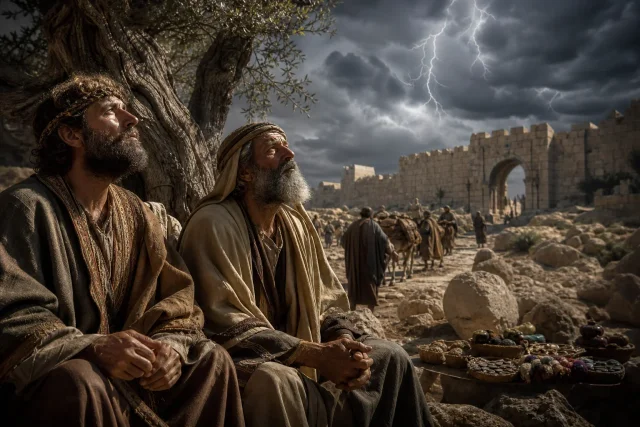
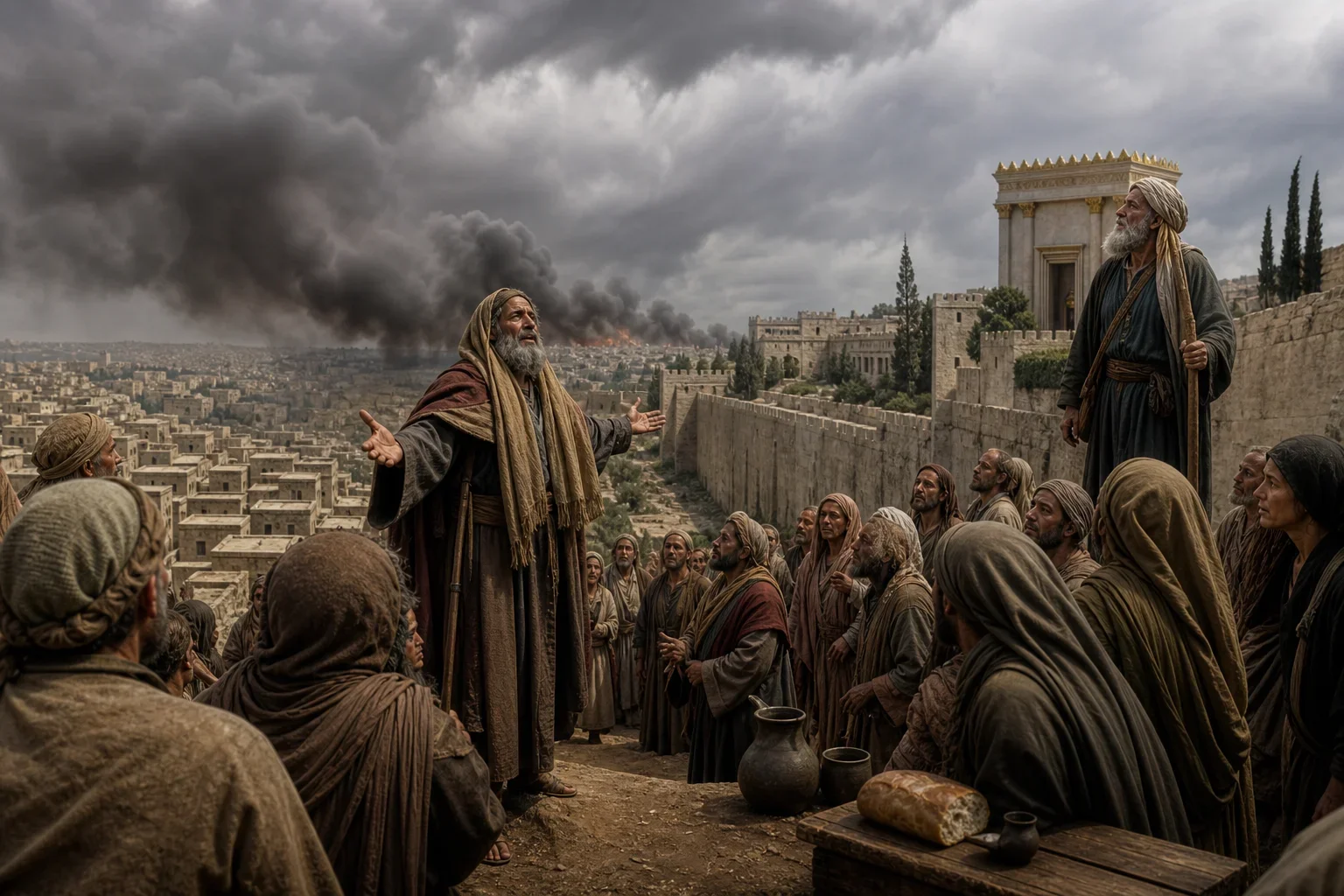
Woe to a generation that wants Jeremiah as a quote on a coffee mug but not as fire in its bones. You ask when Jeremiah was written, and the elephant in the room stomps hard: too many believers want dates without dealing with the devastation that produced the prophecy. Jeremiah did not rise out of a peaceful seminar room with air conditioning, bottled water, and polished branding. He rose in the smoke of national collapse, corrupt leadership, rigged religion, and blood in the streets. Where is the prophetic voice?
Jeremiah’s ministry began around 627 BC in the days of King Josiah and stretched through the last kings of Judah until after Jerusalem fell in 586 BC. Parts of the book were spoken over decades, then written down in stages during that crisis. Jeremiah 36:2 says, “Take a scroll and write on it all the words that I have spoken to you against Israel and Judah and all the nations, from the day I spoke to you, from the days of Josiah until today.” That is not random history. That is God interrupting empire time with kingdom urgency.
You cannot separate the writing of Jeremiah from Babylonian pressure, political panic, and spiritual rebellion. Kings played games. Priests blessed the mess. Prophets for sale preached peace while the nation rotted from the inside. Jeremiah 6:14 says, “They have healed the wound of my people lightly, saying, ‘Peace, peace,’ when there is no peace.” That sounds too familiar. Churches baptize greed. Politicians weaponize faith. Families drown in financial stress while preachers promise luxury.
I have seen this spirit before. I saw it in neighborhoods where young men got swallowed by gangs because leaders failed them. I saw mothers gripping grocery bags with trembling hands, checking bank apps under fluorescent store lights, praying the debit card would not decline. I saw traffic backed up under a gray sky after a police shooting, horns blaring, people angry, phones recording, everybody saying change must come, while systems kept grinding the poor. Comfortable Christianity is dead Christianity. The kingdom demands more than comfort. Jeremiah was written in a season when truth cost something, and the Holy Spirit still confronts every church that wants inspiration without repentance.
But God!
God's Alternative Reality
God did not raise Jeremiah just to announce collapse. God raised Jeremiah to reveal an alternative reality in the middle of judgment. You ask when Jeremiah was written, and the deeper answer is this: it was written in the hour when human power was failing and divine speech was cutting a road through the rubble. The Spirit was not absent in the siege. The Spirit was birthing a radical witness. The kingdom demands more than comfort, and the kingdom also demands vision.
Jeremiah spoke from the late seventh century into the early sixth century BC, yet his words stretch beyond dates because God was forming a people who could survive fire without surrendering identity. In the noise of collapsing walls and marching armies, the Lord planted a promise. Jeremiah 31:33 says, “For this is the covenant that I will make with the house of Israel after those days, declares the Lord: I will put my law within them, and I will write it on their hearts. And I will be their God, and they shall be my people.” Not stone only. Heart. Not ritual only. Transformation.
That is Spirit reality. The same God who judged idolatry promised inner renewal. The same God who exposed fake prophets promised living presence. This is where Pentecostal fire meets Jeremiah’s tears. Spiritual gifts are not stage decorations. They are equipment for covenant faithfulness in hard times. Prophecy confronts lies. Discernment unmasks religious performance. Healing announces that Babylon does not get the last word over bodies, minds, and neighborhoods crushed by trauma.
Picture Isaiah’s holy vision crashing into Jeremiah’s street grief. Picture Revelation’s new city rising over the ashes of empire. Picture Jesus standing in Nazareth and declaring good news to the poor, sight to the blind, liberty to the oppressed. That is the thread. Jeremiah was written in a battered world, yet it carried the DNA of kingdom revolution. God is calling His church to wake up and read the book not as dead chronology but as a living summons.
I think about a woman waiting at a South London bus stop in cold drizzle, scarf tight around her neck, checking messages from a son in court and a landlord demanding rent. I think about a nurse in Atlanta sitting in her car after a twelve-hour shift, forehead against the steering wheel, praying in tongues before going inside to face relationship conflict and unpaid bills. I think about a barber in Lagos, clippers buzzing, listening to neighborhood pain all day while speaking life over boys everybody else has written off. The Spirit is moving in the streets. Jeremiah’s context transforms the way you read him because now you see that God speaks amid eviction notices, hospital corridors, and sirens at midnight.
Divine healing belongs here too. Jeremiah 30:17 says, “For I will restore health to you, and your wounds I will heal, declares the Lord.” That is not escapist religion. That is kingdom invasion. God heals people, and God also heals memory, community, and moral imagination. When you read Jeremiah in context, you stop treating him as a gloomy relic and start hearing him as a Spirit-soaked witness announcing judgment, renewal, and a future empire cannot choke.
The Spirit is moving:
When Heaven Invaded Earth
There have been moments when Jeremiah’s world cracked open and heaven invaded earth with the same fierce truth. First in his own lifetime. The scroll was dictated, cut up by King Jehoiakim, and burned in arrogant defiance. Yet the word rose again. Jeremiah 36:28 says, “Take another scroll and write on it all the former words that were in the first scroll, which Jehoiakim the king of Judah has burned.” You cannot incinerate what the Spirit has decreed. That is breakthrough. Not the absence of resistance. Victory in the face of it.
Then look at history. The Black church in the civil rights movement carried Jeremiah in its bloodstream. Segregation dogs barked. Fire hoses slammed children against walls. Sheriffs grinned under hard Southern sun. Yet saints marched anyway, singing with swollen feet and straight backs. They faced jail cells and church bombings, but the prophetic word would not bow. A people under pressure kept declaring that Pharaoh never owns the future. That is Jeremiah energy in public.
I saw a taste of it in inner-city work with young men marked by violence before they turned eighteen. One brother came into a church basement in a red hoodie, jaw tight, eyes scanning every exit, ankle monitor blinking under denim. He had lost cousins to shootings and carried panic in his shoulders. Week after week we prayed, confronted lies, read the prophets, and called his name before God. The Holy Spirit broke in. Bitterness loosened. He wept hard, ugly tears, then started mentoring boys younger than him. That is heaven invading a coded life script.
You can trace the same pattern in revivals where repentance touched public life, not just private emotion. In the Welsh revival, taverns emptied and debts got repaid. In pockets of the East African revival, confession cut through tribal pride and moral secrecy. In apartment prayer meetings today, people still get healed from chronic pain, freed from addiction, and sent back into neighborhoods with a different fire. A woman battling health concerns receives prayer in a crowded living room with children asleep on the sofa and a rice pot cooling on the stove. By morning she can move her shoulder without pain. The kingdom is not theory.
Even in ordinary places, heaven keeps breaking in. At a grocery checkout, a cashier with tired eyes hears a word of knowledge from a believer and breaks down because nobody knew she had been crying in the stockroom over her mother’s diagnosis. In a traffic jam on the Third Mainland Bridge, a frustrated driver turns worship on instead of cursing and ends up calling his estranged brother. On a cracked apartment stoop after sunset, neighbors who barely spoke start praying over one family facing eviction. Can you see it? Jeremiah was written in crisis, and every true move of God drags divine reality into human wreckage.
Can you see it?
The Price of Prophet
Do not romanticize Jeremiah. The price of prophet is steep. He preached for decades and watched many refuse the word. He got mocked, isolated, threatened, beaten, and thrown into a muddy cistern. Jeremiah 20:9 says, “If I say, ‘I will not mention him, or speak any more in his name,’ there is in my heart as it were a burning fire shut up in my bones, and I am weary with holding it in, and I cannot.” That is not platform glamour. That is costly obedience.
If you take Jeremiah’s context seriously, then you must face what Spirit-filled discipleship costs now. It may cost reputation when you confront racism in your church board meeting and people call you divisive. It may cost money when you stop funding empty religious performance and start investing in mutual aid, youth work, and housing support. It may cost relationships when friends want a faith that blesses their idols and you refuse to baptize greed, misogyny, or nationalist fantasies.
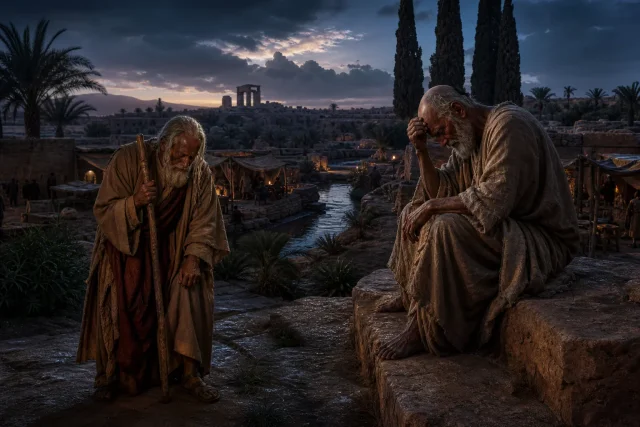
I know this edge. As an immigrant, I have felt rooms shift when truth got too direct. I have stood with families after brutality and felt the cold machinery of power stare back with dead eyes. I have watched pastors lose invitations because they preached justice with names, dates, and receipts. An African proverb says when the roots of a tree begin to decay, it spreads death to the branches. If the church roots itself in applause, the whole witness rots.
The cost also cuts into daily habits. You cannot pray for the kingdom and keep living numb. The Spirit may tell you to fast when your body wants indulgence, to reconcile when your pride wants distance, to give when your budget already looks thin, to keep showing up for a neighbor whose chaos interrupts your schedule. Divine healing and spiritual gifts do not remove sacrifice. They intensify responsibility. Once God heals your sight, you cannot pretend not to see. Once God gives you a word, silence becomes rebellion. Where is the prophetic voice? It must rise from people ready to bleed for truth.
But God!
Rise Up O Sleeper
Rise up, O sleeper. Stop asking when Jeremiah was written as though this is only an exam question. Yes, the core of Jeremiah came through his prophetic ministry from around 627 BC through the fall of Jerusalem in 586 BC and into the aftermath, with collected oracles shaped during those years. Hold that firmly. But do not stop there. Ask why the Spirit preserved these words for a church trapped between performance and powerlessness. God is calling His church to wake up.
Start with repentance that has muscle on it. Read Jeremiah aloud in your house, your prayer circle, your youth gathering, and your street fellowship. Then name the idols in your own context with plain speech. If your neighborhood worships money, confront it. If your congregation hides abuse behind polished worship sets and livestream graphics, expose it. If your own heart bows to image, control, or resentment, drag it into the light. Revival never begins with branding. It begins with brokenness before God.
Then move into Spirit action. Ask the Holy Ghost for prophecy that comforts the crushed and confronts the false. Pray for healing over bodies carrying stress, hypertension, trauma, infertility, and depression. In the book of Jeremiah, context matters because people were not debating in a vacuum. They were surviving siege, loss, propaganda, and fear. Your people today face layoffs, rent spikes, relationship collapse, ambulance bills, food prices, and algorithm-fed anxiety. So build prayer teams that also know the housing office, the school principal, the public defender, and the local clinic.
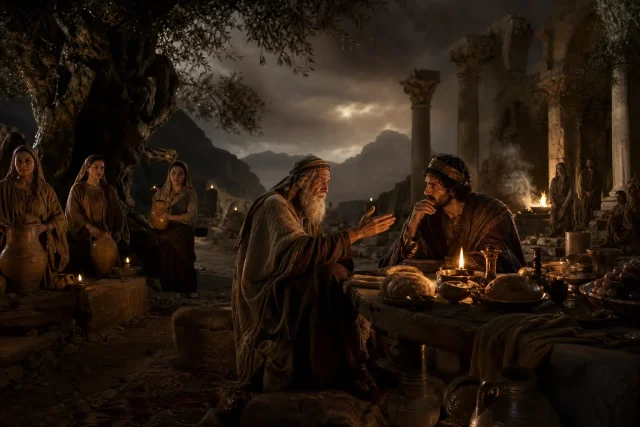
Organize your faith. Start a weekly table where neighbors eat together and tell the truth. Mentor teenagers caught between drill music bravado and funeral reality. Partner with a food pantry, but also challenge the policies producing hunger. At the grocery store, pay attention to the cashier whose hands shake while counting change. In traffic, refuse rage and practice intercession. In neighborhood interactions, know people by name, not stereotype. The Spirit is moving in the streets, and the kingdom demands more than comfort. It demands presence.
So here is the call. Rise with Scripture in one hand and holy fire in the other. Rise with tears for the city and courage for confrontation. Rise until your church stops healing wounds lightly. Rise until spiritual gifts serve liberation and divine healing touches whole communities. Rise until Jeremiah is no longer trapped in ancient dates but heard as a living alarm in this battered hour. Comfortable Christianity is dead Christianity. The church must awaken, repent, and transform because Jesus is Lord now, not later, and the kingdom is pressing into the block right now.
Prophetic: What systems need confronting regarding when Jeremiah was written and the crisis that birthed his message?
Action: With whom will you share this truth about when Jeremiah was written, and what concrete step will you take this week to embody it?
Relational: How could your small group, family, or ministry community carry Jeremiah’s Spirit-charged warning and hope together in your neighborhood?
Continue Your Bible Study
Explore more lessons and deepen your understanding of scripture
View All Lessons Ask AI a Question