Habakkuk and the Search for Faith in Troubling Times

Habakkuk's Dialogue: Faith Amidst Uncertainty
It’s a rainy Tuesday morning when the email arrives, the subject line reading “important update regarding your employment.” My stomach drops. With four children at home and a spouse who depends on my support, the weight of uncertainty begins to crush my spirit. As I click on the email, the words "we regret to inform you" flash before my eyes, and my heart races. In that moment, I enter a world of confusion and fear. The kitchen, usually a place of warmth and laughter, feels like a void. How will I provide for my family? What does this mean for our future? I can almost hear the clock ticking louder, each second stretching into eternity. The chaos of life threatens to swallow me whole, even amidst the sacred moments of our ordinary routine.
This isn’t just my crisis; it’s a reality faced by many. Individuals lose their jobs unexpectedly, families endure health crises, relationships falter under pressure. This modern struggle isn’t isolated; it resonates deeply within the human experience, echoing centuries of pain, questioning, and searching for answers. In such turmoil, we often find ourselves longing for a response from God, a sign that He hears our cries. It is in this searching that we encounter the ancient prophet Habakkuk, whose dialogue with God mirrors our own uncertainties.
Ancient Cries, Timeless Pain
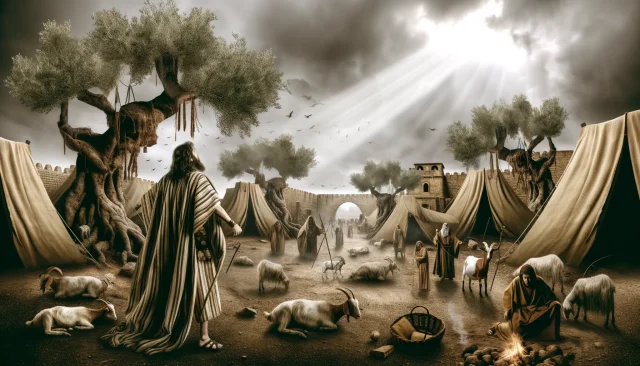
Habakkuk, standing in the midst of Israel's turmoil, lifts his voice to God. "How long, O Lord, will I call for help, and you will not hear?" (Habakkuk 1:2, ESV). His raw emotion resonates through the ages. Like Job, who mourned the loss of everything dear to him, or David, whose heartache over betrayal by friends and family left him in despair, Habakkuk's cries reflect a profound vulnerability. He questions God's silence in the face of injustice, the very same questions that stir in our hearts during times of distress.
Consider Hannah, who faced the agony of barrenness, pleading with God for a child. Her desperation echoes in our own lives when dreams seem unattainable. Each of these figures wrestled with their doubts, poured out their hearts, and waited for divine answers. Their stories remind us that being human involves suffering and questioning, and that God invites us into a dialogue—one that may not yield immediate answers but fosters a deeper understanding of our faith.
In Habakkuk’s case, the dialogue reveals a progression from confusion to clarity. He grapples with the reality of his nation’s moral decay and the impending judgment from Babylon. "Why do you make me see iniquity, and why do you idly look at wrong?" (Habakkuk 1:3, ESV). His questions are not merely complaints; they are a call to engagement with God, an invitation for deeper covenant relationship. Rather than offering platitudes, God responds with profound assurance, reminding Habakkuk of His sovereignty over all things, even when they seem chaotic.
The Unbreakable Promise
In the midst of Habakkuk's turmoil, God lays out His promise: "Write the vision; make it plain on tablets, so he may run who reads it" (Habakkuk 2:2, ESV). This assurance is a beacon of hope amidst uncertainty. God's covenant is not a mere promise to remove suffering but an invitation to trust in His plan, even when the path ahead is shrouded in darkness. This is where we find the transformative power of God’s word, a guiding light through our own crises.
Throughout Scripture, we see God’s commitment to His people—culminating in the New Testament with Christ’s sacrificial love. Just as Habakkuk received a promise, we, too, are reminded of God's faithfulness. Romans 8:28 reassures us that "we know that for those who love God all things work together for good" (ESV). This promise isn't just about the resolution of trials but about God's unyielding presence in our lives. His covenant extends beyond our understanding, embracing the entirety of our being and our circumstances.
When we cling to these truths, we realize that our suffering has purpose within His divine narrative. The prophetic declarations of Habakkuk find their fulfillment in the life, death, and resurrection of Christ. God’s desire is not merely to comfort us but to transform us through our trials, teaching us to lean into faith amidst uncertainty.
The Sacred Transformation
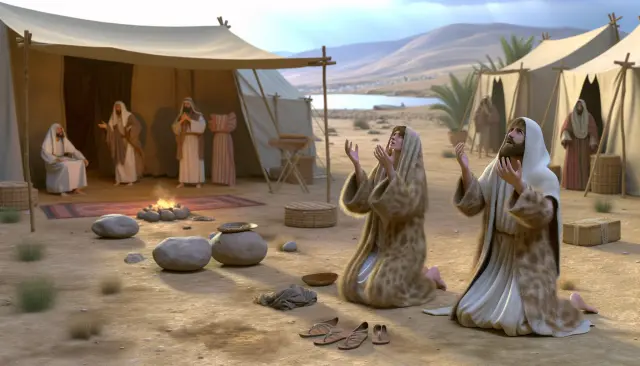
Moving from crisis to covenant trust often requires intentional steps. We must cultivate an environment where our fears are met with faith. This can look like creating sacred spaces in our homes—designating a corner for prayer or a family altar where we can come together and lift our concerns to God. Amidst the chaos of family life, I find that moments of prayer often transform the atmosphere. It becomes a shared sacred act of surrender, a collective trust in God’s promises.
Engaging with community is equally vital. Just as Habakkuk sought answers, we, too, need the suppor
Continue Your Bible Study
Explore more lessons and deepen your understanding of scripture
View All Lessons Ask AI a Question