Gathered to His People and the Hope of Covenant Belonging

Gathered to His People
When Everything Falls Apart
The fluorescent lights in the oncology waiting room hum above you, steady and cold, while a paper cup of burnt coffee cools in your hand. Across from you, a man in work boots stares at the floor tiles as though one more glance upward might break him. A nurse calls a name, a child coughs behind a half-closed door, and your own chest tightens with that strange mixture of dread and numbness that arrives when life has already changed before anyone has found words for it. In moments like this, the modern world feels brutally thin. Degrees, schedules, grocery lists, passwords, retirement plans, all of it suddenly shrinks before the fact that bodies fail and graves still open.
That same collapse comes in other rooms. A woman sits at her kitchen table in a rented duplex, turning over an envelope stamped final notice, while two bags of groceries rest by the chair: eggs, rice, store-brand cereal, and a pack of chicken thighs bought only after checking prices twice. A father grips the steering wheel in stalled traffic after hearing that layoffs hit his department before lunch. A son stands at a funeral home counter choosing between caskets he never imagined he would need to price. Crisis is not always cinematic. Sometimes it smells like disinfectant, rain on asphalt, and the starch of borrowed funeral clothes.
I remember a season in college when my faith nearly came apart under the weight of death and doubt together. One friend buried his mother. Another walked away from Christ after deciding the resurrection belonged in the same category as legend. I sat in a campus library with history books open, trying to hold together grief, evidence, and the God I had preached as a teenager. As a first-generation college student, I already felt I was carrying my family name into unfamiliar territory. Then mortality stepped into the room and made every sentence heavier.
What sharpens the pain is not only the fact of death, but the fear of disconnection. You fear being cut off, forgotten, reduced to paperwork and memory fragments. In neighborhood conversations, people speak of closure, celebration of life, and moving on, yet beneath those phrases sits an older ache: where do the dead belong, and what becomes of the covenant bonds that shaped their lives? Cultural optimism offers sentiment. Religious certainty can offer slogans. Neither can carry the full weight of the graveside.
The phrase gathered to his people enters that ache with ancient gravity. It does not speak first in the language of private spirituality or vague survival after death. It speaks in the language of belonging, kinship, covenant, and continuity. When everything falls apart, Scripture does not hand you a thin cliché. It places you inside a people, inside promises older than your pain, and inside a story where death is real but never solitary.
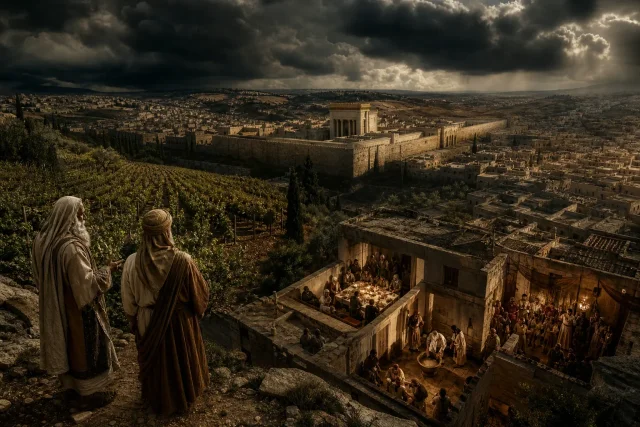
Because of this, the crisis that feels purely personal must be read within a much older world, one where family tombs, burial caves, ancestral memory, and covenant identity all stand together. The ancient witness does not deny tears. The stones cry out that tears are shed within a household of promise, and that is where this phrase begins to gather its force.
Ancient Cries Timeless Pain
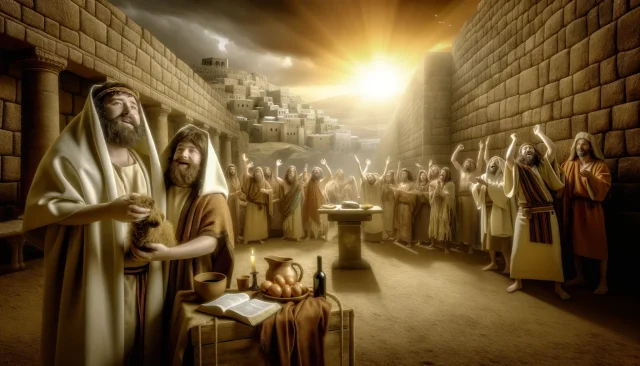
In the book of Genesis, the phrase appears at solemn turning points, and each appearance carries a heavy historical texture. Abraham dies in Canaan, a land promised but not yet possessed in fullness, and the text says, “Then Abraham breathed his last and died in a good old age, an old man and full of years, and was gathered to his people” (Genesis 25:8). The wording matters. Abraham is not buried in Mesopotamia with his ancestors by bloodline geography. He is gathered to his people in a covenant sense that reaches beyond the visible arrangement of bones in a cave. History comes alive when you realize the phrase is larger than burial location.
I have stood in museums looking at burial artifacts from the ancient Near East—small clay lamps, carved ossuary fragments, funerary inscriptions, family markers—and what strikes you is how deeply ancient people connected death with belonging. Yet Israel’s language is distinct. This is not merely clan pride or ancestor cult. The biblical witness frames death in relation to the people bound to God by promise. The archaeological evidence tells us ancient burial practices often centered on family caves and collective resting places, but Genesis presses further, giving theological depth to what surrounding cultures often treated only as lineage memory.
Listen to Isaac: “And Isaac breathed his last and he died and was gathered to his people, old and full of days. And his sons Esau and Jacob buried him” (Genesis 35:29). Listen to Jacob speaking before his death in Egypt: “I am to be gathered to my people; bury me with my fathers in the cave that is in the field of Ephron the Hittite” (Genesis 49:29). The sequence is striking. Jacob speaks of being gathered to his people and then gives burial instructions. Gathering is not identical with interment. Burial is visible; gathering is covenantal.
The same emotional terrain appears across Scripture in many forms. Job sits in ash after catastrophic loss, and his grief is not polished for public reading. David writes psalms with betrayal still fresh in his throat. Hannah weeps under the humiliation of barrenness in a culture where family continuity carries social and covenant significance. These scenes differ, yet each one touches the fear of being cut off—from blessing, from name, from future, from one’s place among the people of God. Ancient pain is not quaint pain. It is the same trembling of the human frame under loss.
Moses adds another layer. In Numbers 27:13 the Lord says, “When you have seen it, you also shall be gathered to your people, as your brother Aaron was”. Moses dies outside the land, and Deuteronomy records a burial unlike the patriarchal cave at Machpelah. Still, he is gathered to his people. That detail is enormous. The phrase cannot be reduced to a burial plot. It points to covenant solidarity that death does not erase. In a world obsessed with location, property, and visible markers, Scripture insists that a deeper belonging holds.
This changes everything: the biblical story does not treat death as simple disappearance, nor as a lonely crossing detached from the community of faith. The ancient cry is not only, “I am dying,” but also, “To whom do I belong when I die?” That question opens the door to covenant theology at its richest and most concrete.
The Unbreakable Promise
The phrase gathered to his people sits inside the covenant made with Abraham, and you cannot hear it rightly unless you keep that covenant in view. God does not call Abraham merely to private belief. He calls him into a people, a land, a name, and a future extending beyond one lifetime. Genesis 17:7 states, “And I will establish my covenant between me and you and your offspring after you throughout their generations for an everlasting covenant, to be God to you and to your offspring after you.” That sentence gives the grammar for gathered belonging. If God binds Himself to Abraham and his offspring in an everlasting covenant, then death cannot be interpreted as covenant cancellation.
When I was twenty and my faith was wobbling, historical questions mattered to me deeply. I needed more than sentiment. I needed to know whether the biblical writers were speaking with coherence across centuries. What steadied me was seeing how the covenant themes lock together. Abraham is promised descendants and land; Jacob dies in Egypt clinging to burial in the promised land; Joseph commands that his bones be carried up in the exodus; Moses is gathered to his people even before Israel fully possesses Canaan. The pattern is not accidental. It is covenant continuity under the pressure of mortality.
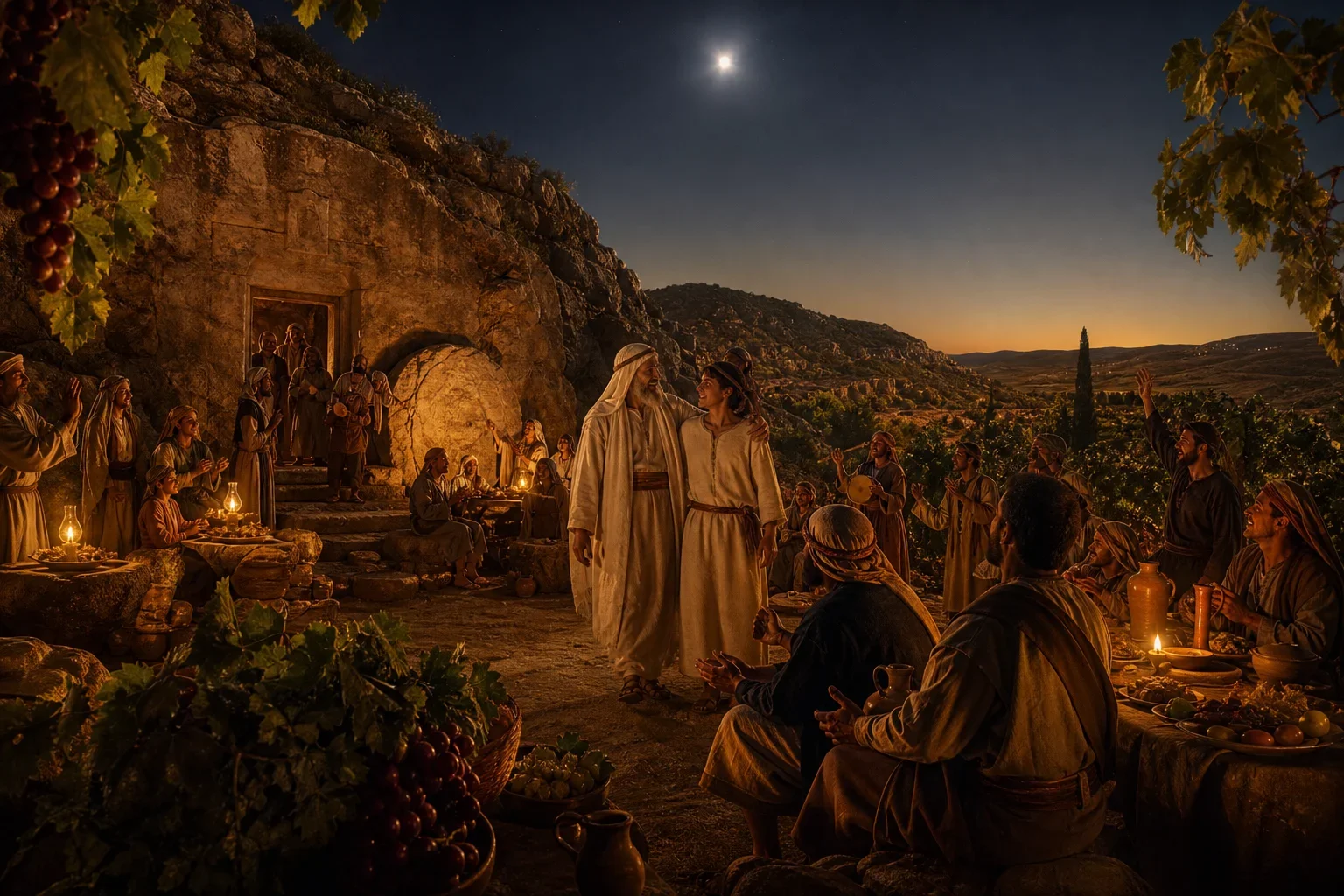
Genesis 15 gives one of the earliest direct statements. God tells Abram, “As for you, you shall go to your fathers in peace; you shall be buried in a good old age” (Genesis 15:15). Notice the paired language: going to your fathers, burial, peace. This is not a philosophical treatise on the afterlife. It is covenant speech. Abram’s personal death is framed by peace with God and continuity with the covenant line. The promise does not end at the grave mouth. The stones cry out that the covenant is larger than one lifespan.
As revelation moves forward, this corporate identity deepens. Israel is repeatedly addressed as a people chosen, redeemed, and named by God. Death remains an enemy, no doubt about that, but it is not an enemy that can dissolve divine ownership. Psalm 16 presses the matter with startling confidence: “For you will not abandon my soul to Sheol, or let your holy one see corruption” (Psalm 16:10). In its immediate setting, the psalm voices trust that God does not surrender His faithful one to ultimate ruin. In the apostolic preaching of Acts, that line reaches its full force in the resurrection of Jesus.
Now the gospel brings the covenant phrase to blazing clarity. Jesus does not merely die as an isolated righteous man. He dies as the covenant head who gathers a people to Himself. Matthew records the name given before His birth: “You shall call his name Jesus, for he will save his people from their sins” (Matthew 1:21). His death addresses the deepest barrier to gathered belonging, which is not geography but sin. His resurrection answers the oldest fear, that death severs communion forever.
Acts 2 places Psalm 16 on the lips of the early church as Peter proclaims the risen Christ. Then Hebrews widens the scene with language that feels almost like the flowering of “gathered to his people”: “But you have come to Mount Zion and to the city of the living God, the heavenly Jerusalem, and to innumerable angels in festal gathering, and to the assembly of the firstborn who are enrolled in heaven” (Hebrews 12:22-23). Here covenant gathering is no longer dimly implied. It is unveiled in Christ. The faithful dead are not lost units in cosmic silence. They belong to the assembly gathered under the risen Son.
Here’s where it gets revolutionary: the gospel does not erase the Old Testament phrase; it fills it with resurrection light. To be gathered to one’s people becomes, in Christ, participation in the redeemed community united across death by the covenant blood of the Messiah. Cultural optimism says memory keeps you alive. Religious certainty says proper ritual secures your place. Biblical faith says the crucified and risen Jesus keeps covenant with His people, and that covenant outlasts the grave.
The Sacred Transformation
If that is true, your approach to death, grief, and daily belonging must be reshaped at ground level. The transformation begins with naming death honestly. Scripture never asks you to pretend the hospital room is peaceful when the monitors are shrill and the family is exhausted. Jesus Himself weeps at Lazarus’s tomb. Covenant trust is not denial; it is truthful grief inside truthful promise. You stop speaking as though believers vanish into abstraction, and you begin speaking of the dead in Christ as those still held within the people of God.
That reshaping also affects spiritual discipline. Reading the genealogies, burial narratives, and resurrection texts becomes more than a duty. These passages train your imagination to see yourself as part of a long covenant people rather than a religious free agent. In my classroom, students often think ancient genealogies are the cinematic equivalent of end credits—names scrolling by while attention drifts. Then you slow down and realize those names are covenant architecture. They tell you that God works through households, generations, memory, and embodied history.
Prayer changes too. Instead of only asking for immediate relief, you begin praying with the categories of belonging and inheritance. A family facing a terminal diagnosis can pray, “Lord, keep us among Your people, keep our dying father steady in Christ, and keep us faithful in the presence of death.” A church can recover funeral language that speaks of resurrection, communion of saints, and covenant hope rather than vague celebration. In many congregations, grief has been flattened by euphemism. The biblical phrase restores weight and tenderness together.
Community support becomes concrete in ordinary spaces. At the grocery store, covenant people notice the widow counting coupons with shaking hands and quietly cover the difference. In traffic after a hard medical appointment, covenant people resist turning inward and instead call a brother from church to pray before pulling into the driveway. In neighborhood interactions, covenant people bring meals, sit in silence, help with estate paperwork, mow the lawn, and stand at gravesides when relatives live three states away. The gospel makes belonging visible.
I think about archaeological digs where layers of earth preserve fragments of a people’s life together: cooking vessels, storage jars, oil lamps, broken tools. Human existence leaves traces. The church should leave traces of gathered faithfulness just as tangible. Write the names of the dead in family Bibles. Tell children where their grandparents trusted Christ. Sing resurrection hymns at bedsides. Visit cemeteries with reverence, not superstition. These practices do not create the covenant; they bear witness to it in flesh-and-blood ways.
Because of this, transformation is not a leap into emotional certainty. It is a disciplined relocation of the self. You move from thinking, “I face death and loss alone,” to confessing, “I belong to Christ and to His people in life and in death.” That confession steadies the hands, clarifies the tongue, and gives grief a home sturdy enough to hold it.
Living as Covenant People
When you truly believe this covenant reality, daily life begins to carry a different texture. Financial stress still bites when the rent is due and the checking account is thin, yet scarcity no longer defines the boundaries of your world. You belong to a people under promise. Relationship conflicts still flare in living rooms and on front porches, yet reconciliation matters more because covenant people do not treat one another as disposable. Health concerns still arrive with scans, prescriptions, and long afternoons in waiting rooms, yet the body is no longer merely a failing machine; it is a body destined for resurrection.
I have seen this in the kind of testimony that rarely trends but quietly honors Christ. A deacon in our church spent months driving an elderly member to dialysis, then stayed to read Psalms in the lobby. A high school student I mentor lost his grandfather and, instead of folding into silence, asked his mother to tell the family stories again at dinner so the younger cousins would know the man’s faith. A woman in our neighborhood, after her husband died, kept hosting a small Bible reading at her table every Thursday, the wood scratched and worn, the coffee strong, the room full of names carried by grief and grace together.
The gospel also guards you from two counterfeits. Cultural optimism speaks as if human warmth can conquer death by memory alone. Religious certainty can harden into polished phrases that leave mourners feeling managed rather than accompanied. Biblical faith is sturdier and humbler. It faces the grave, names the enemy, buries the dead, and confesses Christ risen. It honors ancestors in the faith without turning them into idols. It treasures family bonds without pretending biology is the final word. In Christ, covenant kinship reaches wider and deeper.
I say this as someone who almost lost faith in college and had to rebuild on the historical ground of the gospel: you need a Savior who enters death, not a slogan that dances around it. You need a people who carry one another, not a spirituality built for private consumption. You need the covenant Lord who gathers His people from Abraham to the empty tomb and onward to the final resurrection.
This changes everything: I will not speak of death as though it owns the last sentence. I will not treat the church as a weekend association. I will pray, labor, grieve, bury, remember, and hope as a man gathered already into the people of God through Jesus Christ. Lord, keep Your covenant. Gather our households in faith. Make our churches faithful at hospital beds, dinner tables, neighborhood sidewalks, and gravesides until the day the trumpet sounds and all Your people stand together.
Reflection Questions
Where in your life do you still think of yourself as spiritually isolated rather than already bound to the covenant people of God in Christ?
What concrete act will you take this week to embody gathered belonging for someone facing financial stress, relationship conflict, or health concerns?
How might your church challenge the thin habits of cultural optimism by recovering a deeper practice of covenant memory, grief, burial, and resurrection hope?
Continue Your Bible Study
Explore more lessons and deepen your understanding of scripture
View All Lessons Ask AI a Question