From Sin to Life Through Christ

The Wages of Sin is Death
Creation moment
When Creation Speaks
Picture yourself standing before dawn on the South Rim of the Grand Canyon, your hoodie pulled tight against the desert cold, your breath visible in the blue-gray air, the silence broken only by a raven cutting across the gap. I had that moment during a school trip, half awake, coffee cooling in my hand, while students behind me whispered and shuffled their sneakers on the gravel path. Then the sun rose, and the canyon walls turned from charcoal to rust to blazing gold, layer after layer opening up the deep record of ages. History comes alive when you realize that stone can make you feel very small and strangely seen at the same time.
That morning, you do not just see beauty; you feel scale, weight, order, and a kind of moral seriousness. The cliffs stand there with an authority no screen can imitate, no TikTok clip can compress, no drone footage can fully carry. You hear wind move through juniper branches, smell dust and cold rock, and sense that the world is not random scraps thrown together in the dark. The ancient witness presses on your chest, and you begin to ask what kind of God speaks through grandeur without saying a word.
Then picture a different scene, one I felt on the Pacific coast near San Diego after a youth retreat, where the ocean kept pounding black rocks under a sky streaked orange and purple. A student who had just confessed a hidden addiction stood beside me, hands jammed into his pockets, eyes fixed on the waves, trying not to cry. The sea looked endless, powerful enough to swallow cities, and yet each wave curled with astonishing precision, as if strength and order belonged together. In moments like that, creation does not offer easy comfort; it confronts you with majesty, and majesty exposes your fragility.
Now move closer, from canyon and ocean to intricate design, to the veined wing of a dragonfly resting on a chain-link fence behind my school, shimmering green in the late afternoon sun. A student once held out her phone flashlight so we could see its tiny structure, and even the toughest kid in the group went quiet. The same world that carves canyons also crafts microscopic elegance, and that pairing matters. The God who made what is vast also attends to what is minute, and when you hold that together, Romans 6:23 lands with force: “For the wages of sin is death, but the gift of God is eternal life in Christ Jesus our Lord.” Creation’s witness hints that life belongs to Him, and when life is severed from Him, death is not arbitrary punishment; it is the terrible fracture of the created order itself.
The earth proclaims:
The Original Commission
When you open the biblical story, creation is not background scenery for human drama; it is the stage, the temple, the gift, and the entrusted field of service. Genesis begins with God speaking order into chaos, light into darkness, fruitfulness into emptiness, and humanity into a commissioned place within that good world. Yet the theme does not stay in Genesis 1, tucked away as a children’s Bible opening scene with smiling giraffes and cartoon clouds. It runs through the whole canon, and when you trace it, the line between sin and death becomes painfully clear, because rebellion is always anti-creation before it becomes personally destructive.
Psalm 24:1 says, “The earth is the Lord’s, and all its fullness, the world and those who dwell therein.” That verse resets your posture right away. You do not own the ground under your feet, the breath in your lungs, the body you move through traffic with, or the paycheck you stretch across rent, gas, and groceries at H-E-B or Kroger. Everything begins as God’s possession, God’s artistry, God’s domain, which means sin is never merely breaking a private rule; it is vandalizing borrowed space in the house of the King.
Job pushes this even deeper. In Job 38:4, God asks, “Where were you when I laid the foundations of the earth? Tell Me, if you have understanding.” Picture that courtroom thunder for a second. Job is suffering, demanding answers, and God responds by taking him through mountain goats, storehouses of snow, wild seas, constellations, and creatures no human can tame. The point is not cruelty; the point is scale. Human beings are real, loved, morally responsible, and yet never central in the way our pride imagines.
Romans 8 brings the ache into focus. Romans 8:22 says, “For we know that the whole creation groans and labors with birth pangs together until now.” Paul does not describe a neutral world humming along untouched by human revolt. He describes a creation caught in the fallout of sin, a world where death has entered the bloodstream of the cosmos. That is why “the wages of sin is death” is bigger than a funeral verse on a sympathy card; it is a diagnosis of the whole cracked order.
Revelation completes the arc with a throne, a city, a river, and a renewed world, not an escape into disembodied mist. Revelation 21:1 says, “Now I saw a new heaven and a new earth, for the first heaven and the first earth had passed away.” The biblical commission, then, is not domination driven by greed, nor passive neglect dressed up as spirituality. It is stewardship under the Creator, service within His world, and hope anchored in Jesus, the One through whom all things were made and through whom all things will be made new. The archaeological evidence tells us that Israel’s neighbors worshiped forces within creation; Scripture insists the living God rules over creation and calls you to faithful care within it.
Creation groans:
Groaning with Creation
If creation carries witness, it also carries wounds, and you do not need a satellite map or a seminary degree to see them. You see them in a creek behind an apartment complex choked with plastic bottles and fast-food wrappers, in summer heat that presses harder each year against neighborhoods with few trees, in asthma inhalers tucked into children’s backpacks, in reports of species slipping away before most people even know their names. Picture a traffic jam under a white-hot August sky, engines idling, tempers rising, exhaust shimmering above the freeway, and tell me sin stays private. It spills outward, into air, water, soil, bodies, and systems.
When I was in college, wrestling through doubt and nearly walking away from faith, I joined an archaeological dig for a season and spent long days brushing dirt from pottery fragments under relentless sun. The ground held evidence of whole communities that rose and fell, built and broke, traded and fought, worshiped and wandered. The stones cry out in a way, not with romantic fantasy, but with sober testimony: human rebellion leaves marks. Ruins are not only ancient; they are mirrors.
That same pattern lives in ordinary life now. Sin appears in grocery shopping when convenience trains you to waste food while a neighbor quietly stretches ramen and peanut butter through the week. It appears in financial stress when fear turns a marriage conversation into sharp words at the kitchen table, phones face down, shoulders tense, receipts spread out beside a half-finished cup of coffee. It appears in neighborhood interactions when suspicion keeps you from knowing the family across the hall, even while loneliness gnaws at both apartments.
Death enters all those spaces in layers. Sometimes it is physical, in disease, disaster, and decay. Sometimes it is relational, in trust corroded by lies, in friendships ghosted into silence, in families that share Wi-Fi passwords but not peace. Sometimes it is spiritual, the numbness of a heart drifting from Christ while still going through motions, posting verses, and smiling in church hallways. Genesis begins with a garden, but Romans 6:23 names the bitter harvest with brutal clarity: wages are earned, and sin pays out in death every single time.
Still, the groaning of creation is not the final sound. Birth pangs imply pain with expectation, sorrow with a promised horizon. Jesus steps into the broken field, not as a distant lecturer, but as the second Adam, bearing sin’s curse in His body. That means when you face climate anxiety, health concerns, fractured relationships, or the slow grief of a dying world, you are not staring into a sealed tomb. You are hearing the labor cries of a creation waiting for resurrection.
Listen to the land:
Tending the Garden
If sin brings death, then life in Christ reshapes how you walk through the world, and that includes the ground beneath your sneakers, the food in your cart, the habits wired into your week. Tending the garden is not a trendy side project for people with backyard chickens and expensive water bottles. It is a form of discipleship, a way of saying with your body that Jesus is Lord over your consumption, your waste, your pace, and your neighbor-love. The gospel does not reduce salvation to a private soul floating toward heaven; it trains redeemed people to live faithfully in the Creator’s world now.
Start at the everyday level, because that is where most obedience actually happens. In the grocery store, you can resist the reflex of excess, buying with intention, reducing waste, noticing where your choices exploit workers or crush communities. In traffic, you can reject the little kingdom of rage, where every delay becomes a chance to dehumanize strangers behind windshields. In your neighborhood, you can pick up litter, plant something living, check on the elderly man whose porch light has been flickering for weeks, and make your patch of earth a place where care interrupts decay.
I tell my students that stewardship is a lot less glamorous than superhero movies and a lot more faithful than most people expect. It looks like church members organizing a Saturday cleanup along a neglected creek, teens wearing work gloves and laughing while hauling trash bags into a borrowed trailer. It looks like a congregation helping families lower utility bills with weather stripping, fans, and practical home repairs, which matters when financial stress already has people calculating whether groceries or prescriptions come first. It looks like community gardens in vacant lots where tomatoes, jalapeños, and conversation grow together.
This kind of care becomes gospel witness when it flows from Jesus rather than guilt or cultural fashion. Colossians presents Christ as the One through whom and for whom all things were created, and the cross as the place where reconciliation reaches farther than you often imagine. So when you mend what can be mended, conserve what can be conserved, and protect what is vulnerable, you are not pretending you can save the planet by recycling one milk jug. You are bearing witness to the King who defeats death and claims every square inch of reality.
I think about museum artifacts sometimes, oil lamps and storage jars scarred by centuries, ordinary objects from ancient households that remind you daily life has always been theological. The way people ate, built, harvested, rested, and treated land said something about what they believed. Yours does too. Creation care, held inside the gospel, becomes repentance with dirt under its fingernails, hope with practical shoes on, and love that reaches beyond slogans into habits sturdy enough to honor the Creator and serve the people He places right in front of you.
The earth proclaims:
All Things New
The Christian hope is not that the world gets worse, you grit your teeth, and then your soul evacuates the scene forever. Picture instead the last pages of Scripture opening wide: a healed world, a holy city, tears wiped away, death abolished, and the presence of God dwelling with His people. Revelation 21:4 says, “And God will wipe away every tear from their eyes; there shall be no more death, nor sorrow, nor crying. There shall be no more pain, for the former things have passed away.” That promise matters because “the wages of sin is death” would crush you if death had the last word.
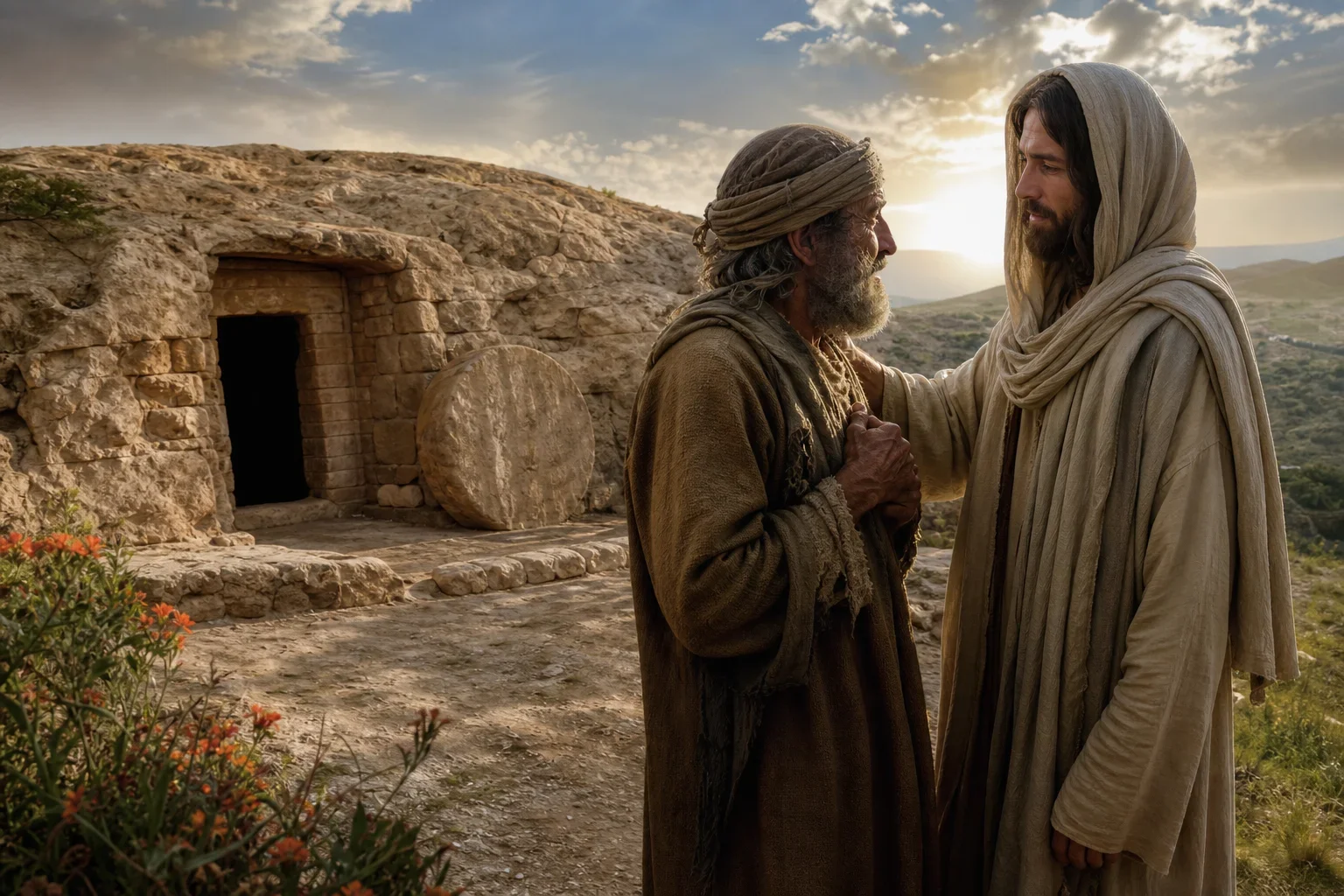
Jesus changes that sentence from despair to contrast. Romans 6:23 does not stop at wages; it moves to gift: “but the gift of God is eternal life in Christ Jesus our Lord.” Sin pays what it owes, and its currency is death. Jesus gives what you could never earn, and His gift is life, embodied life, reconciled life, resurrection life. The cross absorbs the curse, and the empty tomb announces that death’s paycheck has been interrupted by divine mercy.
History comes alive when you realize the resurrection is not a vague inspirational slogan but a claim rooted in time, place, witnesses, and transformed communities. The Gospel accounts place you in gardens, borrowed tombs, locked rooms, seashores, and roads where terrified followers become bold witnesses. As a history teacher, I cannot read those scenes as decorative mythmaking. They carry the texture of memory, the force of testimony, and the shock of something that reordered frightened people from the inside out.
That hope reaches backward into your present routines. When you face health concerns and hear a doctor explain lab results in a fluorescent exam room, when relationship conflicts make your chest tighten before you walk through the front door, when bills stack up on the counter and your bank app makes your stomach drop, resurrection hope does not erase the pain. It keeps pain from becoming ultimate. New creation means your labor in Christ is not wasted, your repentance is not futile, and your care for this world participates in a future already secured by the risen King.
Creation participation begins here: join creation’s praise by refusing the lie that death owns you, commit yourself to earth-keeping as a sign of allegiance to Jesus, and pray with wonder while your feet stay planted in real soil. Picture yourself walking through ancient ruins and then through your own neighborhood, sensing the same truth in both places: sin devastates, Christ restores. So lift your eyes, open your hands, and ask the Lord to make your life a small but stubborn witness to the coming renewal of all things. The stones cry out, and by grace, you can answer with faithful love.
Reflection Questions
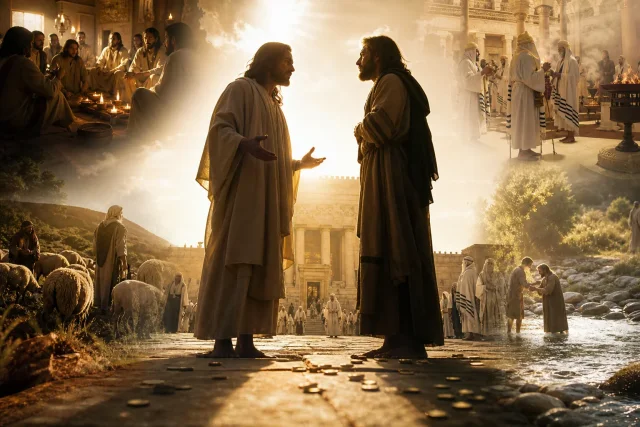
Contemplative: Dwell on this image: a paycheck placed in your hand, stamped with the words “the wages of sin is death,” while beside it Christ offers a gift you could never earn. Where do you feel that tension most sharply right now in your body, your relationships, or your hidden thoughts?
Action: What is one concrete act of life-giving stewardship you will take this week in a real setting, whether during grocery shopping, in a traffic jam, or with a neighbor on your block, as a witness that Jesus is reversing sin’s work of death?
Theological: Where else in Scripture does the biblical story arc reshape your reading of “the wages of sin is death,” and how does the resurrection of Jesus place that verse inside the larger promise of new creation?
Continue Your Bible Study
Explore more lessons and deepen your understanding of scripture
View All Lessons Ask AI a Question