Called Back First in the Gospel of Inclusion

Gospel of Inclusion and the Heart of Christ
The Empty Chair
There is a particular ache in being left out, and most of us have felt it in one form or another. It may come while standing in the grocery store checkout line, watching two old friends ahead of you laugh over plans you were never asked to join. It may come in the slow crawl of evening traffic, hands tight on the steering wheel, while your phone stays silent after a family disagreement. It may even come in the waiting room at a specialist’s office, fluorescent lights humming overhead, when your body is hurting and your heart feels even lonelier than your diagnosis. Oh, dear one, exclusion has a way of making the soul feel thin and hungry.
In my sixty years of walking with Jesus, I have come to see that this hunger is not merely social. It is spiritual, tender, and very deep. We long to be welcomed without suspicion, named without contempt, and held in a place where we need not earn our right to remain. I remember seasons after my husband went home to be with the Lord, when the supper dishes were few and the house was too quiet, and grief itself felt like an uninvited guest sitting across from me. Through every season, He remains, and He met me there in that emptiness.
The gospel speaks into that ache with a voice far more gentle and steadfast than the world’s sorting systems. We live in a culture that categorizes quickly: who belongs, who is useful, who is polished, who is too messy, who votes the wrong way, who has made too many mistakes, who carries too much need. Even in neighborhood interactions, one can feel the subtle chill. A new family moves in with an aging car, children loud in the yard, and unpaid-stress written across their faces, and some curtains twitch before any door opens in welcome.
The sorrow of exclusion is not new. In Scripture, we meet widows, foreigners, the ceremonially unclean, the morally disgraced, and those dismissed by respectable religion. Yet the abiding mercy of God keeps moving toward the margins. The gospel of inclusion is not a sentimental notion that ignores sin, nor is it a careless flattening of truth. It is the precious announcement that in Christ, the door of grace opens wide to those who know they cannot save themselves, and the proud are invited to kneel beside the poor and receive mercy on equal ground.
Pull up a chair
The Scandalous Dinner Guest
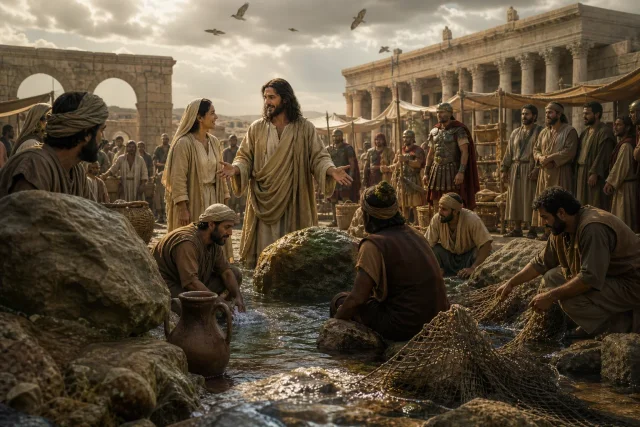
When I prayerfully meditate on the Gospels, one of the tender patterns that rises before me is this: Jesus keeps drawing near to the very people others would rather avoid. He touches lepers, speaks with women whose reputations had been shredded in public memory, and receives the tears of those considered unfit for holy company. The religiously polished often bristled at this. They wanted cleaner boundaries, more predictable categories, and a Messiah who would affirm their nearness to God while keeping obvious sinners at a safe distance.
One scene that has long rested in my heart is the Samaritan woman at the well. She came in the heat of the day, likely because she was weary of glances and whispers. Yet Jesus met her there, not with disgust, but with truth wrapped in mercy. John 4:13-14 says, “Jesus answered and said unto her, Whosoever drinketh of this water shall thirst again: But whosoever drinketh of the water that I shall give him shall never thirst; but the water that I shall give him shall be in him a well of water springing up into everlasting life.” Beloved, He addressed her broken history without casting her away, and He entrusted one once-shamed woman to carry good news back to her town.
Then I think of blind Bartimaeus, sitting by the roadside while others tried to hush him. Mark 10:48-49 says, “And many charged him that he should hold his peace: but he cried the more a great deal, Thou Son of David, have mercy on me. And Jesus stood still, and commanded him to be called.” Those words move me every time: Jesus stood still. In a loud world, where some people are treated as interruptions, our faithful Savior halts for the cry of the overlooked. Inclusion in the kingdom begins with the heart of Christ, who is never irritated by sincere need.
Another precious picture is Philip and the Ethiopian official in Acts 8. Here is a man from another land, reading Isaiah with longing, carrying both status and distance. The Spirit sent Philip close enough to hear his questions and near enough to explain the gospel of Jesus. Acts 8:35 says, “Then Philip opened his mouth, and began at the same scripture, and preached unto him Jesus.” The message of Christ crossed geography, ethnicity, and religious barriers, and the man went away rejoicing, baptized into the family of God.
I have seen smaller echoes of this in ordinary life. A cashier at Kroger, eyes tired near closing time, brightened when someone used her name and asked how her mother’s surgery had gone. A young father in our neighborhood, embarrassed because he had lost work and could not fix his sagging fence, stood straighter when another man offered help without pity in his voice. Inclusion often begins in these concrete moments, where dignity is restored before advice is given. “There’s a wideness in God’s mercy,” the old hymn says, “like the wideness of the sea,” and I believe that with all my heart.
Yet the scandal of the gospel is not merely that outsiders are welcomed. It is that insiders must come the same way—empty-handed, repentant, and dependent upon grace. The elder brother in Luke 15 could not rejoice when mercy embraced the undeserving. That spirit still lingers wherever people prefer hierarchy over humility. The gospel of inclusion tells the truth about sin, then points every soul, respectable or ruined, to the same cross where mercy flows.
Pass the bread
Theology of the Table
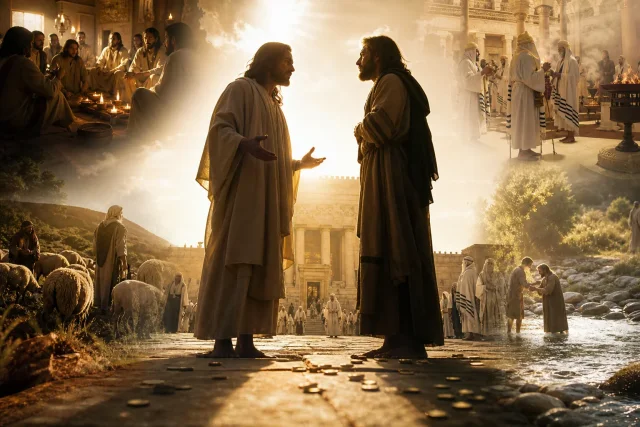
When I sit quietly with Scripture, I do not hear the Lord whispering that all paths are equal or that holiness no longer matters. No, dear one, the inclusion of the gospel is far richer than mere tolerance. It is the holy grace of God making one new people in Christ out of those who had every reason to remain estranged. Ephesians 2:13-14 says, “But now in Christ Jesus ye who sometimes were far off are made nigh by the blood of Christ. For he is our peace, who hath made both one, and hath broken down the middle wall of partition between us.”
That “middle wall” was not imaginary. It was built from history, suspicion, injury, pride, law, and fear. We still build such walls in quieter materials—education levels, politics, race, class, denominational habits, family background, and the polished masks people wear to hide their wounds. Yet Christ Himself is our peace. He does not merely invite separated people into the same room while leaving hostility untouched. He creates reconciliation at the deepest level by cleansing sin and making us new.
This is where prayerful meditation softens the heart. When I linger over passages about Christ receiving the outsider, I find the Spirit turning the light gently toward my own hidden exclusions. Whom have I dismissed as too demanding? Whose accent, clothing, or rough manner has made me keep a little distance? Whose failures have I remembered more readily than my own? Sanctification often begins there, in the secret places, where the Lord uproots the weeds of superiority before they choke love.
James speaks with piercing clarity about partiality. James 2:1 says, “My brethren, have not the faith of our Lord Jesus Christ, the Lord of glory, with respect of persons.” And then he describes the shameful habit of honoring the well-dressed while slighting the poor. I taught children for forty years, and even on a playground you can watch this instinct appear early. The child with the nicest lunchbox gets attention; the child with worn sleeves and hesitant speech may stand at the edge of the game. Sin sorts. Grace gathers.
The gospel of inclusion also carries missionary fragrance. God’s heart has always been wider than one tribe’s comfort. Psalm 67 lifts our eyes beyond ourselves, and Revelation gives that radiant vision of people from every nation praising the Lamb. Inclusion is not about erasing every distinction into sameness. It is about redeemed diversity brought into harmony under Christ’s lordship. The garden of God is not one color only. It is a tended abundance, where each bloom bears witness to the kindness of the Gardener.
The table is set
Setting the Table
The tender question, then, is how this truth takes flesh in ordinary living. It begins with attention. In the grocery store, it may mean noticing the elderly man counting coins twice before paying for milk and bread, then choosing patience instead of restless sighing. In traffic, it may mean refusing to let irritation harden into contempt for the minivan that cuts in front of you, because you do not know whether the driver is rushing toward a hospital room or carrying news too heavy for words. Inclusion begins long before grand gestures; it begins in the soul’s posture.
In our neighborhoods, this may look very plain and very holy. A widow on the corner whose porch light has gone out. A teenager next door who avoids eye contact because his parents are splitting up and shame hangs over the house. A family with health concerns, receiving package after package of medical supplies while trying to smile through mounting bills. The gospel trains our eyes to notice who is slipping to the edges and to move toward them with steady, practical mercy.
I think of a woman in my church years ago named Denise. She had a sharp tongue, a tired face, and a reputation for missing commitments. Many kept her at arm’s length. Then one afternoon, while rain tapped against the fellowship hall windows, she told me her electricity had been cut off and she was heating canned soup on a camping stove for her little boy. Suddenly what had looked like carelessness was tangled with financial stress, fear, and exhaustion. Compassion does not excuse sin, but it often reveals pain hiding beneath it.
We cannot welcome everyone into every role without wisdom, and boundaries can be godly. Yet the heart of Christ keeps us from using prudence as a cloak for coldness. Romans 15:7 says, “Wherefore receive ye one another, as Christ also received us to the glory of God.” I have learned to rest in His promises, and one of them is this: when we ask for love that resembles His, He will prune and nourish our hearts until they bear it. The old hymn says, “Jesus, what a friend for sinners,” and if He is such a friend, then His people must not become strangers to mercy.
Pull up a chair
Foretaste of the Feast
There is coming a day, beloved, when every false boundary redeemed by Christ will be gone forever, and the gathered people of God will rejoice in unmarred communion with their Savior. The gospel of inclusion reaches toward that bright horizon. We are not merely managing diversity in the present age. We are being prepared for the everlasting gladness of Christ’s kingdom, where grace has completed its sanctifying work and love is no longer hindered by suspicion, grief, or sin.
Isaiah gave us a radiant promise in language full of abundance and comfort. Isaiah 25:6-8 says, “And in this mountain shall the Lord of hosts make unto all people a feast of fat things, a feast of wines on the lees, of fat things full of marrow, of wines on the lees well refined. And he will destroy in this mountain the face of the covering cast over all people, and the vail that is spread over all nations. He will swallow up death in victory; and the Lord God will wipe away tears from off all faces.” What a precious hope for every soul who has ever stood outside looking in.
When I meditate on that promise, I think of all the dividing lines that burden our present days. The strained silence after relationship conflicts. The weariness of caring for a spouse through treatment schedules and pharmacy alarms on a smartphone. The embarrassment of declining another invitation because the budget is too tight this month. The ache of sitting in a doctor’s office wearing a paper bracelet, wondering whether your body is betraying you. Through every season, He remains, and His kingdom will not leave any of His children in the waiting room forever.
This future hope reshapes the present. It makes us a people who refuse the cheap comfort of small circles built on sameness alone. It makes us gentler with those who carry grief differently than we do. It makes us braver in crossing toward those who have been mislabeled, misread, or quietly avoided. The Lord whispered to my heart years ago, while I was deadheading roses in the July heat, that every act of Christlike welcome is a seed planted in faith, and heaven itself will reveal the bloom.
So I set before you an invitation, dear one: make room in your heart first, and then in your life, for the people Christ has not overlooked. Ask Him to name the exclusions you have normalized. Ask Him for eyes that linger, ears that listen, and hands ready to serve. Then pray this simple prayer: Lord Jesus, widen my heart by Your grace. Tear down every wall You did not build. Make me faithful in welcome, truthful in love, and steadfast in mercy until that glad day when all Your redeemed rejoice in perfect peace. Amen.
Reflection Questions
Relational: With whom will you share this truth about the gospel of inclusion, especially someone who has been carrying loneliness, conflict, or quiet shame?
Action: What specific act of welcome will you offer this week to a neighbor, coworker, church member, or struggling family under financial stress or health concerns?
Contemplative: Dwell on this image before the Lord: where in your own heart is there still a closed gate that Christ is asking you to open by grace?
Continue Your Bible Study
Explore more lessons and deepen your understanding of scripture
View All Lessons Ask AI a Question