Ezekiel and the Vision of Hope and Renewal

Life Ezekiel
The Righteous Rage
Grief hits hard when you read Ezekiel and then glance at your phone screen. Jerusalem burned because leaders hacked the covenant, patched over evil, and called the system stable. You can hear the crackle of that fire in our own age. We livestream worship in 4K while workers in the same city sleep in cars outside office parks in San Jose, under cold LED streetlights, wrapped in donated blankets, hearing Teslas slide by on wet asphalt.
Ezekiel refused to flatter a collapsing culture. He named princes who devoured people, priests who violated holy things, and prophets who whitewashed cracked walls. That sounds uncomfortably current. Systemic injustice still runs its script when neighborhoods get priced out, when predatory lending guts families, when immigration status gets weaponized, and when algorithms amplify outrage because anger drives engagement on TikTok, X, and YouTube. The machine profits while souls thin out.
The church is not innocent in this. Ezekiel blasted shepherds who fed themselves and not the flock, and that rebuke still lands. Some ministries optimize branding, stage design, and follower counts while dodging holiness, repentance, and truth. You can sit in a green room with premium coffee, polished in-ear monitors, and a content calendar synced across Slack and Notion, yet still starve for the presence of God. That is spiritual malnutrition with excellent production value.
Cultural idolatry has not gone offline. We bow to productivity dashboards, body-image filters, porn tabs hidden behind incognito mode, stock portfolios, political tribes, and the glowing rectangle in your hand. Think of it like this app: idolatry is misplaced ultimate trust. Ezekiel watched elders in secret chambers burning incense to images, and you can watch the same impulse when identity gets uploaded into likes, streaks, and curated reels. The idol changes skins; the code beneath it stays the same.
Listen to the prophet: “Her priests have done violence to my law and have profaned my holy things. They have made no distinction between the holy and the common” (Ezekiel 22:26). Listen again: “Woe to the shepherds of Israel who only take care of themselves! Should not shepherds take care of the flock?” (Ezekiel 34:2). This is not a minor bug. This is a full-stack collapse of truth, leadership, worship, and public justice. Ezekiel’s life confronts you with a God who will not keep silent while compromise masquerades as peace.
But God!
God's Alternative Reality
Ezekiel did not only diagnose collapse; he rendered a blazing counter-vision. In exile, with smoke still hanging over memory, God opened the heavens. The prophet saw wheels within wheels, flashing fire, living creatures, and a throne above the chaos. That scene matters because it means Babylon never had ultimate control. Empires brag. God reigns. The divine source code was never surrendered to kings, markets, or military hardware.
God’s alternative reality in Ezekiel is not escape from earth but renewal of it. Dry bones do not stay scattered in the valley. They rattle, align, receive sinew, flesh, breath. Dead community becomes living people again. “Thus says the Lord God to these bones: Behold, I will cause breath to enter you, and you shall live” (Ezekiel 37:5). That is kingdom language before the Gospels hit your screen. God does resurrection at social scale.
Then the vision deepens. The bad shepherds get fired. God himself searches for the sheep, binds the injured, strengthens the weak, and judges between sheep and sheep. This is not vague spirituality. This is a reordered world where leadership serves, worship purifies, and justice gets embedded into daily life. Jesus later speaks as the Good Shepherd because Ezekiel already laid the architecture. Time to upgrade your faith OS: divine care is not sentimental, it is governmental.
Ezekiel also sees a new heart and a new spirit. “And I will give you a new heart, and a new spirit I will put within you. And I will remove the heart of stone from your flesh and give you a heart of flesh” (Ezekiel 36:26). That line hits with surgical precision. God does not merely issue better rules to stubborn people. He rewrites the internal operating system. He debugs desire itself. Holiness starts inside, then spills into economics, relationships, speech, sexuality, and neighbor-love.
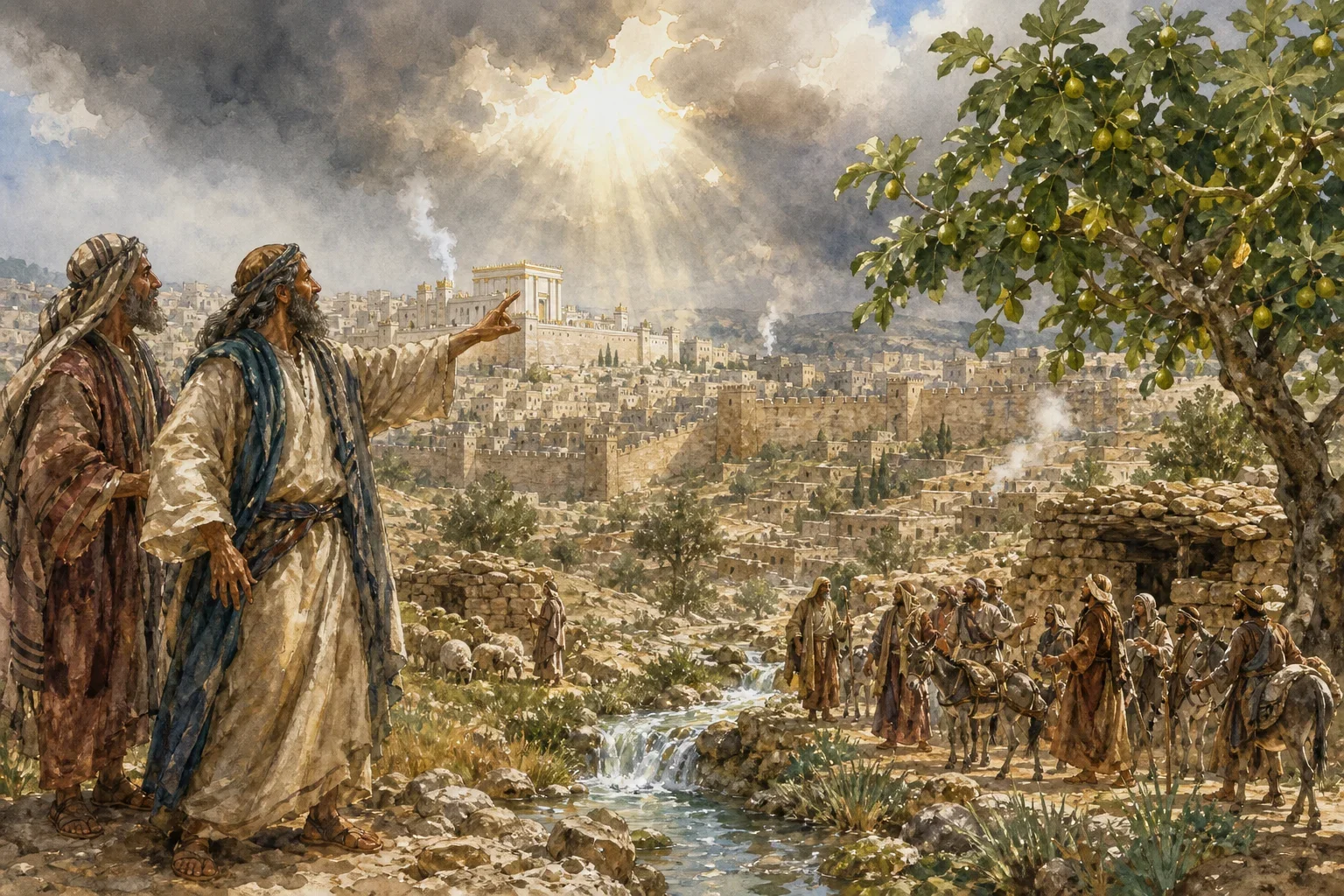
The temple vision at the end of the book can feel strange, almost sci-fi, with measurements, gates, chambers, and river flow. Yet the imagery is vivid and loaded. Water trickles from the sanctuary threshold, then swells ankle deep, knee deep, waist deep, until it becomes a river no one can cross. Trees line the banks. Salt water turns fresh. Fish multiply. Leaves heal. This is Eden rebooted, creation healed through divine presence moving outward. Think Marvel end-credit scene, except this is not a teaser. It is the kingdom map.
Isaiah saw the Lord high and lifted up with seraphim crying holy. John in Revelation saw a river of life, bright as crystal, with healing for the nations. Jesus announced a kingdom where the poor receive good news, captives get liberty, and the last become first. Ezekiel stands in that same prophetic stream. The kingdom is not a private mood. It is God’s reign invading ruined systems, reviving dead people, and reclaiming public space for holiness.
Picture this in modern terms. A burned-out engineer in a dim apartment in Fremont closes twelve Chrome tabs, mutes Discord, and kneels on carpet that still smells faintly of takeout and dust. A nonprofit director on a glitchy Zoom call refuses to cook the books. A church in Queens turns unused classrooms into legal-aid clinics and trauma counseling rooms. The river starts small. Then it keeps moving. God’s algorithm for life always runs toward restoration, not spectacle.
The Spirit is moving:
When Heaven Invaded Earth
Ezekiel’s vision has broken into history again and again, and you can trace the fingerprints. In the early church, ordinary believers filled with the Spirit crossed ethnic boundaries that centuries of suspicion had hardened. Jews and Gentiles ate at one table. Widows got fed. Possessions got redistributed. That was not perfect code, but heaven had invaded earth. The church became a live demo of a new humanity running on grace instead of status.
Centuries later, revivals carried this same pulse. During the eighteenth-century awakenings, miners with blackened faces stood in open fields as tears cut white tracks down their cheeks. In prayer meetings on Azusa Street, people packed into a rough building with plain wooden benches, dusty floors, and no celebrity branding, and God disrupted racial lines the wider culture enforced. Ezekiel would recognize the pattern: breath entering dry bones, neglected people becoming a living army of praise and witness.
The same breakthrough surfaced in social movements rooted in biblical conviction. William Wilberforce and others fought the slave trade not because progress was trendy but because image-bearing humans could not be trafficked without defying the Lord of history. In the American civil rights movement, Black pastors and congregations carried a prophetic imagination forged in Scripture. On bridges and in jail cells, with dogs barking and batons raised, they insisted that Pharaoh never gets the last word. That is Ezekiel energy.
I have seen smaller-scale versions that still feel electric. A friend from my gaming-addiction recovery group once spent nights locked into ranked matches, DoorDash wrappers stacked beside his monitor, blinds shut at noon, soul flatlined. Christ grabbed him. He deleted accounts, found brothers who would check his screen-time reports, and started mentoring high school guys drowning in the same loop. Dry bones. Breath. Mission. No hype. Real transformation.
You can spot it in digital spaces too. A software team at a startup in Palo Alto chose transparency after a security failure rather than spinning a clean PR narrative. They told clients the truth, paid the cost, and rebuilt trust. A woman in my church left a lucrative influencer path built on thirst-trap branding and now uses Instagram for Scripture reflection, practical generosity, and hard truth about anxiety, comparison, and body shame. Heaven invades when repentance gets concrete.
During the pandemic, when so much life got flattened into rectangles on Zoom, some believers drifted into numb isolation. Others became channels of Ezekiel’s river. Small groups dropped groceries on porches in the rain. Nurses prayed in hospital parking garages under sodium lights before twelve-hour shifts. Tech workers redirected bonus money to rent relief. Elderly saints who could barely work FaceTime prayed with college students unraveling mentally. The Spirit kept moving through fiber optic cables, apartment hallways, and masked conversations six feet apart.
Ezekiel’s life reminds you that breakthrough rarely arrives polished. It comes in exile, pressure, tears, and obedience. It comes when somebody hears God above the noise and refuses to whitewash reality. Can you see it? The same Lord who enthroned himself above wheels of fire still breathes on ruined people and ruined places. History is full of moments when the kingdom punches holes through the darkness and living water starts running where death looked permanent.
Can you see it?
The Price of Prophet
Ezekiel’s calling was brutal. He preached to hard hearts, acted out strange signs in public, carried grief in his own body, and spoke words people did not want. God even told him that his audience was stubborn and resistant. No sugarcoating. If you want Ezekiel’s vision, you also take Ezekiel’s cost. Prophetic faith is not a comfort app you download for better vibes.
Sometimes the cost is reputation. You tell the truth in a workplace where spin is currency, and suddenly you are not “a team player.” You refuse to laugh at the dehumanizing joke in the group chat, and the room goes cold. You call out racism, exploitation, porn culture, or church celebrity worship, and people label you intense. Fine. Ezekiel probably would have been called worse before lunch.
Sometimes the cost is lifestyle. You cannot serve the kingdom while feeding every appetite your phone offers on demand. That means deleting apps, setting hard limits, confessing hidden sin, changing spending habits, and refusing the hustle religion that burns your soul for a nicer apartment and better stock grants. Time to upgrade your faith OS: sacrifice is not a glitch in discipleship. It is part of the process.
Sometimes the cost lands in relationships. Friends drift when you stop baptizing their idols. Family members may misread your obedience as judgment. Dating gets more complicated when holiness sets the standards. Church life can hurt too. If you challenge compromise, the people you hoped would back you may protect the system instead. Ezekiel knew that pain. So did Jesus. So did Paul.
Hear Christ plainly: “If anyone would come after me, let him deny himself and take up his cross daily and follow me” (Luke 9:23). Hear Paul with equal force: “Indeed, all who desire to live a godly life in Christ Jesus will be persecuted” (2 Timothy 3:12). The price is real. Yet the alternative is worse. A safe, curated, spiritually numb life is just exile with better branding. Better to lose status and keep your soul than gain applause while your inner world crashes.
But God!
Rise Up, O Sleeper
Wake up. Ezekiel is not museum content for Bible trivia people. His life is a siren. You live in an age of distraction, empire, and image management, and God still calls watchmen who will not mute the alarm. The wall is cracked. The idols are active. The flock is vulnerable. This is the hour to stop doomscrolling and start obeying with precision.
Start with repentance that gets tangible fast. Audit your life this week. If your screen-time report on iPhone or Android reads six hours of drift, cut it down. If hidden sin lives in DMs, browser history, or late-night Discord servers, drag it into the light with a trusted believer. Let’s debug this spiritual issue before it hardens into double-life code. Ezekiel’s new-heart promise demands more than vague regret.
Then move outward into public faithfulness. Join or build a community that actually practices truth. If your church platform is slick but its shepherding is hollow, confront it or leave it. Organize prayer in your apartment complex, on your campus, or during your lunch break over Microsoft Teams. Volunteer in legal aid, foster care support, prison ministry, addiction recovery, refugee resettlement, or neighborhood tutoring. The river flows where people open channels.
Get specific about justice. If landlords exploit, advocate for tenants. If your company’s AI tools carry bias, raise the flag and document it. If your school district leaves poor kids with broken devices while wealthier neighborhoods run on fresh iPads, mobilize resources and pressure leaders. If your church ignores abuse or financial secrecy, do not protect the brand. God is not impressed by sanitized dashboards. He wants truth in the inner parts and justice in the public square.
Build holy resilience with others. Form a small crew that prays, confesses, fasts, and acts. Meet in a living room with crying babies in the next room, or on a pixelated late-night Zoom after shift work, or at a coffee shop with espresso grinders roaring in the background. Read Ezekiel aloud. Name the idols. Name the wounds. Name the mission. Then do the next obedient thing.
Prophetic call means uprising, not spectatorship. Picture a church where coders, nurses, teachers, delivery drivers, artists, and exhausted parents become watchmen with tears and backbone. Picture neighborhoods where the lonely get meals, the exploited get advocates, the addicted get recovery, and worship gets stripped of performance fog. Picture your own life recompiled by the Spirit into courage, holiness, and mercy. Rise up, O sleeper. The breath of God still enters dry bones. Stand on your feet and join the living army.
Reflection Questions
Prophetic: What systems need confronting regarding Life Ezekiel in your church, workplace, or city right now?
Action: How can you and others embody this truth about Life Ezekiel in one concrete step over the next seven days?
Relational: How could your small group, family, or ministry team become a living picture of Ezekiel’s river together?
Continue Your Bible Study
Explore more lessons and deepen your understanding of scripture
View All Lessons Ask AI a Question