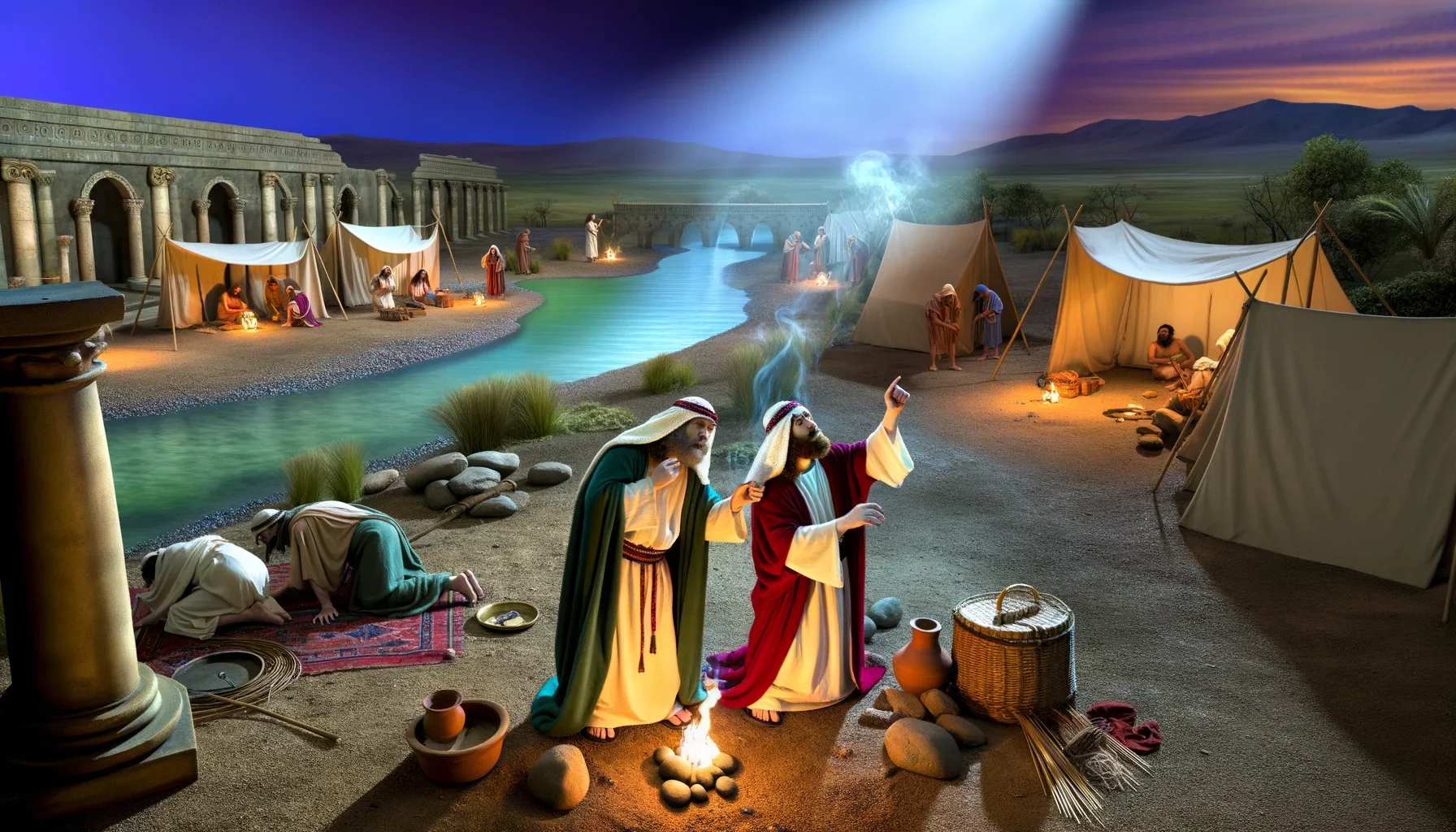
Exploring Levitical Sacrifices and Their Divine Significance

Questions About Leviticus
The Truth We Confess
The Book of Leviticus often feels like an ancient, dusty tome, filled with rituals and laws that can seem irrelevant to our modern sensibilities. Yet, within its pages lies a rich tapestry of theological truths that underpin our faith. Leviticus lays out a system of sacrifices, each representing a different aspect of our relationship with God. These sacrifices are not just relics of the past; they embody profound truths about atonement, reconciliation, and worship.
The burnt offering, or Olah, represents total surrender to God, a life fully consumed in devotion. In Leviticus 1:9, we're told, "The priest is to burn all of it on the altar. It is a burnt offering, a food offering, an aroma pleasing to the Lord." Here, the smoke rising from the altar symbolizes our prayers and lives lifted up to God, a fragrant offering when we surrender completely. The sin offering, detailed in Leviticus 4:20, speaks to our need for forgiveness and cleansing, reminding us that even when we're broken, there is a path to restoration with God.
Peace offerings, or Zebach Sh'lamim, found in Leviticus 3:1-17, illustrate the fellowship and communion we are invited into with God. These offerings were shared meals, a divine dinner table where God and humanity could meet. And the grain offering, Minchah, in Leviticus 2:1, underscores our gratitude and dependency on God as the source of all provision.
Each offering is a piece of the puzzle, revealing the multi-faceted nature of our worship and relationship with God. They point toward Jesus, the ultimate sacrifice, who fulfills every requirement of the Law and extends grace to us in ways the ancient Israelites could only dream of. The atonement, reconciliation, and communion illustrated in these sacrifices are integral to our faith's foundation, calling us to reflect on the depth of their significance in our lives today.
Truth in Flesh and Blood
But bodies complicate things. In the 3 AM darkness of the ER, the scent of antiseptic mingles with the faint aroma of fear and desperation. It's a sacred space of suffering, where the rituals of Leviticus find a visceral reality. Our bodies, fragile and mortal, are the soil in which these ancient truths take root. The act of sacrifice isn't confined to an altar of stone; it's lived in the raw, messy moments of life.
As an ER nurse, I see the offerings of life and death played out in real time. The burnt offering's total surrender is mirrored in the selflessness of a doctor working tirelessly to save a life. The sin offering's cleansing finds a parallel in the healing of wounds, both physical and emotional, as we hold space for pain and offer a balm of compassion.
Peace offerings become palpable in the moments of quiet after a life has been saved, a reconciliation of body and spirit, a brief pause where heaven touches earth. In every healed arm, every stitched cut, there is a grain offering of gratitude—a recognition that life, in its fragility, is a gift.
These Levitical truths remind us that our bodies are not mere vessels but sacred sites where divine and human meet. In our physicality, the theology of sacrifice is embodied, fleshed out in our limitations and vulnerabilities. Our lives, like the offerings, are meant to be lived fully, surrendered wholly, marked by grace even in our failing.
Truth in Relationship
In real life, relationships become the altars upon which our faith is tested. Navigating the complex dance of human connection echoes the relational embodiment of Levitical sacrifices. The peace offering, shared in communal fellowship, finds a modern parallel in our gatherings around a dinner table, where broken bread becomes a symbol of shared lives.
The sacredness of these relationships was brought home to me during a particularly grueling shift. A patient, alone and frightened, clung to my hand as we awaited test results. In that moment, the offering was my presence—a tangible expression of God's love. When words fail, presence speaks volumes, reminding us of the peace offering's call to fellowship.
But relationships also demand the sin offering's grace. We are flawed, and forgiveness must flow freely for true communion to occur. The tension and release of confession and forgiveness, of extending and receiving grace, embody the sin offering's cleansing power.
In our communities, the grain offering's gratitude manifests as we serve one another, recognizing each act of kindness as a fragrant offering to God. Leviticus teaches us that relationships are not merely social constructs but sacred covenants, arenas where the divine touches the human, and love, in its messiest form, is lived out.
Truth at the Kitchen Sink
When rubber meets road, the theology of Leviticus is lived out in the ordinary moments—the clinking of dishes in the sink, the sweeping of floors, the mundane tasks that shape our days. The sacred and the mundane are intertwined, each daily routine an opportunity to embody the truths we confess.
The burnt offering's complete surrender is mirrored in the faithfulness of showing up, even when the tasks feel thankless. In the quiet solitude of folding laundry, there is an opportunity for prayer, a moment of lifting our lives as a fragrant offering to God.
The sin offering's cleansing is evident in the simple act of washing away dirt, a reminder that even in our messiest moments, there is grace. At the kitchen sink, we become the ministers of our own sacred spaces, tending to the small altars of our homes with care.
Peace offerings thrive in shared meals, where communion and gratitude are practiced over bowls of soup and mugs of coffee. Every meal becomes a celebration of provision, a testament to the grain offering's call to recognize God's hand in our nourishment.
In the ordinary, Leviticus invites us to see our lives as holy, every action a potential act of worship. The theology we profess in our creeds finds its fullest expression not in grand gestures but in the faithful living of our daily lives, where every act can be an offering to God.
The Whole-Life Gospel
In the sacred space of suffering, amidst the clatter of the everyday, the whole-life gospel emerges, inviting us to integrate theology into every facet of our lives. The Levitical sacrifices, ancient as they are, call us to a holistic faith where head, heart, and hands move in concert.
In the hospital room, in the home, in the community, these truths demand more than lip service. They ask for embodiment, for lives lived out loud in the rhythm of sacrifice and grace. The gospel is not a segmented belief system but a living, breathing presence in our actions and interactions.
As we embrace the whole-life gospel, we are called to see the divine in the dirt of daily life. Our lives become altars, our actions sacred offerings. Every moment, every relationship, every mundane task is infused with the potential for holiness.
The Levitical system, fulfilled in Christ, reminds us that our faith is not confined to Sunday mornings but is woven into the fabric of our existence. We are called to live lives of worship, where every heartbeat, every breath, is an act of thanksgiving to the God who meets us in our breaking and offers healing in our brokenness.
Embodied Invitation
I invite you to a practice of presence in your daily life. As you wash dishes, breathe a prayer of surrender. As you share a meal, offer gratitude for the provision. As you navigate relationships, extend and receive grace. Let each act become an offering, a fragrant aroma rising to God.
Reflection Questions
Action: Who will you invite to share a meal this week, extending the peace offering's fellowship around your table?
Relational: In what ways can your community express the grain offering's gratitude and service to one another this month?
Contemplative: Dwell with this: Where do you sense God inviting you to embody the burnt offering's complete surrender in your daily life?
Continue Your Bible Study
Explore more lessons and deepen your understanding of scripture
View All Lessons Ask AI a Question