Cleansed by Faith and Forgiveness in God's Grace

When Everything Falls Apart
The sound of metal crunching against metal is deafening, like an alarm clock that shatters the peace of a quiet morning. You're sitting in your truck, watching the airbag deflate, the smell of burnt rubber mingling with your coffee. It’s your livelihood wrapped around a telephone pole, and suddenly, the construction deadline you promised your client seems as impossible as that untouched cup of coffee still steaming in the cup holder.
There’s something about the shock of an accident that makes everything else disappear—your mind blank except for the pounding realization: How will I keep my promise? Bills don’t wait, nor do the workers depending on you. This wasn't just a truck; it was your lifeline, your tool for building futures both yours and others'. Now, it’s just scrap metal.
It's not just about the physical wreckage; it’s about the emotional aftermath. The tightness in your chest, the sense of failure clinging to your skin like the dust from the construction site. You replay the moment over and over: could you have done something different? Desperation seeps in like water through a cracked foundation, threatening to wash away all you’ve built.
In the midst of financial stress and the pangs of uncertainty, life continues to pile on. As if sensing weakness, an overdue utility bill slaps you in the face like a cold wind on an unfinished scaffold. You’re standing in the grocery store, scanning items against your mental budget, squeezing every penny until it screams. The cashier offers a sympathetic smile; you muster a nod, barely managing to hide the turmoil boiling beneath your skin.
Betrayal doesn't just come from others. Sometimes, it comes from life itself, in the form of unexpected breakdowns—mechanical, financial, emotional. And when everything crashes, when the bills, the responsibilities, and the promises seem too heavy to bear, we’re left clutching at the frayed edges of hope.
Ancient Cries, Timeless Pain
Because of this...we’re not the first to stumble over the rubble of shattered dreams. Just ask Job, a man who knew all about loss. His cattle, his servants, his own children—all gone in the blink of an eye. Have you ever considered the silence that must have followed the whirlwind, the weight of the emptiness left behind? Job sat among the ashes, scraping his sores, his cries echoing across the ages (Job 2:8).
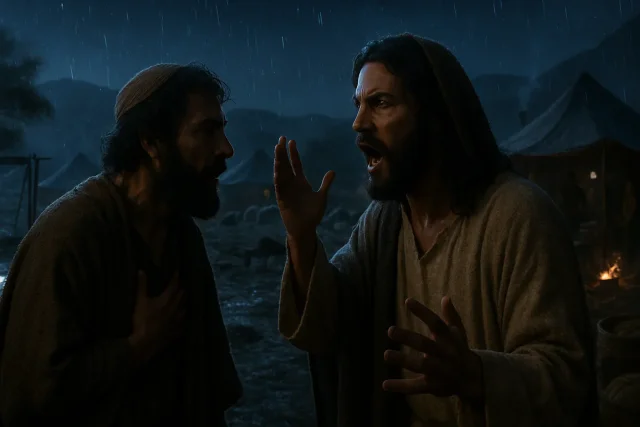
Then there’s David, a king yet a man whose closest friends turned against him. His own son sought his throne. Imagine David, heart pounding, fleeing the palace under the cover of night, the city lights fading behind him as he walked barefoot into the wilderness. His psalms are raw, teeming with the pain of betrayal, yet grounded in an unyielding faith (Psalm 55:12-14, Psalm 3:1-2).
And let's not forget Hannah, barren and mocked, her silent tears seeping into the temple floor. How many nights did she spend pleading for a child, each month another reminder of her empty arms? Her story rings true today for anyone who has felt overlooked or forgotten, crying out to a God who seems silent (1 Samuel 1:10-11).
The Bible doesn’t sugar-coat these stories. It doesn’t gloss over the grief or the disappointment. These stories are real, raw, and gritty, reminding us that the struggle is as old as humanity itself. Their pain echoes through time, reminding us that we’re part of a long line of people who have wrestled with the gap between what is and what was promised.
Here's where it gets revolutionary: Through their trials, we see that they weren’t left alone in their despair. Instead, their cries reached the ears of a God who was not distant but deeply involved. He took their broken pieces and promised something greater, something unbreakable.
The Unbreakable Promise
So, what does God do with the mess of our lives? For Job, God doesn’t just restore what was lost; He gives him twice what he had before. But it's more than just material blessing. Job's story ends with a deeper understanding of who God is—a foundation stronger than any earthly possession (Job 42:10-12).
This changes everything: God's promise isn't just about making life easier; it's about transforming us through the fire. David’s psalms, born from the depths of despair, become songs of deliverance and hope, reminding us of God’s faithfulness even when friends turn into adversaries (Psalm 40:1-3).
For Hannah, her tear-soaked prayers result in Samuel, a child who would anoint kings. Her story is a reminder that God hears our cries, even when it feels like no one else does. It’s a testament to persistence, to the sacred act of laying our burdens before God and trusting Him with the outcome (1 Samuel 1:20).
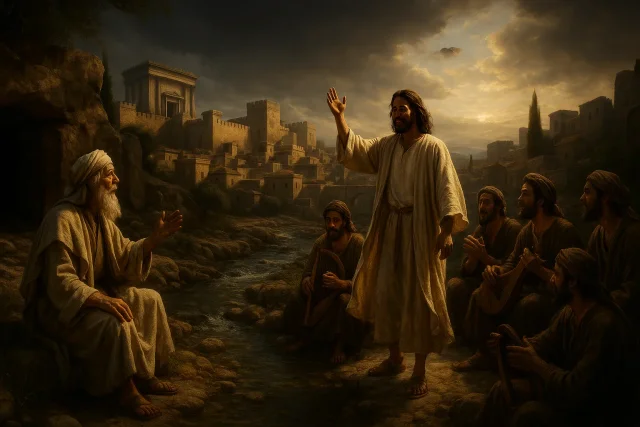
Jesus, the ultimate fulfillment of God's promise, brings remission of sin, tearing down the wall of separation that sin built between humanity and God. His sacrifice wasn’t an af
Continue Your Bible Study
Explore more lessons and deepen your understanding of scripture
View All Lessons Ask AI a Question