Al Masih Ad Dajjal in Bible Prophecy

Al Masih Ad Dajjal and the Kingdom That Refuses Counterfeit Glory
Expose the empire
Picture yourself standing in a crowded electronics store on a Friday night in late November, fluorescent lights buzzing overhead, giant screens flashing breaking news, war footage, celebrity scandals, market panic, miracle cures, and one more voice promising certainty if you will only trust the right strongman. That is the empire pattern behind fear of Al Masih Ad Dajjal: panic-driven allegiance, spectacle-powered authority, and a craving for visible power that can rescue us fast. The pattern is ancient, and the stones cry out with witness, from Roman imperial cult statues to modern algorithm-fed personalities who build loyalty through outrage, charisma, and carefully staged images.
When people talk about the final deceiver, they often assume the main issue is decoding symbols, tracking headlines, or spotting the right villain before everyone else does. Yet the biblical story presses a harder question into your hands: why are human hearts so ready for counterfeit messiahs in the first place? History comes alive when we realize the deepest battle around Al Masih Ad Dajjal is not only about one future figure, but about whether you know the real Jesus well enough to refuse every imitation, whether ancient or digital, political or spiritual, dramatic or ordinary.
The Way of the World
The pattern of this age runs on image, urgency, and control. You can see it in the blue glow of a phone screen at 6:12 a.m., when a tired dad checks headlines before coffee and already feels behind, threatened, and angry. You can hear it in campaign ads, influencer clips, finance podcasts, and conspiracy threads, all insisting that salvation arrives through secret knowledge, stronger force, tighter borders, better branding, or one magnetic figure who will crush the chaos. Fear becomes currency, and certainty becomes a product.
That same pattern shapes how many people approach Al Masih Ad Dajjal. The subject turns into a marketplace of predictions, charts, coded rumors, and social media reels with ominous background music, red circles around world leaders, and captions promising hidden truth in under ninety seconds. Success gets measured by being first, being loudest, or sounding most informed. In that atmosphere, devotion can quietly drift into obsession, and watchfulness can harden into suspicion toward neighbors, immigrants, politicians, doctors, and even fellow believers.
Picture a grocery store aisle on a Wednesday evening, carts squeaking over cracked tile, a mother comparing egg prices with a calculator app, an older man reading labels because his blood pressure medication changed, two teenagers filming a prank near the frozen foods. In ordinary places, the same empire logic whispers that scarcity rules, that other people are competitors, and that safety belongs to those who seize power before power is seized from them. Financial stress, health concerns, and relationship conflict become open doors for counterfeit saviors who promise quick order.
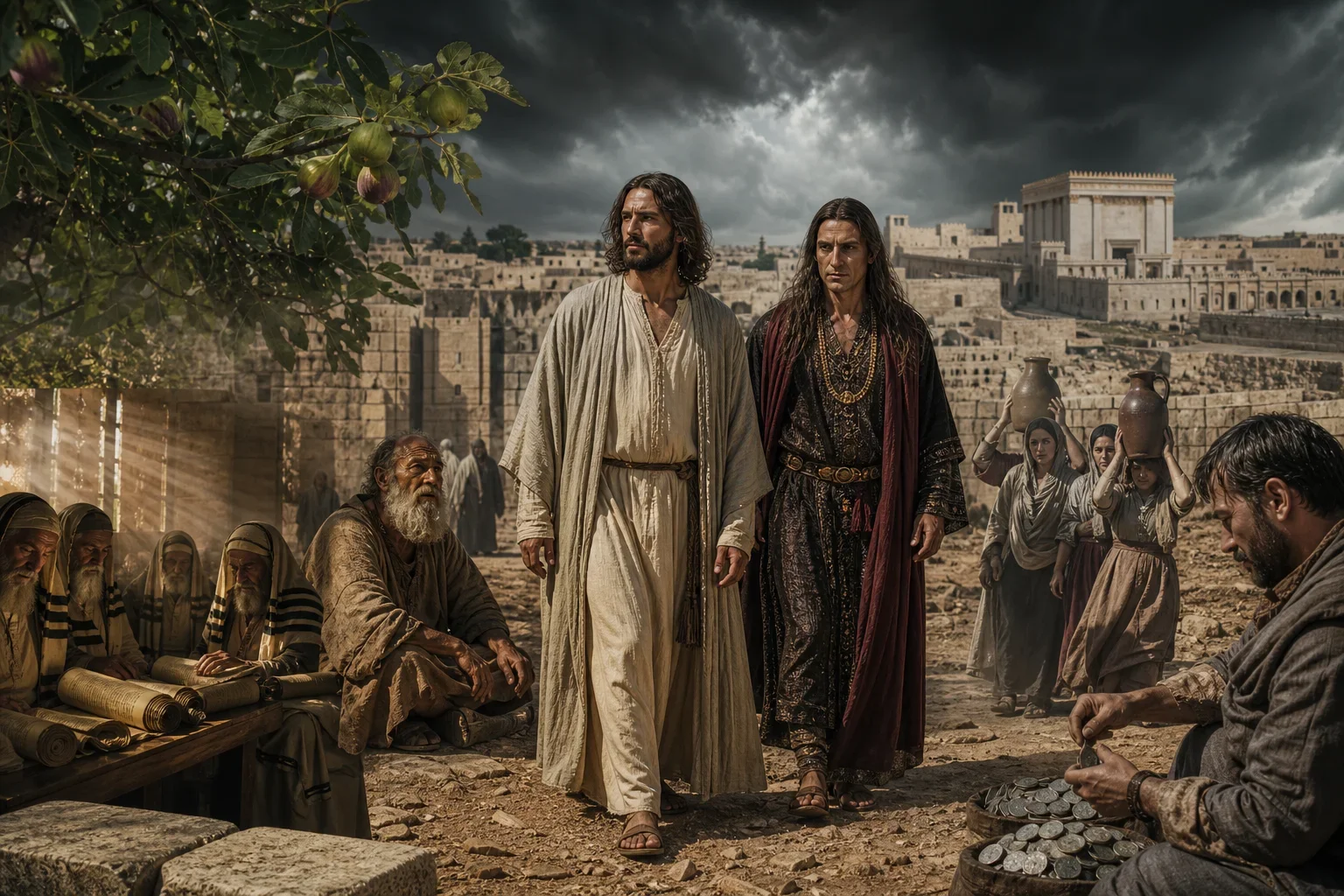
History gives this pattern a face. In the first century, emperors claimed titles soaked in sacred meaning, minted coins with divine language, and demanded public loyalty as proof of peace. I still remember seeing Roman artifacts behind museum glass during college, bronze coins glinting under cold lights, and realizing propaganda did not begin with cable news. The ancient world knew spectacle, and so does ours. When a culture rewards domination, polished performance, and public shaming, Al Masih Ad Dajjal makes emotional sense, because deception thrives where people have already been trained to worship power dressed as protection.
Even religion can get captured by that script. A preacher builds a platform through fear, a podcast host treats every crisis as apocalyptic branding, a small group spends more time identifying enemies than loving actual people. The worldly way wants a messiah who mirrors our anxieties and weaponizes them. That is why the question is not merely whether deception will come. The question is whether your heart has been discipled by empire long before the deceiver arrives.
But the kingdom!
The Divine Disruption
Everything changes when you place Al Masih Ad Dajjal beside Jesus of Nazareth, not the sentimental version painted in soft focus, but the historical Jesus who walks dusty roads, touches unclean skin, rebukes storms, and refuses the shortcut of domination. In the wilderness, the tempter offers Him spectacle, bread without trust, kingdoms without a cross. Jesus rejects each offer. Right there, the kingdom begins its assault on counterfeit messiahship. The true King refuses to seize what the false king will always crave.
Matthew 4:8-10 “Again, the devil taketh him up into an exceeding high mountain, and sheweth him all the kingdoms of the world, and the glory of them; And saith unto him, All these things will I give thee, if thou wilt fall down and worship me. Then saith Jesus unto him, Get thee hence, Satan: for it is written, Thou shalt worship the Lord thy God, and him only shalt thou serve.”
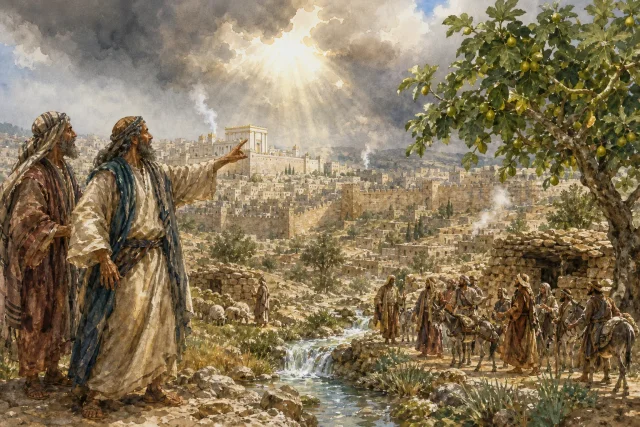
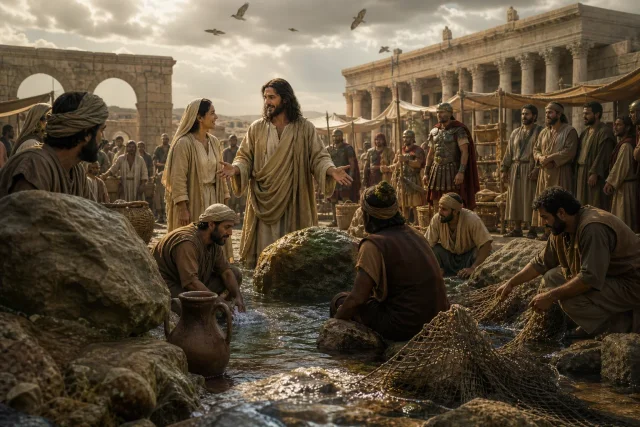
Picture yourself walking through ancient Jerusalem during Passover week. The city is packed, dust hanging in the air, lambs bleating, Roman soldiers watching from stone towers, pilgrims pressing shoulder to shoulder through narrow streets. Everyone knows what power looks like: cavalry, banners, elite robes, polished weapons. Then Jesus enters on a donkey. History comes alive when we realize this is not a quaint detail for a children’s pageant. This is open defiance against the entire grammar of empire. The King comes without coercion.
John 18:36 “Jesus answered, My kingdom is not of this world: if my kingdom were of this world, then would my servants fight, that I should not be delivered to the Jews: but now is my kingdom not from hence.”
That single sentence cuts through panic about the final deceiver. The kingdom of God does not advance through manipulation, panic cycles, or force-fed allegiance. Al Masih Ad Dajjal represents the climax of counterfeit rule, a final concentrated parody of kingship. Jesus represents the original and eternal reality. One dazzles to dominate. The other stoops to save. One gathers followers by fear. The other calls disciples by truth, even when truth costs them comfort.
The apostolic witness keeps pressing this reversal. Paul does not tell frightened churches to become prophecy addicts. He roots them in the person of Christ. John does not reduce antichrist to one headline figure; he speaks of a spirit already at work, a pattern of denial and deception. That means your defense is relational before it is analytical. You resist the counterfeit by abiding in the real. When I nearly lost faith at twenty, it was not a chart that steadied me. It was the Gospels in my hands, the stubborn historical weight of Jesus in time and space.
1 John 2:22 “Who is a liar but he that denieth that Jesus is the Christ? He is antichrist, that denieth the Father and the Son.”
The archaeological evidence tells us Christianity is rooted in public events, places, names, and witnesses, not vapor. Ossuaries, inscriptions, first-century fishing boats, synagogue foundations, Roman roads, and the Pilate Stone all push back against fantasy religion. That matters here. Counterfeit messiahs thrive in disembodied hype. Jesus steps into verifiable history. Luke anchors rulers by name. Acts places the gospel in ports, courtrooms, and city streets. The true Christ is not a mood. He is the crucified and risen Lord.
So the kingdom subverts fear by redirecting your gaze. Instead of staring endlessly at the shadow, you fix your eyes on the Son. Instead of chasing secret codes, you remain in His words. Instead of building a bunker mentality, you practice faithful presence in traffic jams, staff meetings, oncology waiting rooms, and tense kitchen-table conversations. The kingdom answer to Al Masih Ad Dajjal is not naïveté. It is deep attachment to Jesus, whose voice trains you to detect every counterfeit note.
Everything changes when:
The Beautiful Scandal
The gospel feels scandalous here because it tells frightened people that the answer to ultimate deception is not ultimate self-protection. You want a surveillance system, a foolproof timeline, a tactical edge. Jesus gives you a cross, a table, a flock, and a Shepherd’s voice. That can feel almost offensive. In a moment when many crave ironclad control, Christ calls you into trust. In a climate obsessed with dominance, He speaks blessing over the meek, the merciful, and the pure in heart.
Picture Golgotha under a bruised afternoon sky, the smell of sweat, blood, and dust thick in the wind, soldiers gambling at the foot of the cross, religious leaders folding their arms with tight jaws, a few grieving women refusing to leave. If you were building a movement to defeat deception, this is not the scene you would script. Yet the kingdom’s deepest victory comes through apparent defeat. The final answer to counterfeit glory is not bigger spectacle. It is self-giving love that passes through death and breaks it from within.
1 Corinthians 1:18 “For the preaching of the cross is to them that perish foolishness; but unto us which are saved it is the power of God.”
That is why Al Masih Ad Dajjal, whether viewed as a final individual or the concentrated spirit of anti-Christ rebellion, cannot be faced merely with better fear management. The offense of the gospel is that you conquer by communion with Christ, by truth-telling, by endurance, by refusing worship of any false savior. Revelation does not present the saints as those with the slickest strategy videos. It presents them as those who hold fast to the Lamb. Weakness becomes strength because the Lamb already reigns.
I think about students I have taught who can spot manipulation in a TikTok ad faster than adults can, yet still struggle to believe that humility could be stronger than swagger. You can feel that tension in yourself. When someone cuts you off in traffic on I-35, when a doctor’s portal posts test results at 11:47 p.m., when your rent rises and your bank account sinks, you want immediate force, immediate certainty, immediate rescue. The scandal is that Jesus often meets you there with presence before explanation, with faithfulness before visibility.
The ancient church knew this offense. Refusing emperor worship looked absurd. Refusing vengeance looked weak. Singing in prison looked irrational. Yet the stones cry out from catacombs, inscriptions, and martyr stories that this so-called weakness outlasted Caesar. The false christ always overpromises and overperforms until the mask slips. The true Christ tells the truth from the start: take up your cross. Lose your life to find it. That message still sounds upside down because it is. It turns every human instinct for self-exaltation inside out.
So yes, the topic of Al Masih Ad Dajjal can stir dread. The gospel turns that dread into discernment by scandalous means. You do not prepare by becoming paranoid. You prepare by becoming rooted. You do not overcome by mastering every rumor. You overcome by loving the real King so fully that imitation loses its charm. That is beautiful, and to a power-hungry age, it sounds outrageous.
The revolution looks like:
Subversive Saints
Picture Polycarp, old and steady, standing before Roman authority with weathered skin and a calm face while the machinery of empire demands public compromise. He will not offer worship where worship does not belong. That is subversive kingdom life in its clearest form: not dramatic branding, not performative outrage, but durable allegiance. The same spirit appears in believers across centuries who refuse counterfeit lords even when the pressure comes wrapped in patriotism, ideology, or religious theater.
I think too of Corrie ten Boom, hiding Jews in a cramped secret space while occupation forces weaponize fear and paperwork. The kingdom answer to deceiving power is not passive retreat. It is courageous fidelity rooted in Christ. Or take modern believers in places where confessing Jesus can cost a job, a lease, or family approval. Some gather in apartments with blackout curtains and whispered songs. Some sit at office desks under fluorescent lights, declining to join corruption that could boost their salary by twenty thousand dollars.
Then there are ordinary subversives you would pass without noticing. A nurse in Houston prays quietly before entering a room where a cancer patient has grown numb from bad news. A bus driver in Chicago greets each rider by name in a neighborhood where invisibility wounds almost as much as violence. A single mom at Aldi puts back snacks she wanted so she can buy groceries for an elderly neighbor whose Social Security check came late. These acts do not trend, yet they train the heart away from counterfeit glory.
When I worked with inner-city teenagers, I met kids who had already seen enough broken promises to laugh at polished speeches. They could smell fake from a mile away. What reached them was embodied truth: adults who kept showing up, who knew their names, who opened Scripture and pizza boxes at the same folding table, who admitted pain without surrendering hope. In that room, under cheap fluorescent lights and the sound of sneakers squeaking in the hallway, allegiance to Jesus became visible resistance against every lying power.
The archaeological evidence tells us early Christians left traces not merely in texts but in burial practices, inscriptions of hope, and communities that cared for widows, infants, and plague victims. History comes alive when we realize discernment is not only what you reject. It is what kind of people you become. Subversive saints are not obsessed with the counterfeit. They are captivated by Christ, and that attachment reshapes money, speech, loyalty, suffering, and love.
But the kingdom!
Joining the Revolution
Revolutionary call
If you want to face Al Masih Ad Dajjal faithfully, begin where Scripture begins: with Jesus Himself. Open the Gospels slowly, not as a frantic codebook but as a place of encounter. Read His words aloud at your kitchen table before the school rush, before Slack notifications start, before traffic thickens and your patience thins. Train your ear to His voice. Counterfeit messiahs always sound impressive at first. The Shepherd sounds true over time, especially when your life gets squeezed.
Practice resistance in very ordinary places. At the grocery store, when prices rise and anxiety starts tightening your chest, refuse the liturgy of scarcity by thanking God and helping someone else in small ways. In a traffic jam, when anger surges and every horn blast feels personal, turn that trapped moment into prayer for the drivers around you. In neighborhood interactions, especially with the difficult neighbor whose dog barks at 1:00 a.m. or whose political sign irritates you, choose patient presence over caricature. Kingdom resistance starts with refusing the soul-shaping habits that make deception feel normal.
Build communal habits that anchor you. Share meals with believers who will tell you the truth when fear begins running your imagination. Read passages about Christ’s return with humility, not swagger. Fast from prophecy content creators who monetize panic. Give generously when financial stress tempts you to clutch everything with white knuckles. If health concerns have made you vulnerable to voices promising secret cures and spiritual shortcuts, bring that fear into prayer and wise community rather than into the black hole of late-night scrolling.
2 Thessalonians 2:3-4 “Let no man deceive you by any means: for that day shall not come, except there come a falling away first, and that man of sin be revealed, the son of perdition; Who opposeth and exalteth himself above all that is called God, or that is worshipped; so that he as God sitteth in the temple of God, shewing himself that he is God.”
Notice the heart of the matter: self-exaltation in the place of God. That pattern can appear on a throne, on a screen, in a pulpit, or in your own chest. Resist it by worship. Resist it by confession. Resist it by serving people who cannot advance your reputation. Picture yourself walking through ancient ruins where once-mighty rulers carved their names into stone, and now tourists pass by with water bottles and camera phones while weeds creep through the cracks. The stones cry out: counterfeit glory fades.
So join the resistance. Hold to the kingdom manifesto of the crucified and risen King. Bless when cursed. Tell truth when lies are profitable. Stay near the poor, the weary, the overlooked, because false christs rarely linger there, but Jesus does. May you receive this subversive blessing: that your heart would love the real Christ so deeply that no dazzling imitation could seduce you, and that in an age of spectacle, your steady faith would become a witness.
What kingdom work confronting regarding Al Masih Ad Dajjal?
What specific habit this week could train your heart to recognize the voice of Jesus over every counterfeit voice?
Who in your life exemplifies this truth about Al Masih Ad Dajjal, and how could your community walk nearer to Christ with that person?
Continue Your Bible Study
Explore more lessons and deepen your understanding of scripture
View All Lessons Ask AI a Question