Thursday, September 03, 2026
Today we step into a painful moment in Ezra’s story: a leader ashamed of the people’s sin, yet kneeling to pray for them. His sorrow shows us what intercession looks like when a community has wandered.
Today's Verse
"And at the evening sacrifice I rose up from my affliction; and having rent my garment and my mantle, I fell upon my knees, and spread out my hands unto the Lord my God, And said, O my God, I am ashamed and blush to lift up my face to thee, my God: for our iniquities are increased over our head, and our trespass is grown up unto the heavens. Since the days of our fathers have we been in a great trespass unto this day; and for our iniquities have we, our kings, and our priests, been delivered into the hand of the kings of the lands, to the sword, to captivity, and to a spoil, and to confusion of face, as it is this day. And now for a little space grace hath been shewed from the Lord our God, to leave us a remnant to escape, and to give us a nail in his holy place, that our God may lighten our eyes, and give us a little reviving in our bondage. For we were bondmen; yet our God hath not forsaken us in our bondage, but hath extended mercy unto us in the sight of the kings of Persia, to give us a reviving, to set up the house of our God, and to repair the desolations thereof, and to give us a wall in Judah and in Jerusalem."— Ezra 9:5-9
Reflection
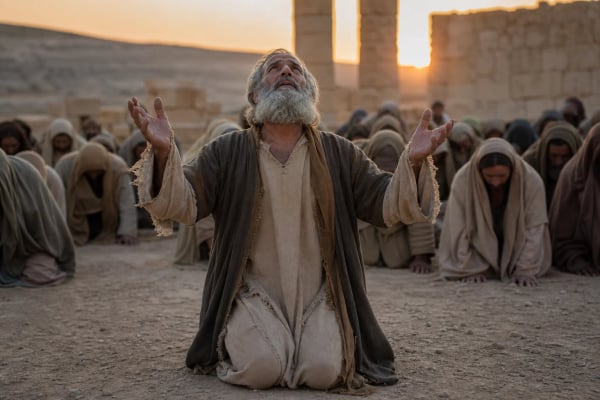
Ezra had just learned that the returned exiles had mixed themselves again with surrounding peoples in disobedience. At the evening sacrifice, he tore his clothes, dropped to his knees, and confessed the nation’s sin as his own. He did not stand above the people; he stood among them before God. In harvest season, when we count provision, intercession means bringing our family, church, workplace, or town honestly before the Lord instead of merely criticizing what is wrong.
Intercession kneels in the gap, naming real sin while still asking God for mercy and renewal.
1-Minute Study: Understanding intercession
Intercession is prayer offered on behalf of others, especially when they are in need, in danger, or in sin. Ezra models it clearly: he does not say, “They have sinned,” but “our iniquities are increased over our head.” He identifies with the people and carries their condition to God. That does not excuse wrongdoing; it refuses cold distance. Moses did this after Israel’s rebellion, pleading that God would spare the nation. Daniel also confessed the sins of his people though he was personally faithful. Intercession requires honesty, humility, and memory. Ezra remembered both the people’s long history of failure and God’s recent mercy in preserving a remnant and restoring worship. During harvest season, this matters deeply. As we thank God for food, work, and shelter, intercession keeps gratitude from becoming private. We pray for struggling neighbors, compromised communities, wandering children, and weary churches, asking God not only to provide, but to revive.
Cross References: Daniel 9:4-5 • Exodus 32:11-14 • 1 Timothy 2:1
Prayer of the Day
Lord God, As Ezra knelt in grief at the evening sacrifice, teach me to pray for others with honesty and mercy. Keep me from pride when I see sin in my community, and give me courage to stand before Thee on their behalf. For the people around me who are wandering, provide repentance, reviving, and help. And in this season of harvest, make me thankful enough to pray beyond myself. Amen.
Today's Challenge
Set aside ten minutes today to write down three people or groups in spiritual need, then kneel and pray specifically for their repentance, protection, and renewal.
Sacred Art Spotlight
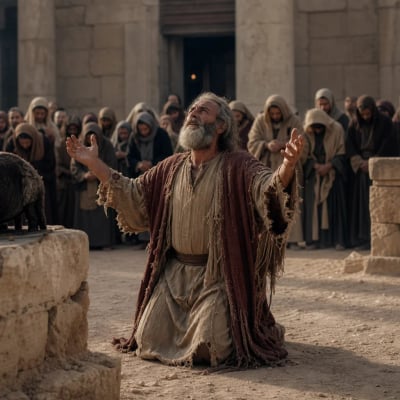
Ezra at the evening sacrifice, garments torn, kneeling with hands spread toward heaven as he confesses the people’s sin and remembers God’s mercy to the remnant.