When Prayer Meets the Purposes of God

Can Faith Change God Plan
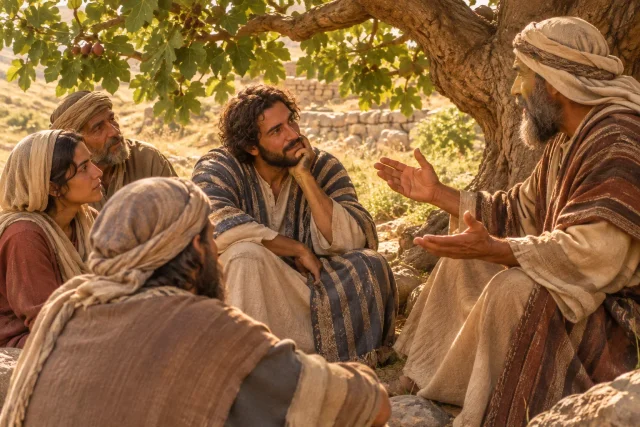
There is a particular ache in passages where God announces judgment, then a human voice rises in prayer, and the outcome in the narrative changes. Careful readers feel that tension. The text does not flatten it. Moses pleads after the golden calf. Hezekiah turns his face to the wall after a death sentence. Nineveh fasts under a prophetic warning. In each case, the stated outcome is altered in history, and the reader must not pretend that nothing happened.
Name the loss clearly. These scenes carry the loss of security, the loss of time, the loss of presumed inevitability. They also unsettle tidy formulas about sovereignty, because the living God is not a static equation on a whiteboard. The covenant Lord speaks, warns, invites, and responds in history with purposeful consistency.
Let’s unpack this systematically. The question is not whether human faith mutates the eternal character of God. Scripture is explicit that God does not change in his being, perfections, or covenant faithfulness. The sharper question is whether faith, repentance, and intercession are ordained means within God’s sovereign framework by which he brings about different historical outcomes. That is where the data of Scripture points our attention.
The Sacred Right to Cry
When believers hear the phrase God’s plan, many assume silence is the holiest posture. The result can become a polished form of religious positivity that leaves no room for covenant pleading. Yet biblical faith is not mute resignation. Biblical faith speaks back to God with reverence, grief, argument, confession, and appeal to his promises.
Notice the pattern here. In Scripture, lament is not merely sorrow over pain; it is often the doorway into intercession. A mother waiting in a fluorescent urgent care lobby at 11:40 p.m., refreshing the patient portal on her phone, is not faithless when she says, “Lord, spare.” A man reviewing overdraft notices at his kitchen table is not outside the boundaries of trust when he asks God to intervene in rent, work, and daily bread. Covenant prayer is permitted to name reality without cosmetic edits.
The Psalms grant this vocabulary. They do not train the saints to pretend outcomes are fixed in a way that cancels petition. They train the saints to bring distress into God’s presence. Even when lament psalms do not reverse circumstances immediately, they establish a principle: God invites honest address. That principle matters for our topic because intercession begins where fatalism ends.
Jesus himself wept, and that detail matters not merely as emotional texture but as theological structure. The incarnate Son did not inhabit human suffering from a distance. He entered it. The one who perfectly trusted the Father also prayed with intensity, tears, and submission. Faith and earnest petition are not opposites. In biblical terms, they are interconnected.
James 5:16 says, “Therefore, confess your sins to one another and pray for one another, that you may be healed. The prayer of a righteous person has great power as it is working.”
That verse does not treat prayer as decorative language around an unalterable process. It assigns real efficacy to righteous prayer. Not autonomous efficacy, as though humans control outcomes, but covenant efficacy under divine sovereignty. The underlying principle is that God ordains both ends and means. He ordains the result, and he ordains the prayer that belongs to the result.
Yet even here: lament must not drift into the claim that God is unstable or manipulable. The sacred right to cry is not a license to imagine that tears function as leverage over heaven. It is the covenant privilege of bringing sorrow and need before the God who has already chosen to work through the prayers of his people.
The Language of Loss
If we ask whether faith changes God’s plan, we need precision in language. Scripture uses anthropomorphic and relational language to describe God’s actions in time. One of the most debated words is the Hebrew term nacham, often rendered “relent” or “repent” in certain contexts. When the text says God relented from announced disaster, it does not mean God discovered new information or corrected a mistaken forecast. It means that in the sphere of history, God responded according to his holy character and covenant framework.
Moses gives us a central case study. Israel has corrupted itself with the golden calf. God announces judgment in severe terms, and Moses intercedes by appealing to God’s name, God’s reputation among the nations, and God’s covenant promises to Abraham, Isaac, and Israel. Moses does not invent a new theology in crisis. He prays from revealed covenant structure.
Exodus 32:11-14 says, “But Moses implored the Lord his God and said, ‘O Lord, why does your wrath burn hot against your people, whom you have brought out of the land of Egypt with great power and with a mighty hand? Why should the Egyptians say, “With evil intent did he bring them out, to kill them in the mountains and to consume them from the face of the earth”? Turn from your burning anger and relent from this disaster against your people. Remember Abraham, Isaac, and Israel, your servants, to whom you swore by your own self, and said to them, “I will multiply your offspring as the stars of heaven, and all this land that I have promised I will give to your offspring, and they shall inherit it forever.”’ And the Lord relented from the disaster that he had spoken of bringing on his people.”
The language of Moses is instructive. He prays God’s own covenant words back to him. This is not negotiation between equals. It is dependent intercession grounded in divine promise. Faith here is not optimism. It is structured appeal. The data of Scripture presents Moses as participating in God’s ordained means for preserving the covenant people.
Hezekiah adds another dimension. His lament is personal and immediate, yet the pattern remains covenantal. He does not merely express dread of death. He places his life before God and appeals to his walk before the Lord. Then the prophetic word itself is followed by a second prophetic word, one that extends his life.
2 Kings 20:5-6 says, “Thus says the Lord, the God of David your father: I have heard your prayer; I have seen your tears. Behold, I will heal you. On the third day you shall go up to the house of the Lord, and I will add fifteen years to your life. I will deliver you and this city out of the hand of the king of Assyria, and I will defend this city for my own sake and for my servant David’s sake.”
Something shifts: the language of loss becomes the language of appeal, and the appeal is tethered to God’s covenant commitments. In practical terms, that matters for ordinary life. In a traffic jam on I-405, with a child coughing in the back seat and a missed appointment fee looming, prayer is not a theatrical coping device. In a grocery checkout line while calculating whether eggs, milk, and prescription co-pays can all fit the weekly budget, the saint may ask God for concrete intervention. Faith speaks specifically because Scripture trains it to do so.
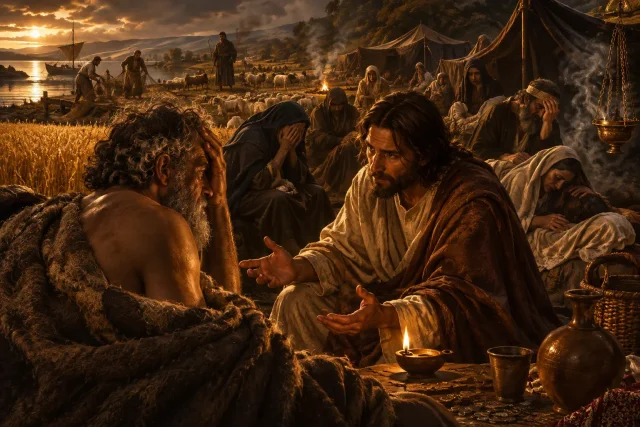
Meeting God in the Darkness
The deepest error in this topic is to imagine two bad options. One option says prayer changes everything because human sincerity can redirect heaven. The other says prayer changes nothing because God’s decree renders petition functionally irrelevant. Neither option matches the structure of biblical revelation. Scripture presents a God whose sovereign decree includes real human prayer as an instrument within history.
Notice the pattern here in Jonah. Nineveh receives a word of judgment: forty days, and destruction is coming. The city responds with fasting, mourning, and repentance from violence. The narrative does not frame this repentance as meaningless theater. It places repentance inside the logic of divine warning. Warnings in Scripture are often means by which God brings about the very repentance that averts judgment.
Jonah 3:8-10 says, “Let everyone turn from his evil way and from the violence that is in his hands. Who knows? God may turn and relent and turn from his fierce anger, so that we may not perish. When God saw what they did, how they turned from their evil way, God relented of the disaster that he had said he would do to them, and he did not do it.”
That passage is not evidence that God’s eternal purpose was unstable. It is evidence that God’s warnings are morally serious and relationally active. In Reformed terms, we distinguish between God’s secret will and his revealed will. The revealed warning is genuine. The historical reversal is genuine. The eternal decree remains wise, fixed, and comprehensive. When we connect the dots, the structure is coherent rather than contradictory.
This is where covenant theology clarifies the issue. God binds himself by promise, establishes mediator figures, and appoints means. Moses stands in a mediatorial role. Hezekiah appeals to the Davidic covenant context. Nineveh, though Gentile, experiences the moral governance of the Lord of all nations. Prayer, repentance, and faith do not break into God’s plan from outside the system. They are inside the covenantal architecture God himself designed.
That architecture has contemporary force. A woman in a supermarket parking lot, rain stippling the windshield, receiving a text that her husband wants “space,” is not reduced to passive observation. A retiree checking blood pressure readings before another cardiology visit is not consigned to detached acceptance. A tenant speaking with a landlord about late payment while hearing the hum of hallway fluorescent lights may pray for favor, provision, and altered circumstances. These petitions are not intrusions into providence. They are part of providence.
Watch what happens when this principle settles in the mind. Prayer becomes neither panic nor performance. It becomes participation. Faith does not rewrite God’s eternal decree, but faith often precedes changes in lived outcomes because God ordained that sequence. The same Lord who appoints the destination also appoints the road, the timing, the plea, the tears, and the answer.
Meeting God in darkness, then, is not merely emotional comfort. It is encountering the God who hears, who responds in time, and who remains utterly sovereign while doing so. That is why biblical saints pray boldly. Not because God is changeable in essence, but because he is faithful in covenant responsiveness.
The Mysterious Turn
There is a mysterious pivot in these texts, and we should not flatten it into a slogan. The pivot is not from unbelief to technique. It is from announced threat to covenant appeal, from divine warning to divinely ordained response. In mathematical terms, if I may borrow a structural analogy, the visible line in the narrative changes direction while the underlying theorem remains intact. The movement is real at the level of history, yet fully coherent within the larger system.
Moses is the clearest illustration of this turn. The Lord declares judgment; Moses intercedes; the announced disaster is withheld. The text wants the reader to feel the gravity of mediation. It also wants the reader to see that God had already chosen to work through a mediator. This is not an emergency patch in the divine administration. It is a feature of covenant history pointing forward to the greater Mediator, Christ.
Hezekiah’s turn is similarly layered. Isaiah first delivers the sentence of death. After prayer, Isaiah returns with a different word. The turn is historical, concrete, measurable: fifteen more years. Yet the text anchors the answer in God’s commitment to David and God’s own name. The answer is personal, but never merely private.
Something shifts: faith is reframed. Faith is not a force that bends God. Faith is the posture by which a creature lays hold of God’s appointed mercy. That distinction guards against two modern distortions. One distortion treats faith as spiritual certainty that guarantees preferred outcomes. The other treats faith as stoic acceptance that asks for nothing. Biblical faith does neither. It petitions intensely while submitting wholly.
Christ is the final interpretive key. In Gethsemane, the Son asks for the cup to pass, yet submits to the Father’s will. The prayer does not remove the cross, but it reveals the pattern in its highest form: honest petition and perfect submission coexist. At the center of redemption, prayer is real, anguish is real, and the Father’s decree is real. The mystery remains, but it is not chaos. It is holy coherence.
Songs from the Ruins
What, then, does praise sound like after wrestling with this doctrine? It is not shallow triumphalism. Honest praise begins by confessing that God is sovereign enough to ordain means, near enough to hear prayer, and wise enough to answer in ways that fit his covenant purposes. That praise can arise when circumstances changed, and it can arise when they did not. The difference lies in what faith is praising.
When prayers are answered in visible ways, the believer praises God not for being persuaded against his better judgment, but for carrying out his wise purpose through appointed means. A healed body, a reconciled relationship, an unexpected rent extension, a calm conversation after weeks of neighborhood hostility over a property line, all become testimonies to providence working through prayer. The praise is deeper because it traces mercy back to God’s sovereign structure.
When prayers are not answered in the requested form, praise is still possible, though scarred. That praise does not deny the tears that came before it. It says, with greater precision, that God never invited prayer as empty ritual. He invited communion, dependence, submission, and participation in his will. Some prayers alter temporal outcomes; all true prayers place the believer beneath the faithful rule of God.
Watch what happens: the false conflict between sovereignty and petition begins to dissolve. The saints stop speaking as though prayer is pointless, and they stop speaking as though prayer makes them authors of reality. They become biblically proportioned. They ask boldly, repent seriously, intercede covenantally, and praise honestly.
The data of Scripture points to a beautiful pattern. God’s eternal plan does not change in the sense of revision, correction, or instability. Yet within that unchanging plan, faith, repentance, and prayer are genuine means by which God brings about changed historical outcomes. Moses was not playacting. Hezekiah was not speaking into the air. Nineveh did not repent into a void. The Lord responded, and those responses were always part of his sovereign wisdom.
Honest praise, then, carries both tears and clarity. We praise the God who hears in hospital corridors, at self-checkout screens, in stalled traffic under red brake lights, and in apartments where the pharmacy receipt sits beside the utility bill. We praise the God whose rule is not threatened by our petitions and whose mercy is not diminished by his sovereignty. Joy and sorrow can stand in the same room because the covenant Lord remains faithful in both.
Reflection Questions
Introspective: Where in your life are you treating prayer as either a way to control outcomes or as a useless ritual, instead of as covenant participation under God’s sovereign rule?
Contemplative: Sit with this tension: in which current burden do you need to ask God boldly for a changed outcome while also resting beneath his unchanging wisdom?
Theological: How does the pattern of Moses, Hezekiah, and Nineveh reshape your view of God’s immutability so that his unchanging nature and his real responses in history remain interconnected rather than opposed?
Continue Your Bible Study
Explore more lessons and deepen your understanding of scripture
View All Lessons Ask AI a Question