Matthias and the Quiet Call to Faith

Matthias at the kitchen table of discernment
The Crossroads Moment
Some saints arrive in Scripture with trumpet blasts. Matthias enters in the hush after betrayal, after grief, after a vacancy nobody wanted to name. I think that is why his story presses on my heart. Most of us are not standing on a balcony announcing a grand calling. We are at the kitchen table with cold coffee, a spreadsheet open on a laptop, a text thread from a hurting sibling, and a doctor’s portal notification we are half afraid to open. We need wisdom when life feels holy and unfinished at the same time.
Picture a woman in Houston inching through traffic on I-45 beneath a gray February sky, windshield wipers tapping a nervous rhythm. Her company has offered a promotion with more money and more travel, but her marriage has been strained for months, and her teenage son has started going silent at dinner. Her mother needs rides to oncology appointments on Thursdays. She prays the rosary at red lights, fingers tight around the steering wheel, asking whether faithfulness means saying yes to the opportunity or stepping back from it. The question is not only what she can do, but what she is being asked to become.
Now place beside her a father in the grocery store comparing prices on eggs, rice, and ground beef while checking his banking app in aisle seven. He and his wife argued that morning over credit card debt and whether to pull their daughter from a private school they love. He feels ashamed, defensive, tired. Then his parish calls asking whether he would consider serving on the finance council after another member resigned suddenly. A vacancy appears, and with it comes the ache of wondering whether he has anything holy to offer while his own house feels fragile.
Matthias stands at that kind of crossroads. He is chosen in Acts after Judas leaves an empty place among the Twelve, and the whole moment carries sorrow, memory, and responsibility. This is not shiny success. It is discernment in the wake of failure. In the midst of chaos, God whispers through community, prayer, and hidden readiness. Matthias had already been present, already faithful, already near Jesus from the Lord’s baptism to the Ascension. The kitchen table became an altar there too, in a sense: an ordinary place where a painful absence became an offering and a new yes was spoken.
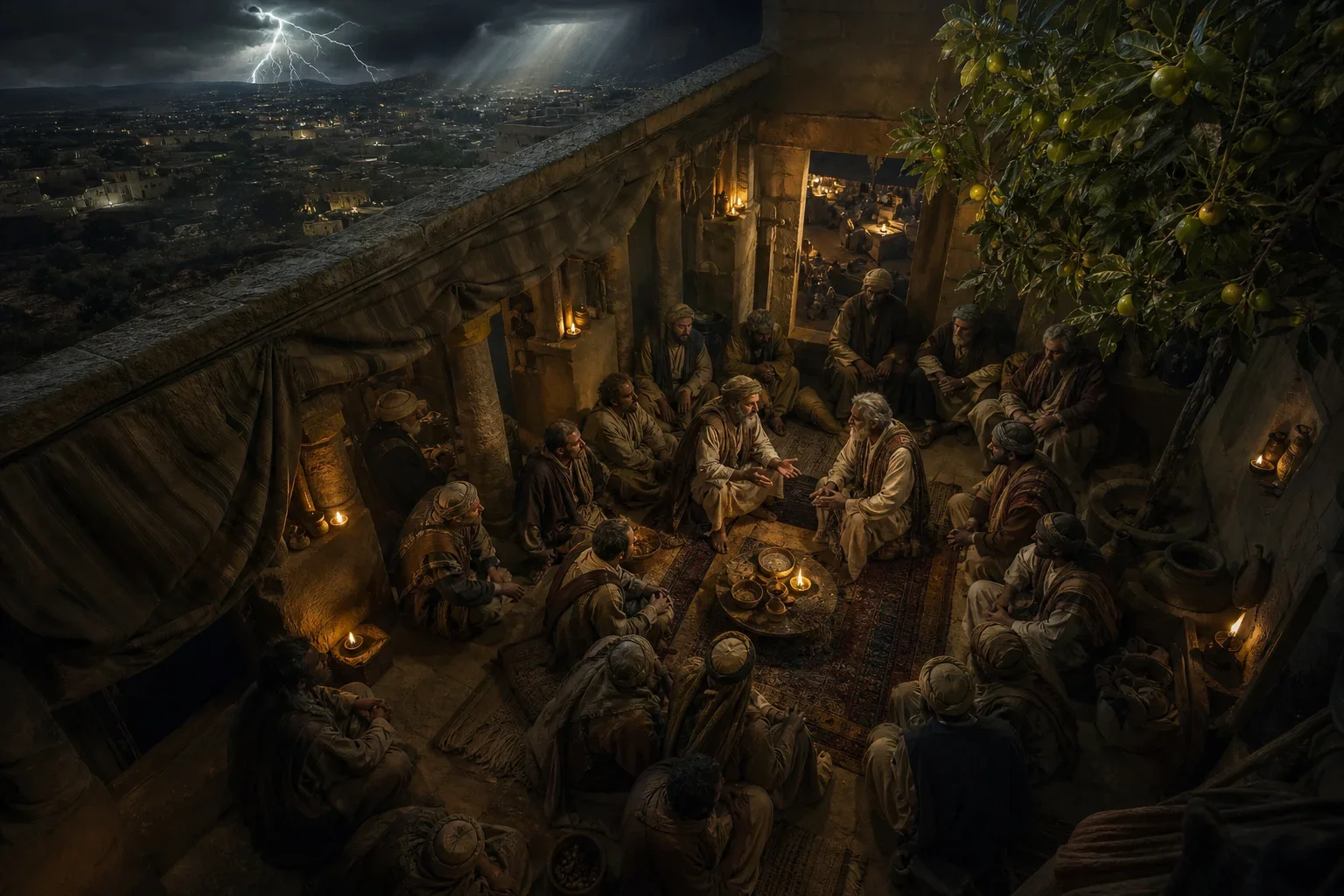
His story meets us when we are asked to step into gaps left by disappointment, betrayal, illness, burnout, or death. Who fills the role after a miscarriage changes a family’s future, after a business partner walks away, after a parish volunteer collapses from exhaustion, after a friendship fractures over politics and pride? We often want a dramatic sign. Instead, Acts gives us a room full of prayer, names spoken aloud, criteria rooted in memory, and a choice made with trembling trust. That is why Matthias matters to modern hearts.
Voices from the Cloud
When I sit with Matthias, I do not hear one voice only. I hear a cloud of witnesses speaking from different corners of Scripture, each one placing another tile into the mosaic. The apostles in Acts are dealing with leadership, loss, and the need for trustworthy presence. Their discernment is not random. Acts 1:24-25 says,
They name the wound, they name the office, and they submit the hidden heart to God. That alone feels medicinal in an age of branding and self-promotion.“And they prayed and said, ‘You, Lord, who know the hearts of all, show which one of these two you have chosen to take the place in this ministry and apostleship from which Judas turned aside to go to his own place.’”
Another voice speaks: Proverbs, with its earthy, steady wisdom, reminds me that discernment usually grows in humble counsel rather than impulse. Proverbs 15:22 says,
Matthias is not a lone spiritual entrepreneur. He is recognized within a praying body. Between diaper changes and dishes, I have found that many of my worst decisions were made in isolation, when pride disguised itself as independence. The apostles refuse that trap. They gather, remember, confer, and pray.“Without counsel plans fail, but with many advisers they succeed.”
Consider also: Saint James speaks into our restless, double-minded hearts with a tenderness that feels almost maternal. James 1:5 says,
Matthias appears in a moment where wisdom is needed more than charisma. Judas had once held office and proximity, yet proximity is not the same as perseverance. James calls us back to asking, receiving, and standing with integrity before God. My vocation as mother teaches me that asking for wisdom is not weakness; it is surrender, and surrender can be very strong.“If any of you lacks wisdom, let him ask God, who gives to all men generously and without reproaching, and it will be given him.”
From a different angle: Jesus speaks of hidden faithfulness rather than public applause. Luke 16:10 says,
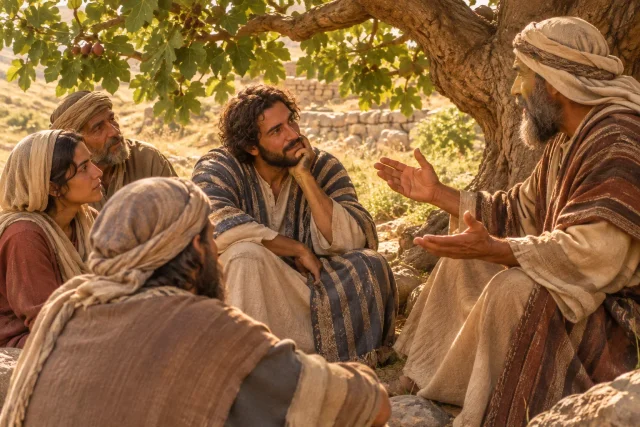
Matthias has no recorded speeches before his choosing. No miracle stories are attached to his name in Acts before this moment. He is one of those grace-filled souls who stayed near the Lord in the ordinary stretch of years. Finding Christ in the mundane prepared him for a task he did not campaign for. That touches something deep in me, because family life often feels hidden, repetitive, unnoticed by the world, and yet heaven weighs it differently.“He who is faithful in a very little is faithful also in much; and he who is dishonest in a very little is dishonest also in much.”
Then Paul adds a needed note about the Church as a body with real offices and mutual dependence. 1 Corinthians 12:18 says,
Matthias is not replacing Judas as though persons were interchangeable parts. He is being set into a place within a wounded body that still needs wholeness and witness. In Catholic imagination, vocation is never merely personal preference. It is ecclesial, embodied, sacramental. Bread and wine become communion; ordinary men become apostles; ordinary homes become domestic churches. The vacancy left by sin does not get the final word.“But as it is, God arranged the organs in the body, each one of them, as he chose.”
I also hear an echo from Mary, though not directly named in the choice. She is present in that upper room in Acts 1, praying with the disciples. Her whole life is a school of consent without spotlight-chasing. She receives, ponders, stays. Matthias is chosen in an atmosphere marked by Marian waiting: not passivity, but attentive availability. Qué regalo, what a gift, that Scripture places this election in prayer rather than panic. It tells me that when a role opens in a parish, when a family business shifts after a death, when a neighborhood needs one calm person to mediate a conflict over a property line or a barking dog, the first task is not frantic action. The first task is holy listening.
Wisdom Across Cultures
Matthias does not stand alone in the memory of the Church. The early Christians kept his feast, preached his witness, and saw in him a sign that apostolic life continues even after scandal tears at the fabric. Saint John Chrysostom marveled at the apostles’ restraint in Acts. They did not rush to appoint someone by personal favoritism. They prayed, set criteria, and entrusted the matter to God. There is a wisdom here that speaks to parish councils, school boards, nonprofit teams, and families deciding elder care in a cramped living room while a ceiling fan hums overhead and paperwork covers the coffee table.
Another voice speaks: Saint Bede read Matthias through continuity, not novelty. The replacement of Judas signaled that God preserves the twelvefold witness tied to Israel’s tribes. In typological reading, that matters. The old covenant pattern is not discarded; it is fulfilled. Matthias enters the number that speaks of a restored people. I love that, because sacramental life also works this way. Water is still water, oil is still oil, bread is still bread, and grace fills matter without erasing it. Matthias is an ordinary man taken up into a holy pattern larger than himself.
Consider also: the global Church often sees hidden fidelity with clearer eyes than cultures obsessed with platform and visibility. I think of catechists in rural Mexico preparing children for First Communion in cinderblock chapels with flickering fluorescent lights. I think of mothers in Nigeria walking dusty roads at dawn to daily Mass before opening market stalls. I think of Korean Catholics who kept the faith through long stretches of persecution, sustained by memory, prayer, and household witness. Matthias belongs to that company of believers whose names are less famous than Peter or Paul, yet whose steadfastness keeps the lamp burning.
From a different angle: the saints of domestic life illuminate him too. Saint Zélie Martin balanced invoices, household needs, fragile health, and deep prayer. Blessed Franz Jägerstätter stood firm in conscience when the world around him bent toward compromise. Saint Joseph, silent and reliable, remains for me a patron of Matthias-like souls. These are not personalities built on spectacle. They carry wood, ledgers, laundry, and hidden sorrows. The kitchen table became an altar in their homes because offering did not wait for ideal conditions.
In Hispanic Catholic life, we often honor the saints with candles, flowers, pan dulce after Mass, and stories shared by abuelitas who remember feast days better than birthdays. That living memory forms a people. Matthias reminds the Church across cultures that replacement is not erasure, and hiddenness is not uselessness. When one worker leaves, when one leader fails, when one family member cannot carry the load anymore, grace can raise up another. Not as a copy, but as a fresh offering placed into the same wounded, beloved Body of Christ.
The Wisdom Tapestry
When I gather these strands together, Matthias becomes more than the apostle chosen by lot. He becomes an icon of how God heals ruptures without pretending the rupture never happened. Judas leaves a terrible absence. The apostles do not deny it, spiritualize it away, or treat office as irrelevant. They face the loss. They pray. They name qualifications rooted in companionship with Jesus. Then they act. There is a deeply sacramental logic here: grace works through concrete realities, through bodies in rooms, spoken names, remembered history, and visible signs.
Another voice speaks: Matthias reveals that discernment is rarely about chasing novelty. It is often about recognizing who has already been faithful in obscurity. In a culture that rewards self-advertising on LinkedIn, polished Instagram testimonies, and constant commentary, Acts gives us a man formed in quiet consistency. He had walked with the community from the baptism of John to the Ascension. He had stayed. That word lands on me with holy weight. Staying through traffic jams, budget meetings, soccer practice pickups, and hard marriage conversations can become part of the soul’s preparation for unexpected service.
Consider also: his election by lot unsettles modern people, and I admit it unsettles me too. We prefer personality tests, strategic plans, and color-coded charts. Yet the casting of lots in Acts does not endorse superstition. It belongs to a community already formed by prayer and bounded by clear criteria. They are not using chance to avoid responsibility. They are confessing that final knowledge belongs to God, who sees the heart. There is wisdom here for families deciding whether to move cities, whether to care for an aging parent at home, whether to accept a treatment plan with uncertain outcomes. Gather facts, seek counsel, pray deeply, and leave room for mystery.
From a different angle: Matthias also protects us from an overly heroic spirituality. Peter gets the sermons, Paul gets the letters, John gets the soaring theology. Matthias gets almost no narrative after his choosing. And still the Church venerates him as an apostle. Holiness is not measured by how much airtime a person receives. It is measured by communion, fidelity, and offering. That can steady the heart of a woman who left a prestigious job to care for children with special needs, or a man who took night shifts after a layoff and now serves quietly as an usher at the 7 a.m. Mass.
The unified principle, then, is this: God often fills painful vacancies through people already shaped by hidden faithfulness, communal prayer, and willingness to belong to something greater than themselves. If I were placing this into a practical framework at my own kitchen table, I would ask four questions. What absence am I facing without denial? Who has already been faithful nearby? What does the Church, or the wise community around me, recognize? What part must be entrusted to the Lord because no spreadsheet can settle it? Matthias stands where those questions meet, and his witness turns discernment from anxious control into reverent cooperation with grace.
Walking in Wisdom
If Matthias teaches us anything for Tuesday morning life, it is that hidden readiness matters. I think of the mother loading groceries into the trunk in ninety-degree heat, mentally calculating whether there is enough for copays and gas this week. I think of the man gripping his steering wheel in backed-up traffic after a tense cardiology appointment with his wife. I think of the neighbor waving awkwardly across a fence after a months-long disagreement over noise and parking. Holiness in those places begins with presence before it becomes clarity.
Another voice speaks: build small habits of discernment before the crisis arrives. Keep a notebook near your prayer corner and write the names of the people, duties, and wounds that need light. Attend Mass not only when life feels orderly, but especially when it does not. Sit with Acts 1 during the octave after Ascension or near Pentecost, and place your own vacancies beside the apostles’ vacancy. In the midst of chaos, God whispers through repeated prayer more often than through dramatic interruption.
Consider also: invite communal wisdom in concrete ways. Ask one spiritually grounded friend, one honest family member, and one person with practical competence to speak into your decision. If the question is financial stress, bring the numbers into the light instead of hiding them behind shame. If the question is a strained relationship, ask for counsel before resentment hardens. If the question is health, bring the doctor’s notes, the medication list, and the fears to prayer together. The kitchen table became an altar when truth was spoken there with charity.
From a different angle: practice sacramental imagination in the ordinary. Light a candle before a difficult family conversation. Pray a decade of the rosary in the school pickup line instead of doom-scrolling on your phone. Keep Sunday distinct with a meal that tastes festive even if it is arroz con pollo and store-bought flan. Read the names of the apostles aloud with your children and remind them that God uses people whose stories seem small on the page. My vocation as mother teaches me that repetition forms the heart long before the heart notices it is being formed.
And when you do not know what to do, begin with one faithful act that resists panic. Apologize for the sharp word. Answer the parish email. Make the budget appointment. Bring soup to the sick neighbor. Go to confession and name the fear underneath the control. Wisdom is not a performance. It is a grace-filled way of standing before God with open hands. Lord Jesus, who called Matthias into a wounded circle and made his hidden fidelity fruitful, receive our ordinary offerings. Holy Mary, Mother of the Church, pray for us as we wait, choose, and stay. Saint Matthias, pray for us.
When do you find yourself resisting the hidden, ordinary faithfulness that reflects the truth about Matthias in the Bible?
What implications does Matthias being chosen within prayerful community reshape your understanding of Matthias in the Bible and of vocation in the Church?
What one concrete vacancy in your home, parish, workplace, or neighborhood will you bring to prayer and wise counsel this week?
Continue Your Bible Study
Explore more lessons and deepen your understanding of scripture
View All Lessons Ask AI a Question