Anchored in Grace Perseverance through Biblical Faith

The Beautiful Contradiction
In the grand tapestry of faith, we often stumble upon paradoxes that defy our human logic. One such paradox is the doctrine of the Perseverance of the Saints—the idea that those whom God has truly called will persevere until the end. It's a beautiful contradiction that, while we are called to work out our salvation with fear and trembling, we are simultaneously assured that God is the one working in us to will and to act according to His good purpose (Philippians 2:12-13). How can we be both responsible for our faith journey and also secure in the hands of a sovereign God?
This tension is like the paradox of strength found in weakness, echoed in Paul's declaration that "when I am weak, then I am strong" (2 Corinthians 12:10). It nudges us to lean into our human frailty while resting in divine strength. The doctrine of Perseverance of the Saints invites us into this sacred space of tension—where the eternal security of God's grace meets the grit of daily discipleship.
But here's where it gets interesting: in our human understanding, security often demands control, predictability, and clarity. Yet, in this divine paradox, security comes from release, trust, and surrender. The more we cling to our control, the more we miss the gentle assurance of His grip. This paradox beckons us to trust the unseen, to find rest in the mystery that though life may shake us, nothing can snatch us from the Father's hand (John 10:28-29).
Our Struggle with Mystery
The plot thickens: we, as humans, naturally resist the tension of paradox. In my own life, working in the emergency room, I've witnessed the deep discomfort with unanswered questions. Patients and families crave concrete answers, just as we desire clear-cut assurances of our eternal status. When facing a diagnosis or a critical moment, there's an innate longing to grasp certainty like a lifeline. Yet, life often refuses neat closures, leaving us unsettled.
Personally, the struggle with mystery is profound. I remember a night shift, holding a young mother's hand as she begged for assurance about her critically ill child. Her tears mirrored my own internal cry for certainty in my walk with God. How could I offer her peace when the outcome was so uncertain? My heart echoes this cry when faced with the paradox of eternal security. How can we be sure we won't fall away when faith feels fragile?
Our cultural resistance to mystery also feeds this tension. We are taught to value answers, solutions, and resolve. Ambiguity is often viewed as a problem to solve rather than a space to dwell in. Yet, this is where the doctrine of Perseverance of the Saints calls us deeper—it is an invitation to live in the discomfort, to embrace the unknown, trusting that God's promises are more steadfast than our understanding.
In therapy, I've learned to hold space for unresolved feelings, recognizing that trying to fix everything isn't always healing. This is a mirror to our spiritual lives, where faith isn't about having all the answers but resting in the One who does. Our struggle with mystery is a dance with God, where we learn to follow His lead, allowing Him to guide us through uncertain paths with the assurance that He is always present.
Living the Paradox
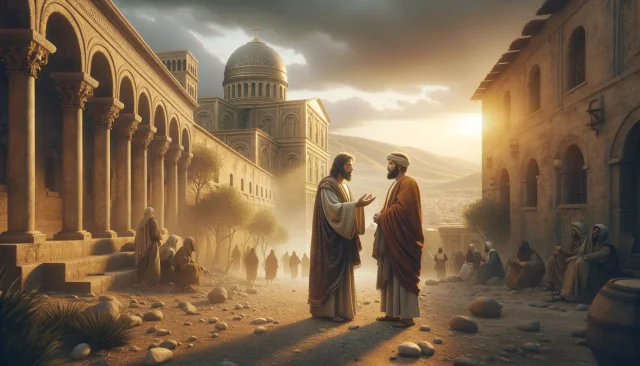
Now watch this: biblical figures who embodied this paradox teach us through their lived experiences. Take Peter, for instance. His journey is marked by bold declarations and profound failures, yet his perseverance was not of his own making. Jesus assured him, "I have prayed for you, Simon, that your faith may not fail" (Luke 22:32). Peter's confidence wasn't in his own strength but in the intercession of Christ.
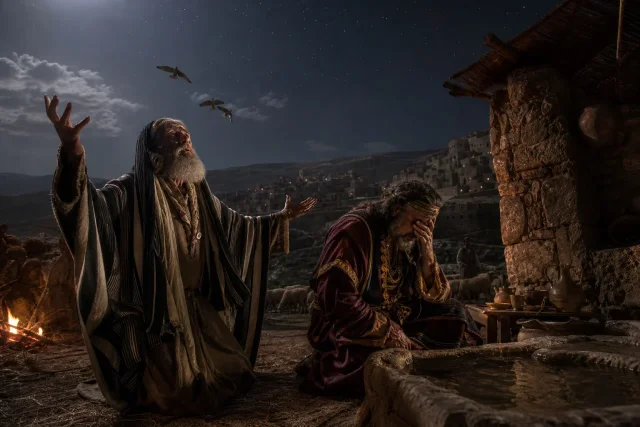
Then there's the story of Job, who, in the depths of his suffering, clung to a paradoxical faith. Despite losing everything, he declared, "Though he slay me, yet will I hope in him" (Job 13:15). Job's perseverance was forged in the fire of affliction, held not by his understanding but by his unwavering trust in God's sovereignty.
Even Paul, with his thorn in the flesh, exemplifies this paradox. He pleaded for its removal, yet God's response was, "My grace is sufficient for you, for my power is made perfect in weakness" (2 Corinthians 12:9). Paul's experience teaches us that perseverance isn't about escaping weakness but embracing it as the place where God's strength is most manifest.
In these saints, we see a living paradox: their faith endures not because of human resolve but divine sustenance. Their lives reflect the truth that perseverance is not the absence of struggle but the presence of a God who holds us through it. These stories remind us that our journey of faith is less about perfection and more about reliance on the One who perfects us.
The Hidden Unity
The seeming contradiction of the Perseverance of the Saints finds its unity in divine logic that transcends ours. But here's the divine twist: God's kingdom operates on principles that confound human wisdom. In our minds, perseverance should follow a linear path of constant upward progress. Yet, in God's economy, it's often through the valleys of despair and the deserts of doubt that our faith is deepened.
Consider the kingdom principle Jesus taught: "Whoever wants to save their life will lose it, but whoever loses their life for me will find it" (Matthew 16:25). This paradox points to the heart of perseverance—the release of self-preservation leads to the discovery of true life in Christ. It's not our grip on Him that ensures our security but His unwavering hold on us.
God's wisdom is woven into the fabric of perseverance, where He uses every circumstance to conform us to the image of His Son. Our trials and triumphs, our failures and faithfulness, all serve His eternal purpose. The unity of this paradox is seen in the assurance of Romans 8:28, that "in all things God works for the good of those who love him, who have been called according to his purpose."
The hidden unity of this great paradox is the unshakeable truth that our salvation is anchored not in our ability to persevere but in the finished work of Christ. It is His faithfulness that secures us, His grace that sustains us, and His love that calls us ever deeper into trust.
Dancing with Mystery
Living comfortably with mystery is an art, an invitation to embrace rather than resolve the paradox. In the sacred space of suffering and uncertainty, we find the breath of God's presence, whispering peace into our restless hearts. It's a dance of trust, where we learn to let go of our need for answers and rest in His promise.
Daily practices can anchor us in this divine dance. Prayer becomes a place of surrender, where we hold our questions lightly, trusting that His understanding is enough. In moments of doubt, we breathe deeply, inviting His Spirit to calm our anxious hearts. We learn to cherish the whispers of His presence over the clamor of our fears.
Shifting our mindset from control to trust is a daily choice. It’s in the surrender of our plans that we begin to see His purpose unfold. The paradox of perseverance invites us to live in the mystery, believing that God's faithfulness transcends our understanding and His grace is sufficient for every need.
In the end, embracing the mystery of the Perseverance of the Saints is about resting in His eternal grip, knowing that we are held tenderly in the hands of our Maker. We don't need to have it all figured out; we just need to trust the One who does.
Reflection Questions
Contemplative: Sit with this paradox: where do you feel the tension of holding both security and responsibility in your faith?
Theological: How does the doctrine of Perseverance of the Saints reveal the nature of God's grace and sovereignty?
Introspective: In what areas of your life are you resisting the mystery of God's assurance, and how can you lean into trusting Him more?
Continue Your Bible Study
Explore more lessons and deepen your understanding of scripture
View All Lessons Ask AI a Question