Admah and Zeboiim Lost Cities and Ancient Lessons

The Grief of Admah and Zeboiim
The Sacred Right to Cry
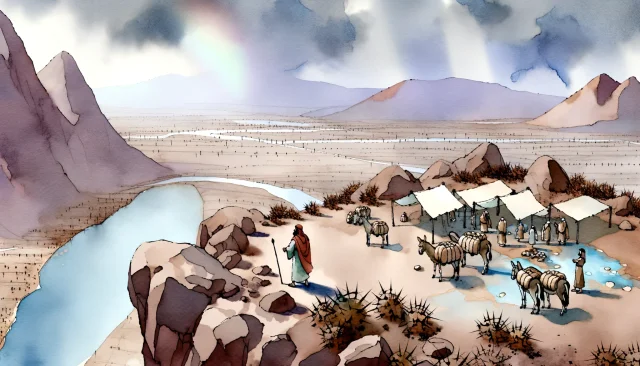
Let's get real here. Life isn't always a walk in the park. It's more like a construction site littered with problems. You've got delays, cost overruns, and sometimes the whole thing seems like it's collapsing—like the story of Admah and Zeboiim. These ancient cities, mentioned in Genesis 14:8 and Deuteronomy 29:23, were destroyed along with Sodom and Gomorrah. Now, we often skip over them, like they're just footnotes. But these cities had people, families, and communities. They had dreams and hopes, just like us. And then, they were gone. That's a real loss.
Too often, Christianity tries to plaster over pain with a smile and a "God's got this." But if we're being honest, that doesn't cut it. The Bible is full of lament. King David, a man after God's own heart, wrote so many Psalms of lament it could fill a construction blueprint. "How long, O Lord? Will you forget me forever?" (Psalm 13:1). Jesus himself wept at Lazarus' tomb (John 11:35). It's okay to feel sorrow—it's okay to cry. We need to name our losses and give them the dignity they deserve.
When the rubber meets the road, pain can feel overwhelming. Whether it's a financial setback that shakes your foundation or a family conflict that tears at your heart, it's all right to admit it's hard. Admah and Zeboiim remind us that sometimes things don't end with a neat little bow. There's no quick fix or easy answer. Just as the cities were reduced to ruins, our lives can feel like that too. But acknowledging the reality is the first solid step we can take. It's okay to sit in that grief for a moment—it's human.
In our rush to solve problems, let's not forget the sacred right to cry. Lament is a place where we can be honest before God, giving our pain a voice. We're not alone in this. We stand with the ancients, echoing their cries, and in doing so, we draw near to God. Real lament isn't a sign of weak faith; it's a robust, honest relationship with our Creator. No sugar-coating this—life is difficult, and sometimes the most faith-filled response is to weep and wail with no immediate answers.
The Language of Loss
So, how do we lament? It's not just about feeling sad. There's a structure to it. Think of it like the blueprints for a new project—essential for building something solid. Biblical lament follows a pattern that can guide us when we're lost in our own sorrow. It starts with an address to God, followed by a genuine complaint, a request for help, and then an expression of trust or praise. Psalm 13 is a good example of this model.
Lament gives us a language, a way to articulate the chaos inside. It starts by addressing God directly, laying it all out there. "Lord, are you even listening?" That's the opening line. It's raw and unfiltered. Next, you voice the complaint, the specific loss or pain. "God, why is my business failing despite all my hard work?" or "Why is my family falling apart?" This is where we get real, no holding back.
Then there's the petition, the ask. "Lord, give me strength to get through this, wisdom to navigate this mess." It's not just about whining; it's about seeking help, firming up the foundation with divine support. Finally, you express trust or praise—even if it feels a bit shaky. It's like saying, "I don't see the way out, but I'm gonna trust You know the blueprint better than I do."
Prophetic laments in the Bible, like those from Jeremiah, show us this isn't just a personal thing. It's communal too. We lament for the state of our world, our communities, our churches. "Why does injustice thrive while good people suffer?" These are the tough questions, and lament allows us to bring them before God.
Lament isn't about wallowing in despair. It's about being honest and making a space where God can work. In my own life, I've seen how past doubts and struggles weren't resolved overnight. They were messy, but that's the language of lament—it acknowledges the mess and invites God into it. As we lament, we create a sacred space for transformation, for God to meet us in our darkest hours.
Meeting God in the Darkness
Yet even here, in the midst of lament, something remarkable happens—God meets us in the darkness. We might think God only shows up when the sun is shining, but Scripture paints a different picture. God doesn't shy away from our suffering. In fact, He's right there in the thick of it, just as He was with Job and King David.
The story of Admah and Zeboiim isn't just about destruction; it's also about divine presence. Even as these cities were overtaken by devastation, God was present, not distant. Remember "The Lord is close to the brokenhearted and saves those who are crushed in spirit" (Psalm 34:18). That's a promise we can build our lives on.
In our darkest moments, we often feel abandoned, like everything's falling apart faster than a house
Continue Your Bible Study
Explore more lessons and deepen your understanding of scripture
View All Lessons Ask AI a Question